

A finished game is only the start of its journey to a global console audience. Digital game publishing worldwide means matching platform reach with a disciplined release process, from planning submissions to preparing for launch. If you’re unsure what happens between development and a worldwide digital release, you’re not alone. Platform requirements and operational decisions can make the path feel complex.
With a clear publishing pipeline, you can approach each stage with a better understanding of what needs to happen and who needs to do it. This guide explains how worldwide digital console publishing works, what platform and market planning involves, and how a publishing partner can support the release lifecycle. You’ll also learn how Ocean Media’s experience across more than 20 years in gaming can help coordinate platform submissions and certification as you bring your game to consoles.
Whether you’re preparing for your first console release or expanding your game’s reach, let’s make the next steps more manageable. When you’re ready, reserve your slot in our publishing pipeline and let's get started today!
Key Takeaways
- Digital game publishing worldwide connects your release plan with the steps needed to reach players through console storefronts across markets.
- Match your platform priorities to your project goals and your team’s practical readiness before setting the release scope.
- Prepare a snapshot of your game’s status, target platforms, release goals, and studio decision-makers to make the publishing pipeline easier to navigate.
- An experienced console publishing partner can coordinate key release stages and support you in bringing your game to consoles.
What Does Digital Game Publishing Worldwide Actually Mean?
Digital game publishing worldwide is the coordinated process of preparing and releasing a game through digital console storefronts for selected platforms and markets. It’s more than uploading a finished build. A release plan connects platform readiness, storefront availability, and the audiences you want to reach.
Console storefronts give players a place to discover and access a game digitally. A worldwide release aims to make that connection across selected markets, but “worldwide” describes the scope of the publishing objective, not a guarantee of availability in every territory or storefront. Actual reach depends on the platforms and markets included in your release plan.
How digital distribution differs from physical retail
Digital distribution makes a game available through console storefronts, where players can find and access it without a physical copy. The broader idea of digital distribution of video games includes delivering games through online platforms rather than relying on boxed products sold through retail channels.
That distinction affects the work involved. Physical retail includes manufacturing copies, shipping them, and stocking them for sale. Digital console publishing focuses on preparing a release for online storefronts and coordinating the steps needed for it to appear there. These are different routes to players, and a digital release should not be assumed to cover every market automatically.
What worldwide reach means for a console game
Worldwide reach means deciding where your game should be available, which console platforms fit your goals, and how to prepare the release for those choices. Storefront availability is one part of that plan. Your game might target a selected set of platforms and markets rather than every possible combination, so define the intended scope early.
Start by identifying your priority audience, then assess which platforms align with your project and release goals. This gives your team a practical basis for planning submissions and organizing the work required for each platform. A publishing partner can help coordinate those responsibilities and support the release lifecycle. For a closer look at that relationship, explore our console publishing support for developers.
In short, digital game publishing worldwide is a structured effort to bring your game to relevant console storefronts and audiences. It turns a finished game into a planned digital release, with platform and market scope set deliberately rather than assumed.
How the Worldwide Console Publishing Pipeline Moves from Game to Release
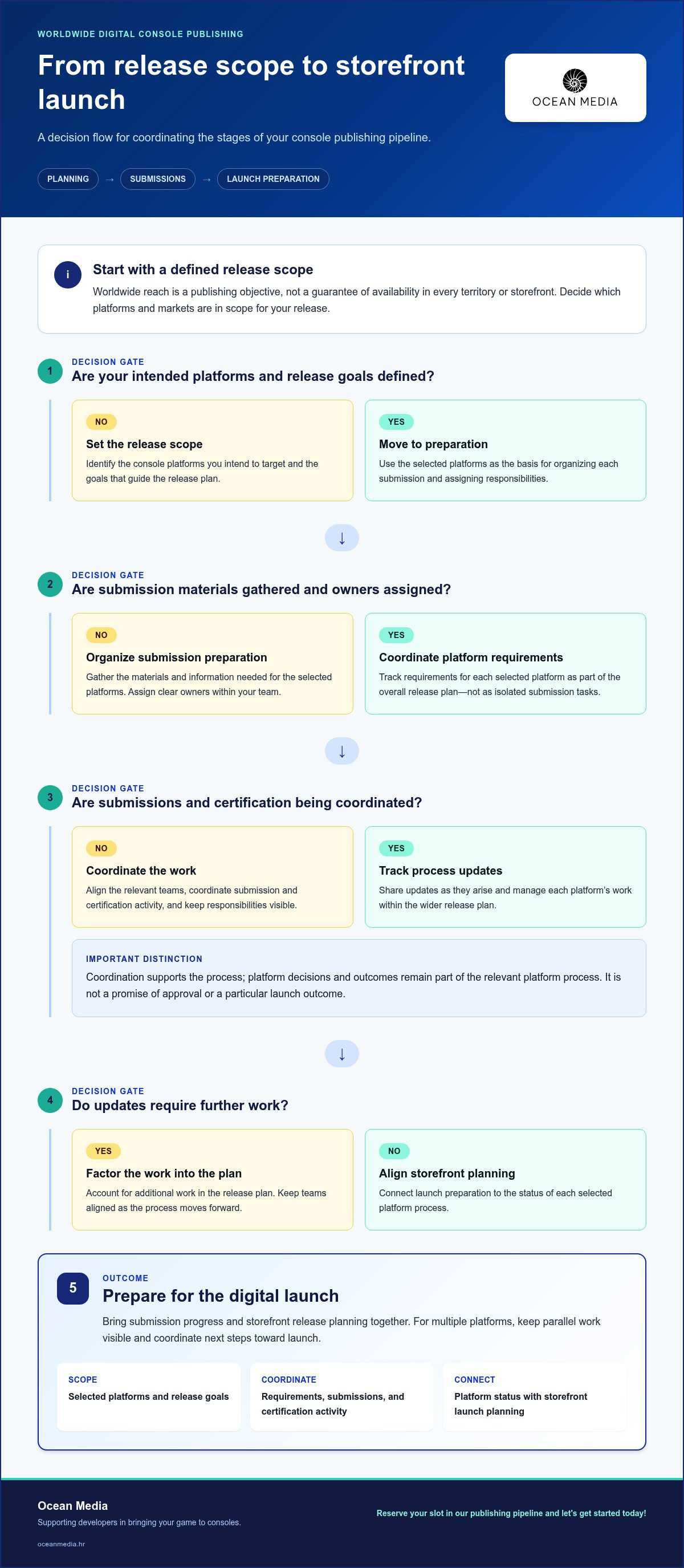
A console release moves through connected stages, from setting the release scope to coordinating platform submissions and preparing the digital launch. A clear publishing pipeline helps your studio understand what happens next, who is responsible, and how platform-specific requirements fit into the wider plan. It’s a coordinated workflow, not a promise of approval or a particular launch outcome.
From release planning to platform submission
Start by aligning your intended console platforms with your project goals and release plan. This defines the scope for preparing each submission, assigning responsibilities, and tracking open decisions. Because platform requirements can differ, plan for the requirements that apply to each selected platform. For a broader view of the stages, see How to Publish a Game on Console: The Complete Developer Roadmap for 2026.
- Set the release scope. Identify your intended platforms and the goals that will guide the release plan.
- Organize submission preparation. Gather the materials and information needed for the selected platforms, and assign clear owners within your team.
- Coordinate platform-specific requirements. Track the work for each platform as part of the overall release, rather than handling submission tasks in isolation.
- Manage submissions and certification. Coordinate submission and certification activity, keep the relevant teams aligned, and respond to process updates as they arise.
- Prepare for digital launch. Connect submission progress with storefront release planning so launch preparation reflects the status of each platform process.
From submission coordination to digital launch
Certification coordination connects submission work to the wider release plan. It involves organizing tasks and communication around platform submissions, while platform decisions and outcomes remain part of the relevant platform process. If updates require further work, factor that into the plan instead of treating launch preparation as a separate task.
As submissions progress, align storefront release planning with the status of each selected platform. Your studio and publishing partner can keep responsibilities visible, share updates, and coordinate the next steps toward launch. This structure is especially useful when a release spans multiple platforms, since work may need to be managed across several parallel tracks.
For digital game publishing worldwide, this sequence creates a practical route from release planning to storefront launch without assuming every platform follows identical steps. Ocean Media supports developers with platform submissions, certification coordination, and publishing lifecycle management. Explore our developer publishing support, reserve your slot in our publishing pipeline and let's get started today!
How to Plan Platform and Market Coverage for a Worldwide Release
A worldwide release plan works best when you make platform and market decisions deliberately. Start with your game, your intended players, and your studio’s practical readiness. Then compare how each potential platform fits those priorities. Storefront and territory availability can differ, so don’t treat global reach as a single switch that guarantees access everywhere.
A worldwide plan needs platform-by-platform decisions because each platform and intended market can bring different release considerations. Use a simple comparison to identify what needs further planning:
| Platform scope | Intended audience | Release considerations |
|---|---|---|
| Platform under consideration | Players you aim to reach through it | Submission pathway, practical readiness, and storefront availability |
| Additional platform under consideration | Audience that aligns with your game and goals | Separate platform requirements and preparation needs |
| Market focus | Players in the markets prioritized for release | Relevant storefront access, localization, and age-rating planning |
Choosing console platforms around your game and audience
Begin with the experience your game offers and the players you want to reach. Decide which platform priorities support your project goals, then assess your team’s readiness to prepare for each platform’s submission pathway. This helps you distinguish a strategic priority from an option that would add work without a clear reason. There’s no universal platform choice. The right scope depends on your game and release plan.
Keep the comparison practical. For each platform, note the reason for considering it, the audience it serves, and the preparation work your team expects to manage. A publishing partner can help organize platform submissions and keep the release plan aligned with those priorities.
Preparing a game for different global audiences
Audience planning involves considerations beyond platform selection. Localization and age ratings are separate workstreams to account for in your release planning; neither is an automatic result of choosing a storefront. For detailed localization planning, consult 2026 Global Console Launch: Indie Game Localization Guide. For rating-system specifics, see Global Console Game Age Rating Guide for Developers 2026.
Bring these decisions together by recording your priority audiences, the platforms you’re preparing for, and any localization or rating work to plan. Review the comparison with your team. Identify where you have a clear rationale and where more planning is needed. This makes your scope easier to communicate throughout the publishing pipeline and supports informed decisions about bringing your game to consoles.
Our console publishing support for developers can help coordinate the digital release process around your platform priorities. When you’re ready, reserve your slot in our publishing pipeline and let's get started today!
What Developers Should Prepare Before Entering a Digital Publishing Pipeline
You don’t need every release detail settled before starting a publishing conversation. A clear snapshot of your game, its current development status, and your ambitions gives you and a publishing partner a useful foundation. For digital game publishing worldwide, early clarity helps turn broad goals into practical discussion about platforms, responsibilities, and next steps.
Project information that makes early planning productive
Prepare a concise overview rather than a full launch dossier. Explain what the game is, where development stands, and what you hope to achieve with a console release. Include your priority platforms and the audiences you want to reach. If some decisions are still open, list them as open questions so the discussion can focus on the choices that matter now.
- Game status: Summarize the current state of the project and the work still underway.
- Platform priorities: Name the consoles you’re considering and the reasons behind those priorities.
- Release goals: Describe the audience and outcomes your studio is aiming for.
- Decision-making contacts: Identify who can discuss development, publishing, and business decisions for your studio.
Bring questions, too. Ask how publishing roles are divided, how communication is handled, and who needs to be involved when decisions arise. These points keep conversations focused and make it easier to identify the next information or action needed.
Setting expectations for a collaborative release
Working with a publishing partner doesn’t have to mean giving up your studio’s voice or control of the project. It means aligning on responsibilities and how decisions will be discussed. Be clear about what your team wants to lead, where it would value support, and how you expect important choices to be communicated. Clear expectations help both sides work toward shared release goals.
Keep the discussion specific to your project. Clarify which responsibilities belong to your studio and which the publishing partner will coordinate, including platform submissions and the broader publishing process. Discuss roles, schedules, revenue arrangements, and other terms directly when establishing a working relationship. A shared understanding creates a stronger basis for planning while keeping your team involved in decisions.
If your plans include European markets, Console Game Publishing in Europe: The Developer’s Guide to 2026 offers additional regional publishing context. To turn your project overview and priorities into a publishing discussion, reserve your slot in our publishing pipeline and let's get started today!
How Ocean Media Supports Bringing Your Game to Consoles Worldwide
Once you’ve defined your release goals and platform priorities, the next step is turning that plan into coordinated publishing work. Ocean Media is a digital console publishing partner with more than 20 years of gaming-industry experience. We help developers navigate the publishing lifecycle, connecting platform submissions and certification support with the goal of reaching console audiences around the world.
A publishing partner for digital console distribution
Digital releases involve more than preparing a game for a storefront. Your team needs to coordinate platform-specific requirements, submission activity, certification, and release planning. Ocean Media supports developers across these publishing responsibilities, helping organize the technical and administrative work between development and digital release.
Our focus is digital distribution across major console platforms. We publish your game and coordinate the release process, with platform submissions and certification considered as part of the wider publishing lifecycle. The platform scope and release plan are shaped around your project.
Good coordination keeps responsibilities and next steps visible. Your studio brings its knowledge of the game and its goals; our publishing experience supports the work of moving the release forward. This collaborative approach can make complex operational stages easier to manage while keeping the plan connected to the audiences you want to reach.
Take the next step with your game
Digital game publishing worldwide calls for a clear view of both the creative project and the release work required to bring it to console storefronts. Ocean Media works with your studio through the publishing process, including platform-specific requirements, submissions, certification support, and lifecycle coordination. We provide a structured path and keep communication focused on your project and priorities.
Start by sharing your game and the console publishing goals you’re working toward. From there, we can discuss the publishing process and the support involved in bringing your game to consoles. You don’t need every decision finalized to take that first step. A clear starting point gives us something practical to work through together.
Ready to move forward? reserve your slot in our publishing pipeline and let's get started today!
Turn Your Release Ambitions into a Clear Next Step
Your game’s route to players begins with a decision: move from broad ambition to a focused publishing conversation. Use what you’ve established about your project to align your team on what success means, which priorities matter most, and where a partner can help carry the work forward. That shared direction gives digital game publishing worldwide a practical starting point and keeps your studio’s goals at the center.
You don’t need to solve every release question alone. A collaborative publishing relationship can turn your priorities into an organized path, with clear communication as the project moves ahead. Bring your questions, your perspective, and the ambition behind your game. Let’s shape the next step together.
reserve your slot in our publishing pipeline and let's get started today!
Your game has a future beyond development. Take the next step with confidence, and let’s work toward bringing it to console players.
Frequently Asked Questions
Can an indie game reach players worldwide through digital console publishing?
Yes, an indie game can be planned for digital console releases in multiple markets. The scope depends on the platforms and storefront availability included in the release plan, so worldwide reach doesn’t mean automatic access everywhere. For digital game publishing worldwide, start by defining your priority audiences and discussing a practical platform scope with a publishing partner.
Do I need a separate publisher for every country where my game launches?
Not necessarily. A publishing partner can support releases intended for multiple markets, but you don’t select a publisher simply by counting countries. Consider how the publishing arrangement covers your planned markets and which storefronts your release targets. Discuss the intended scope early, and make sure your team understands how responsibilities for the selected markets will be coordinated.
How long does worldwide digital game publishing take?
There isn’t one fixed duration for every release. The time involved can depend on your game’s readiness, the platforms in scope, submission progress, and any steps needed to address platform feedback. Plan around the work and decisions still ahead rather than relying on an assumed launch window. Your publishing partner can help keep those dependencies visible as the process develops.
Does worldwide digital game publishing include physical game copies?
No. Digital publishing concerns distribution through online console storefronts, not the production or retail stocking of boxed copies. Ocean Media’s publishing work is centered on digital console releases. If your studio is planning a digital release, make that scope clear in project discussions so your team and publishing partner are aligned on the type of distribution being planned.
Can a game launch on more than one console platform?
Yes, a game can be planned for release on multiple console platforms. Each platform has its own submission pathway, so consider the work and readiness involved for each one rather than treating a multi-platform release as a single submission. Record platform priorities separately and coordinate progress for each as part of the wider release plan.
What happens if a console platform does not approve a game submission?
If a submission isn’t approved, review the platform’s feedback with your publishing partner and identify what action is needed before deciding on next steps. The response depends on the feedback and the platform process, so don’t assume a particular outcome or timing. Keep the release plan flexible enough to account for follow-up work and communication related to that submission.
Is worldwide publishing the same as localizing a game?
No. Worldwide publishing concerns planning and coordinating a digital release across selected platforms and markets. Localization adapts game content for players in different languages or cultural contexts. For example, a studio may plan localized in-game text while separately organizing platform submissions and storefront release activity. Treat localization as one consideration within the broader release plan, not as a substitute for publishing coordination.


