

What if the biggest challenge in bringing your game to consoles isn’t the port itself, but coordinating the steps between a finished build and a digital release? Console publishing for indie developers can feel unfamiliar when platform submissions, certification, and release administration compete with the work of making games. A clear publishing pipeline helps you organize those steps, assign responsibilities, and see what needs attention next.
You don’t have to plan every stage alone. Ocean Media brings over 20 years of gaming-industry experience and helps indie teams navigate platform submissions and certification as they prepare for digital releases across console platforms. In this guide, you’ll learn what the publishing pipeline involves, what to prepare, and how to decide which tasks your team can manage in-house and where publishing support can help. As you plan your next move, reserve your slot in our publishing pipeline and let's get started today!
Key Takeaways
- Understand how console publishing coordinates a digital release, distinct from game development and physical retail distribution.
- Map the publishing pipeline from release goals and materials to platform submissions and launch planning.
- Use current official platform guidance to verify submission and certification requirements as you plan.
- Assess which publishing tasks your team can manage in-house and where partner support could help.
- Prepare for a focused publishing conversation by outlining your game’s status, target platforms, goals, and known support needs.
What console publishing means for indie developers
Finishing a game is a major creative milestone. Bringing it to consoles also involves coordinating the work that prepares it for digital release on selected platforms. Console publishing for indie developers connects that release work, including platform submissions and certification support, with your studio’s goals for reaching players.
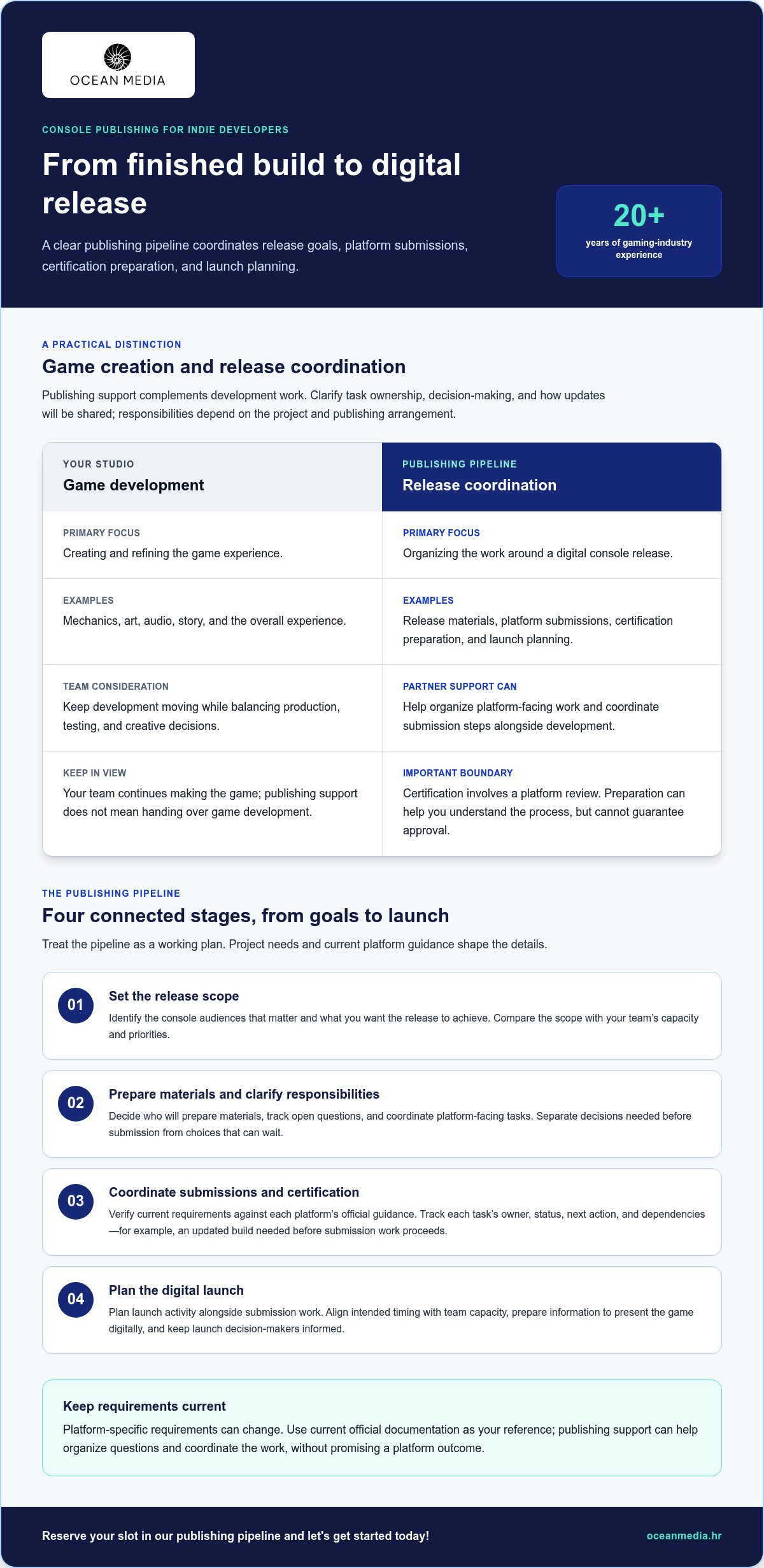
The publishing pipeline is the coordinated path from setting release goals to preparing, submitting, and launching a game digitally on console platforms. A publisher can help organize that path while your development team focuses on creating and refining the game. Before work begins, clarify who owns each task, who makes decisions, and how updates will be shared. The exact responsibilities depend on the project and publishing arrangement.
What does a console publisher do for an indie studio?
A console publisher coordinates activities around a digital release and supports the studio with platform-specific submissions. This can include organizing release materials, managing submission steps, and guiding the team through certification. Certification involves a platform review. Preparation and support can help your team understand the process, but they cannot guarantee an approval outcome.
The term video game publisher covers a range of roles. For an indie studio pursuing a console release, the practical question is how publishing coordination can complement your development work. Ocean Media’s digital console publishing supports developers as they work through submissions and certification. Explore how developer publishing support can fit into your plans for bringing your game to consoles.
How console publishing differs from making the game
Your studio creates the game: its mechanics, art, audio, story, and overall experience. Publishing coordination covers a separate set of release activities, such as aligning platform submissions, preparing for certification, and planning a digital release. These tasks may be unfamiliar for a small team, especially when the same people are balancing production, testing, and creative decisions.
Publishing support doesn’t mean handing over game development. It helps address the administrative and platform-facing work around release while your team continues to make the game. Ownership, decision-making, and other contractual details depend on the agreement between the parties, so include those terms in your planning.
Console submissions and certification can involve processes that differ from your studio’s usual development workflow. Platform-specific requirements can change, so use current official documentation as your reference. A publishing partner can help organize questions and coordinate submission work, making the process easier to manage without promising a particular platform outcome.
If you’re ready to explore console publishing, bring your release goals and current game status into the conversation. Our team can help you identify a practical starting point for the publishing pipeline. To take the next step, reserve your slot in our publishing pipeline and let's get started today!
Inside the console publishing pipeline: from release goals to launch
A clear publishing pipeline turns the broad goal of bringing your game to consoles into coordinated decisions and tasks. For console publishing for indie developers, start by defining the release scope, then prepare materials, coordinate submissions, and plan the launch. Treat the pipeline as a working plan rather than a fixed checklist. Project needs and platform guidance shape the details.
Set the release scope before platform work begins
Identify which console audiences matter to your studio and what you want the release to achieve. You might prioritize reaching a particular player community, aligning a console launch with another release, or keeping the first release focused. These goals help define the digital release scope and give your team a basis for prioritizing work.
Next, compare that scope with your team’s capacity and priorities. Decide who can prepare materials, track open questions, and coordinate platform-facing tasks while development continues. List the decisions that need to be made before submission and separate them from choices that can wait. A focused scope can be easier to manage than pursuing every possible release path at once. For broader process detail, use the complete console publishing roadmap alongside your project plan.
Coordinate submissions and certification
Submission materials and platform checks are platform-specific. Don’t rely on assumptions or an old checklist: verify current requirements against each platform’s official guidance. Publishing expertise can help you organize the work, identify questions that need answers, and coordinate submission and certification activity. Support can make the process more manageable, but no partner can promise a platform’s approval.
Keep the team aligned with a simple task tracker. For each item, record the owner, current status, next action, and any dependency. For example, if a submission task depends on an updated build, note who is responsible for the build and what needs to be completed before submission work can proceed. Clear ownership reduces uncertainty and keeps release tasks visible alongside day-to-day development.
Plan launch activity alongside submission work, rather than leaving it until the final stage. Align the intended release timing with your team’s capacity, prepare the information needed to present the game digitally, and keep the people responsible for launch decisions informed as the plan develops. IndieGameBusiness offers resources for indie game developers exploring the business side of publishing, which can help you frame wider planning questions.
Good communication connects each stage. Agree on who makes decisions, where updates live, and how your team will handle changes to scope or timing. Ocean Media’s console publishing support for developers can help you structure platform submission work around your release goals. To take the next step, reserve your slot in our publishing pipeline and let's get started today!
Publisher support or in-house work: find the right fit for your studio
Deciding whether to manage publishing tasks in-house or work with a specialist starts with your team, not a one-size-fits-all formula. Console publishing for indie developers can involve coordination that draws on time and experience your studio may need elsewhere. Identify where your team has capacity, where guidance would be useful, and how responsibilities should be divided.
Specialist publishing support can reduce operational friction when platform-facing tasks compete with the time your team needs to make and refine the game. That support doesn’t have to change who leads the creative work. Release coordination and creative direction are distinct responsibilities. Discuss how each will be handled so your team knows where decisions sit and who owns the next action.
Which publishing tasks can your team manage?
Review each task against your team’s available time and relevant experience. A studio that has coordinated platform submissions before may be comfortable owning more of that work. A team doing it for the first time may value specialist guidance. Neither arrangement is automatically right for every indie studio.
| Publishing task | In-house capacity to assess | Potential partner support |
|---|---|---|
| Submission preparation | Can your team gather and organize the requested materials? | Help structure preparation and clarify submission steps. |
| Platform communication | Is someone available to track messages and follow-ups? | Coordinate platform-facing communication with your team. |
| Certification coordination | Does your team have experience managing this workflow? | Provide guidance as you navigate platform-specific processes. |
| Release coordination | Can you assign an owner to track decisions and tasks? | Help align publishing activity with your release plans. |
Use the table as a conversation starter, not a scorecard. Mark tasks your team can own confidently, then flag those without a clear owner or where your team lacks experience. Your plan can combine both approaches: retain work that fits your studio and get support where it would make the path clearer. Revisit the division of work if your release scope or team capacity changes.
How to evaluate a publishing partner’s role
Look for relevant console publishing experience and a clear account of responsibilities. For your project, understand how submission and certification support would fit your needs, what your team remains responsible for, and how updates and decisions will be coordinated. If your release has a meaningful European focus, the Europe-focused console publishing guide can add regional context.
At Ocean Media, we support digital console publishing, including platform submissions and certification. Clear roles help keep your creative priorities distinct from release administration while giving everyone a shared view of the work ahead. Bring your team’s needs into the discussion, and reserve your slot in our publishing pipeline and let's get started today!
Prepare your indie game for a productive publishing conversation
A focused first conversation helps turn your console ambitions into a practical discussion about fit, responsibilities, and next steps. You don’t need to have every decision finalized. Bring a clear picture of your game, your goals, and the areas where your team wants support. That gives us a useful starting point for shaping a publishing approach around your project.
What to clarify about your game and release goals
Summarize the game’s current development stage in straightforward terms. Explain what’s playable or complete, what remains in progress, and who you expect to play it. If you’re still exploring your audience or release direction, say so. Being open about what’s decided and what’s still under consideration makes the conversation more productive.
Use this short checklist to prepare and save notes before you speak with a publishing partner:
- Game status: Describe the current stage and the main work still underway.
- Audience: Identify the players you hope to reach and what makes the game distinctive for them.
- Platforms: List the consoles you’re considering, if you’ve already identified them.
- Release priorities: Note what matters most to your studio, such as release scope, audience reach, or coordinating with another project milestone.
- Team capacity: Name the publishing tasks your team can own and where you’d value specialist guidance.
- Communication: Share how your team prefers to receive updates and make decisions.
What to discuss about pipeline responsibilities
Use your notes to establish who would coordinate platform submissions and certification support, and how those tasks connect with your team’s work. Discuss how responsibilities will be divided, who should receive updates, and where decisions and open questions will be recorded. A shared understanding helps each team member see what they own and what needs attention.
Clarify the intended digital release scope, too. Which platforms are you considering, and which decisions are still open? The aim is to align the conversation with your goals, not to settle every detail at the outset. Agree on how platform-specific questions will be tracked and how updates will be shared as the project progresses. Timelines and outcomes depend on project details, so focus first on responsibilities, dependencies, and the information needed to plan.
For console publishing for indie developers, preparation is less about presenting a perfect plan and more about making your needs visible. Your game status, goals, and support questions can help identify a sensible starting point. Bring what you know, flag what you don’t, and let’s build clarity together. If you’re ready to discuss bringing your game to consoles, reserve your slot in our publishing pipeline and let's get started today!
Bring your game to consoles with Ocean Media's publishing experience
Bringing your game to consoles takes more than a clear release ambition. It also takes a publishing plan that accounts for digital distribution, platform submissions, and certification. Ocean Media focuses on digital console publishing, helping indie developers connect their game with console audiences while coordinating important release work.
A publishing partner for platform complexity
Ocean Media bridges developers and console digital distribution. Our experience in gaming and publishing helps your team approach platform-facing administration with a clearer view of the tasks, responsibilities, and questions involved. We support developers as they navigate submissions and certification, using the project’s goals and the team’s needs to shape the publishing conversation.
This is publishing support, not work-for-hire game development. Your team brings its creative vision and builds the game; our role is to support the digital publishing process around it. Our focus is also digital release, not physical retail distribution. Keeping that scope clear helps you identify the expertise you need and the work your team wants to manage directly.
Platform requirements and project circumstances can differ, so there’s no universal checklist or promised outcome. A productive collaboration starts with an honest view of your game’s status, target platforms, release goals, and known support needs. From there, we can discuss how submission and certification coordination fits into your publishing pipeline and how to organize responsibilities around your studio.
Take the next step toward a console release
You don’t need a finished plan before starting the conversation. Share what your game is, where it stands, which consoles you’re considering, and what you want from a digital release. If some decisions are still open, that’s useful context too. It helps us focus the discussion on your priorities rather than assumptions and identify a practical path for bringing your game to consoles.
Explore Ocean Media's developer publishing page as you prepare to discuss your project. We can work with you to understand where platform submission and certification support fit, clarify the release scope, and establish a shared view of responsibilities. The goal is a structured starting point that helps your team move forward while keeping the game’s creative direction at the center.
Ready to take the next step? Bring your goals and questions, and let’s start building a publishing approach around your project. reserve your slot in our publishing pipeline and let's get started today!
Turn your console release plans into a clear next step
Your publishing conversation doesn’t need to begin with every answer in place. Start with what you want your game’s console release to achieve, what your team is ready to handle, and where you’d value support. Those priorities can shape a practical discussion and help you move from broad ambition to a plan built around your studio and its creative goals.
That’s the value of approaching console publishing for indie developers as a collaborative process. You bring your game, perspective, and priorities. We can work with you to clarify the publishing scope and identify a useful starting point for the next stage. As the project develops, keep decisions visible and revisit your plan when new information changes the path forward.
Take the next step with Ocean Media. reserve your slot in our publishing pipeline and let's get started today! Your console release journey can begin with a focused conversation, and we’re ready to move forward with you.
Frequently Asked Questions
Can an indie game reach console platforms after launching on PC?
Yes, a PC launch can be followed by a console release as a separate stage in your release plan. For console publishing for indie developers, treat the console version as its own platform-facing project: consider whether the audience and release goals still align, and assess what work remains before discussing submissions. A PC release doesn’t automatically make a game ready for console storefronts. Reviewing the game’s status and your team’s capacity can help you decide whether to explore that next step.
Does console publishing include physical retail distribution?
No. Ocean Media focuses on digital console publishing, not physical retail distribution. Digital publishing concerns preparing and coordinating a game’s release through console storefronts and associated platform processes. Physical retail is a separate distribution route involving physical copies and retail placement, so don’t assume it is part of a digital publishing plan. Defining your intended release scope early helps keep discussions focused on the route your studio wants to pursue.
Can a console publisher help with platform submission and certification?
Yes. Ocean Media helps developers navigate platform-specific submission requirements and certification as part of console publishing. For example, your team can discuss how submission coordination fits its responsibilities and how to approach questions that arise during the process. Requirements vary by platform, so use current official guidance for platform details. Publishing support can help you work through the process, but it can’t guarantee a platform’s decision or approval.
Do indie developers need to finish their game before discussing console publishing?
No. You can clarify release goals and publishing needs before the game is finished. A useful discussion can start with the project’s current development stage, the work still underway, and the platforms you’re considering. This gives you a way to identify questions and responsibilities while plans are taking shape. There isn’t one milestone that applies to every project, so describe what’s known and leave unresolved decisions open for discussion.
Can a console publishing partner develop the game for an indie studio?
Publishing support and work-for-hire game development are different roles. Ocean Media focuses on digital console publishing, including support with platform submissions and certification, rather than developing games for studios. As you plan, distinguish who is responsible for creating and updating the game from who coordinates publishing activities. Clear responsibilities help prevent assumptions about what a publishing relationship covers and keep your creative and release work organized.
What should an indie developer prepare before discussing console publishing?
Prepare a concise description of your game, its current stage, the platforms you’re considering, your release goals, and the support your team may need. For example, note whether you have prior experience coordinating platform-facing work or want guidance with it. These details help make the conversation specific to your project without requiring a fixed document list or build specification. You can also flag decisions that are still open so they can be discussed together.


