

Does using Unreal Engine make console publishing straightforward? It gives you powerful tools to build your game, but a working project alone doesn’t complete the journey to a console storefront. Unreal engine game console publishing involves more than development: it includes platform-specific requirements, submissions, certification, and digital release.
That distinction can feel daunting when your team is focused on finishing the game, especially if console publishing is new to you. You don’t have to manage every step alone. This guide explains what Unreal Engine handles, what the publishing process adds, and how to prepare your project for the handoff into a console publishing pipeline. You’ll also learn how publishing support can help organize the route from a working build toward release across major console platforms.
Ocean Media brings over 20 years of gaming-industry experience to console publishing. We help developers navigate platform submissions, certification, and the wider digital publishing lifecycle. When you’re ready to bring your game to consoles, reserve your slot in our publishing pipeline and let's get started today!
Key Takeaways
- Use a planning framework to organize project readiness, platform requirements, submissions, and release coordination. Treat it as a guide, not a universal checklist.
- Compare self-publishing with partner support by identifying who will manage platform coordination and release administration.
- For unreal engine game console publishing, prepare a concise project brief that separates confirmed details from open technical and platform questions.
- Clarify your target platforms and release goals early so publishing discussions can focus on the needs of your game.
- Ocean Media supports developers through platform requirements, submissions, certification, and the wider digital publishing lifecycle.
Unreal Engine game console publishing: what the engine does, and what it doesn’t
Unreal Engine supports the work of building your game. Console publishing is a separate stage: preparing the project for a platform, submitting it for review, addressing platform-specific requirements, and coordinating its digital release through a console storefront. Understanding the distinction helps you plan the handoff from development to release without assuming the engine alone defines the route.
Using Unreal Engine doesn’t, by itself, establish your project’s access to a console platform or determine how its release will be managed. The engine and publishing process are connected, but they serve different purposes. For background on the engine’s history and capabilities, consult Unreal Engine Wikipedia. For platform access and release logistics, plan for the publishing work separately.
What does Unreal Engine contribute to a console project?
Unreal Engine is the environment your team uses to create and develop the game. Your developers shape the content and prepare builds as development progresses. That work brings the game toward a build for its intended platform, but it doesn’t automatically complete the steps involved in releasing it through a platform’s digital storefront.
Think of development and release as connected stages with different goals. Development brings the project toward a build for the intended platform. Publishing focuses on the work around that build, including platform coordination and release administration. This distinction helps you identify which questions belong in your development plan and which need attention in the publishing pipeline.
What sits beyond the game build?
A console release involves more than producing a game build. The route can include platform access, submission preparation, certification, and coordination for digital storefront release. Requirements vary by platform, so don’t treat the process for one console as a universal checklist for every platform.
As you plan, separate what your team already knows from what depends on the target platform. You may have a clear project build and release goal, for example, while platform access or submission details still need to be addressed. This makes publishing discussions more focused and avoids treating the engine as a substitute for platform-specific preparation.
This is the central point of unreal engine game console publishing: the engine supports development, while a publishing pipeline carries the project through platform-facing steps toward digital release. Ocean Media supports developers with platform-specific requirements, submissions, certification, and the wider publishing lifecycle. Our console publishing support for developers connects the project handoff with the work involved in bringing your game to consoles.
For a broader view of the stages involved, see How to Publish a Game on Console: The Complete Developer Roadmap for 2026. It expands on the wider process, while the distinction between development and publishing gives you a practical starting point.
The Unreal Engine publishing pipeline: from project build to console storefront
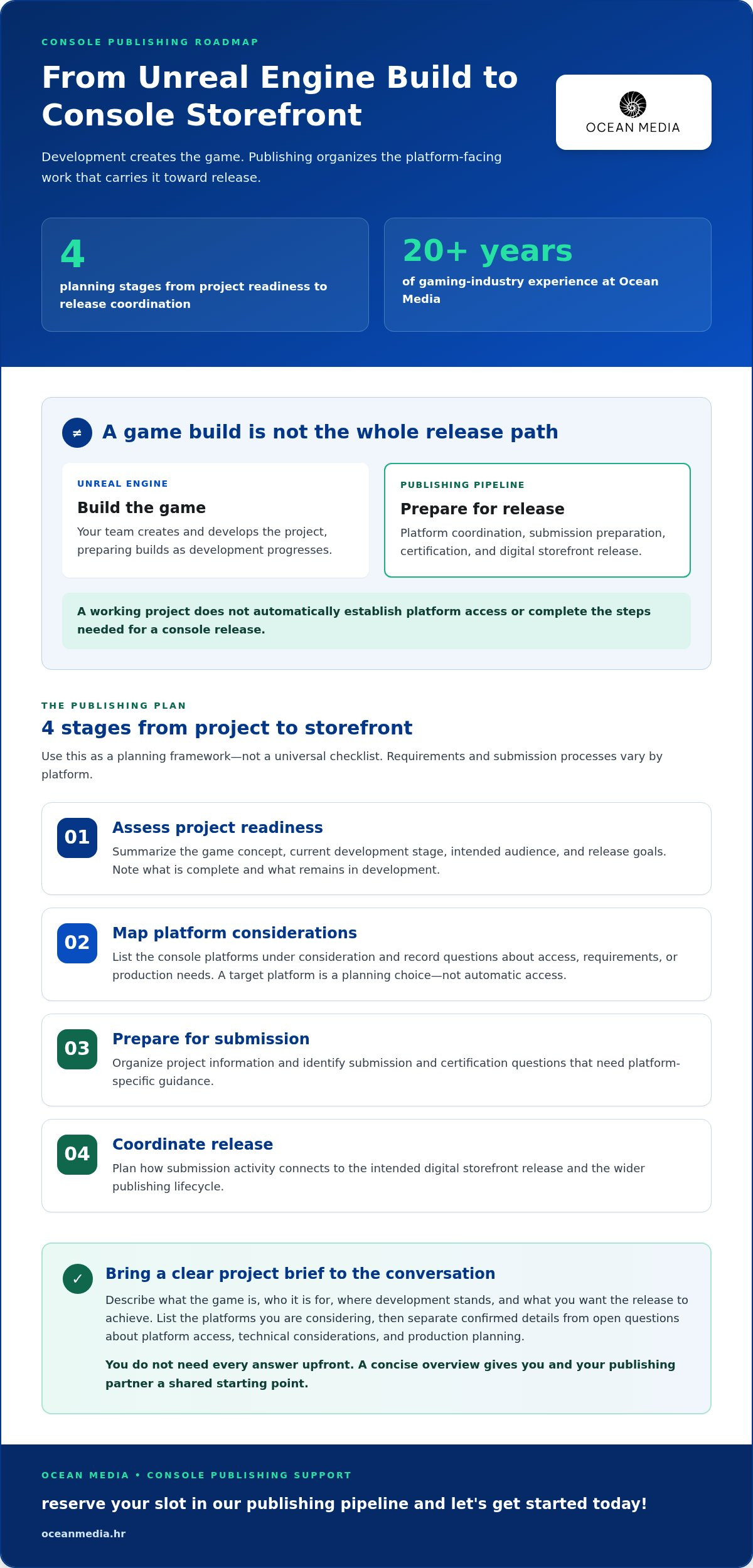
A useful publishing plan turns a finished or in-progress Unreal Engine project into clear next steps. Treat the sequence below as a planning framework, not a universal platform checklist. Requirements and submission processes vary by platform and may change. The goal is to identify what your team knows, what needs platform-specific attention, and how each stage connects to a digital storefront release.
Development readiness is not the same as submission readiness. Your project can be progressing well while platform access, submission preparation, or release coordination still needs attention. Keep those questions visible so you can plan the handoff instead of assuming a build alone settles the release path.
- Assess project readiness. Summarize the game concept, current development stage, intended audience, and release goals. Note what is complete and what remains in development.
- Map platform considerations. List the console platforms you’re considering and record questions about access, requirements, or production needs. A target platform is a planning choice, not automatic access.
- Prepare for submission. Organize project information and identify the submission and certification questions that need platform-specific guidance.
- Coordinate release. Plan how submission activity connects to the intended digital storefront release and the wider publishing lifecycle.
How to prepare an Unreal Engine project for publishing discussions
Make the first conversation practical. Prepare a concise overview of what the game is, who it’s for, where development stands, and what you want the release to achieve. List the console platforms under consideration, then separate confirmed details from open questions about platform access, technical considerations, or production planning. This gives you and your publishing partner a shared starting point without requiring every answer upfront.
For unreal engine game console publishing, separating known details from open questions keeps creative progress and release planning in view at the same time. Your project summary describes the game; your questions outline the work needed to understand its path to console release.
Where submission and certification fit
Submission and certification are part of the release process. First identify the relevant platform considerations and prepare for the platform-specific steps. Since requirements and processes can differ, a generic checklist can’t replace guidance tailored to the platforms in your plan. Ocean Media helps developers navigate platform requirements, submissions, and certification as part of the digital publishing lifecycle.
For a closer look at certification, see Console Game Certification: What Devs Need to Know. As you organize the project handoff, our console publishing support for developers connects planning with the publishing pipeline. Reserve your slot in our publishing pipeline and let's get started today!
Self-publishing or a partner for Unreal Engine console publishing?
Choosing how to manage a console release comes down to responsibility, capacity, and experience. With self-publishing, your studio coordinates platform-facing work and release administration. With a publishing partner, some of that work can be supported through a shared publishing pipeline. Either way, plan carefully. The right fit depends on your team’s skills, available time, and release goals.
Compare the responsibilities rather than assuming one route guarantees a particular outcome. Consider who will track platform-specific requirements, organize submissions, address certification, and coordinate the digital release. Then assess whether your studio has the experience and capacity to handle those tasks alongside game development.
When managing the pipeline in-house may fit
In-house publishing may suit a studio with console publishing experience and people able to manage platform workflows as well as development. Assess whether your team can take responsibility for platform coordination, submission preparation, certification steps, and release administration. Assign owners for these tasks and account for the attention they require, so publishing work doesn’t become an unassigned responsibility while the team focuses on the game.
Even with experienced staff, your studio remains responsible for coordinating its chosen route. Decide who owns each task, how platform questions will be handled, and how release planning connects to development work. If ownership is difficult to assign, consider whether publishing support would help.
When a publishing partner can help
A publishing partner can support your studio across platform requirements, submissions, certification, and digital release coordination. This can be useful when you want a structured publishing process but have limited internal time or console publishing experience. Your team can stay focused on developing the game while working with a partner on the publishing responsibilities for the project.
Ocean Media is a digital console game publisher, not a work-for-hire game development studio. We help developers manage platform and administrative complexity through the publishing lifecycle. For a wider look at what publishers do, Console Game Publishers: A Developer’s Guide can help you frame the responsibilities involved.
To choose a route, map your team’s capabilities against the work ahead. Consider:
- Experience: Has your team managed console submissions and certification before?
- Capacity: Who can own platform coordination while development continues?
- Release needs: Which platforms are you considering, and what support would help organize the digital release?
- Responsibility: Which publishing tasks will stay with your studio, and which would benefit from partner support?
This comparison makes unreal engine game console publishing easier to evaluate in practical terms. If you want support bringing your game to consoles, our console publishing support for developers provides a starting point for discussing your project and its publishing needs.
Prepare your Unreal Engine game for a console publishing conversation
A focused project snapshot turns a broad publishing conversation into a practical discussion about your game and its release goals. You don’t need every platform question answered before you start. Separate what your team knows from what still needs discussion, and you’ll give a publishing partner a clearer view of where support could help.
Use this checklist to organize the essentials. It’s a conversation aid, not a universal list of required submission materials.
Build a clear project snapshot
Start with the game, then describe its current status and what you want its release to achieve. A concise, accurate summary is more useful than a long pitch that leaves development status or goals unclear.
- Game overview: Note the genre, core player experience, and intended audience.
- Development status: Describe the current build and what remains in progress in terms your team can explain clearly.
- Release objectives: List your intended console platforms and broader launch goals without assuming platform access is automatic.
- Team capabilities: Identify your studio’s strengths, along with areas where publishing coordination would be useful.
This snapshot gives everyone a shared reference point. It also distinguishes a development update from a publishing request. One explains the game’s progress; the other identifies the release questions your team needs to work through.
Map open questions before release planning
Next, make a separate list of questions that depend on your plans and the relevant platform. Keep them open rather than turning assumptions into requirements. Platform access, submission processes, certification, and launch coordination are useful topics to flag for discussion. Their details should be addressed in the context of the platforms you’re considering.
- What platform access or coordination does your intended route involve?
- Which submission and certification questions need platform-specific guidance?
- What release planning decisions should your studio address before setting launch objectives?
- What audience or regional goals should inform the digital release plan?
For global audience preparation, 2026 Global Console Launch: Indie Game Localization Guide offers a related perspective. Keep audience goals distinct from technical and platform questions so each part of the conversation gets the attention it needs.
Once your snapshot and open questions are ready, you can discuss your console publishing pipeline with our team. Share what’s known, flag what’s undecided, and reserve your slot in our publishing pipeline and let's get started today!
Bring your Unreal Engine game to consoles with a publishing partner
Your Unreal Engine project has a distinct creative identity and a release path shaped by the console platforms you’re considering. Ocean Media works with developers as a digital console publishing partner, supporting the process of bringing your game to consoles. We focus on global digital releases, with support across platform requirements, submissions, certification, and the wider publishing lifecycle.
This is publishing support, not outsourced game development. Your team remains the creative force behind the game, while we help navigate the technical and administrative work connected to its digital console release. The process starts with understanding your project and goals, identifying the platform-facing work, and coordinating publishing around your release plans.
What working together can support
Console submissions involve platform-specific processes and coordination. We help developers work through platform requirements, prepare for submissions, and address certification as part of the larger publishing lifecycle. This support connects the project handoff to the steps involved in a global digital release, so publishing considerations can be discussed alongside your studio’s goals rather than treated as an afterthought.
Our focus is digital console publishing. We don’t provide physical retail distribution or develop games on your behalf. With that distinction clear, you can focus the conversation on your project, target platforms, release objectives, and where publishing coordination would be most useful.
Take the next step toward console release
You don’t need every platform question resolved before starting a publishing conversation. Share what your game is, where development stands, which consoles you’re considering, and what you hope to achieve with the release. We’ll discuss the publishing path and the support your project needs, including submissions, certification, and release coordination.
For teams exploring unreal engine game console publishing, a clear project overview gives us a practical foundation for working together. Bring your known details and open questions, and we’ll focus on your goals and the next publishing steps.
When you’re ready to move forward, reserve your slot in our publishing pipeline and let's get started today!
Shape the next step for your console release
Your next move doesn’t need to solve every publishing question at once. Start by deciding what you want the game’s console release to achieve, then bring that goal into a focused conversation about the path forward. A clear direction turns unreal engine game console publishing from a broad challenge into a set of decisions your team can work through with purpose.
Share your project and release goals with Ocean Media. Together, we can discuss how the publishing pipeline can support your plans and help you move toward bringing your game to consoles. The conversation is a practical starting point, whether you’re shaping your platform strategy or preparing to hand off a project for publishing support.
Explore your console publishing path, reserve your slot in our publishing pipeline and let's get started today! Your game’s next stage starts with a conversation. We’re ready to take that step with you.
Frequently Asked Questions
Can you publish an Unreal Engine game on consoles?
Yes, an Unreal Engine game can be part of a console release, but the engine alone doesn’t establish your route to market. For unreal engine game console publishing, start by identifying the platforms you’re considering and separating confirmed project details from questions about platform access and process. If your team is weighing more than one console, track each platform’s publishing questions separately rather than assuming the same path applies to all.
Does Unreal Engine automatically make a game ready for console release?
No. Using Unreal Engine supports game development, but it doesn’t automatically make a project ready for platform review or release. Treat development progress and publishing preparation as related workstreams. Your team can continue advancing the game while identifying platform questions that need attention. This makes release planning part of the project conversation rather than a task to consider only after development is complete.
Do you need a publisher to release an Unreal Engine game on consoles?
No, not every studio needs the same publishing model. If you self-publish, your team takes ownership of platform coordination and release administration. A publisher can support those responsibilities, including submissions, certification, and digital release coordination. To decide what fits, consider who can own each task and whether that work can be managed alongside development without losing focus on your release goals.
What does a console game publisher do for an Unreal Engine project?
A console game publisher supports the release work around your project rather than building the game itself. Ocean Media focuses on digital console publishing, helping developers navigate platform requirements, submissions, certification, and the broader publishing lifecycle for global digital releases. Start by identifying which release responsibilities you want support with and how they connect to your project’s goals.
Is console certification part of Unreal Engine development?
No. Certification belongs to the console release process, not simply to developing a game in Unreal Engine. Since platform processes are specific to the console and may change, don’t treat old forum discussions as a current checklist. Keep certification questions tied to the platform you’re considering and your project’s stage. A publishing partner can help you work through those questions as part of release planning.
What should you prepare before discussing console publishing for your Unreal Engine game?
Prepare a brief project snapshot and a separate list of open questions. Include the game’s genre, core experience, development status, intended audience, release goals, and platforms under consideration. Mark which details are confirmed and which are assumptions, such as questions about access or platform-specific processes. Naming a team contact for the discussion can also help keep follow-up decisions organized as your publishing plans develop.


