

What if the publishing support that helps bring your game to consoles also limits rights or release decisions you hoped to retain? It’s a fair concern. A publishing deal for indie studio teams can open a path to console platforms, but its value depends on how clearly the agreement defines rights, revenue, responsibilities, and control.
Before signing, understand which rights the publisher receives, how long they last, which costs can be recouped, and who makes key creative and release decisions. This guide explains the terms in plain language and shows how they connect to the publishing pipeline, so you can assess whether the agreement supports your console goals. Ocean Media brings over 20 years of gaming-industry experience, including support for platform submissions, certification, and global digital releases. Ready to explore bringing your game to consoles? Reserve your slot in our publishing pipeline and let's get started today!
Key Takeaways
- A publishing deal for indie studio teams should define the rights granted, how long they last, and what happens when the agreement ends.
- Review revenue definitions, recoupable costs, and platform-specific expenses to understand how the deal’s economics may affect your studio.
- Assign each console-release responsibility to an accountable party, with a clear deliverable, approval point, and communication route.
- Assess the agreement against your console goals, the support you need, and the release decisions you want to retain.
- For a structured path to bringing your game to consoles, reserve your slot in our publishing pipeline and let's get started today!
What a Publishing Deal for an Indie Studio Actually Covers
A publishing deal for indie studio teams is a written agreement defining the rights each party receives, the responsibilities each party takes on, and the commercial terms for publishing the game. It differs from a development-services contract: the publisher supports agreed publishing activities, while the studio remains responsible for creating and developing its game.
For digital console publishing, the agreement can specify who coordinates platform preparation, submission materials, certification, and digital release management. The contract should describe the work and handoffs clearly, rather than relying on assumptions about what a publisher does. A Video game publisher may perform different functions depending on the partnership, so look for specific deliverables and approval steps.
Which parts of bringing your game to consoles can a deal cover?
The publishing lifecycle can start with preparing a game for platform submission and continue through certification coordination and digital storefront delivery. Your studio creates the game and makes creative decisions as set out in the agreement. The publisher manages the publishing tasks both parties have agreed to. Platform procedures can vary, so identify the applicable requirements in the contract and project plan instead of treating one platform’s process as universal.
Make responsibilities practical by connecting each task to an owner and a handoff. For example, specify who prepares submission materials, who coordinates responses during certification, and who manages release information for digital storefronts. Ocean Media supports platform-specific requirements, certification, and global digital releases as part of its console publishing work. Explore our console publishing support for developers to see how this collaboration can fit your release plans.
What makes a console publishing deal different from a broad publishing agreement?
A broad publishing agreement may cover different channels or services. A console-focused deal centers on platform access, submission coordination, certification, and digital storefront delivery. These tasks involve technical and administrative handoffs alongside your studio’s development work. Define who leads each step and how decisions or required changes are communicated.
The scope comes from your project and the written contract, not from a standard package implied by the word “publisher.” For a fuller view of the release journey, read our console publishing developer roadmap. When you’re ready to discuss bringing your game to consoles, reserve your slot in our publishing pipeline and let's get started today!
Publishing Deal Terms That Shape Rights, Revenue, and Control
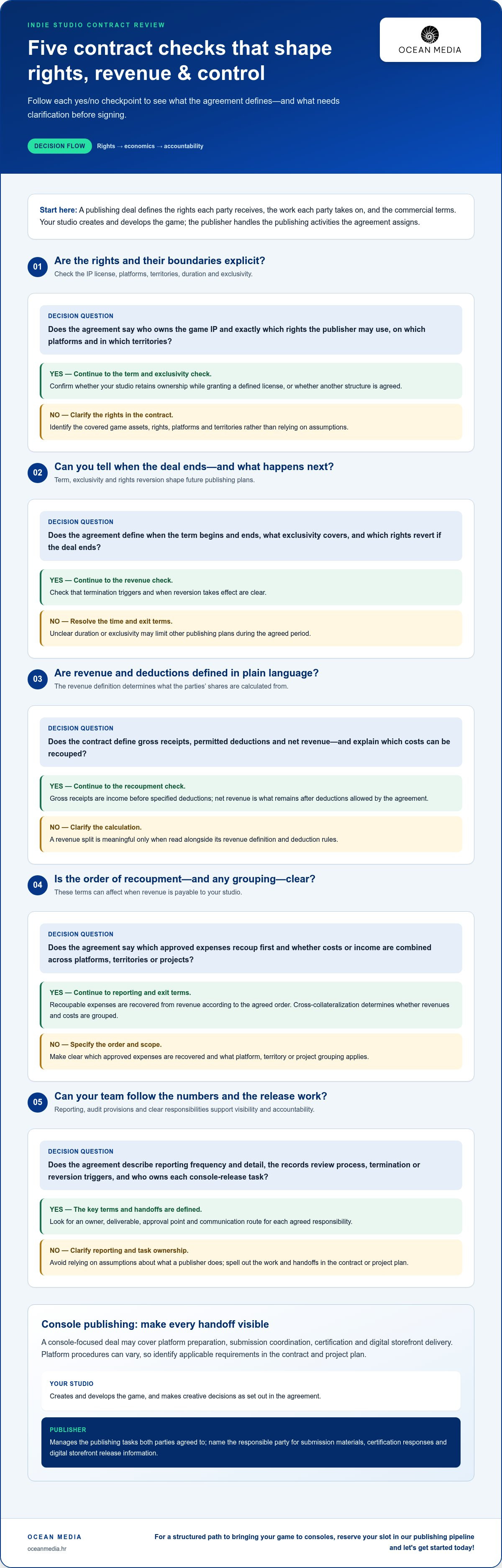
Read each commercial term as part of a connected system. The rights granted determine what the publisher can do, while the revenue language explains what income is shared and which costs are deducted first. A publishing deal for indie studio teams is easier to assess when the agreement answers these questions in clear, consistent language.
| Term | Plain-language meaning | Studio impact | Questions to resolve |
|---|---|---|---|
| IP and license | Who owns the game’s intellectual property, and what rights the publisher may use. | Can shape future releases and other uses of the game. | Which rights, platforms, and territories are included? |
| Term and exclusivity | How long the agreement lasts and whether the rights are exclusive. | May limit other publishing plans during the agreed period. | When does the term begin and end? What does exclusivity cover? |
| Revenue and deductions | How receipts are defined and which permitted costs are deducted. | Determines the amount used to calculate the parties’ shares. | How are gross receipts, deductions, and net revenue defined? |
| Recoupment and grouping | How approved expenses are recovered and which revenues or costs are grouped. | Can affect when revenue is payable to the studio. | What recoups first? Are costs or income across platforms or projects combined? |
| Reporting, audit, and exit | How statements are provided, records can be reviewed, and rights may end or revert. | Supports visibility into performance and clarity about what happens at termination. | How often are reports issued? What review process and reversion triggers apply? |
How do IP rights, exclusivity, and territory affect your studio?
Ownership and licensing are different structures, and neither is automatically right for every project. Your studio may retain IP ownership while granting a defined license, or agree to another structure. Focus on which game assets and rights are covered, for which platforms and territories, and for how long. Define exclusivity, termination triggers, and what rights revert if the agreement ends, including when that reversion takes effect.
How do revenue definitions and recoupment change the economics?
Gross receipts are income received before specified deductions. Net revenue is what remains after deductions allowed by the agreement. Recoupable expenses are costs recovered from revenue according to the agreed order. Cross-collateralization determines whether revenues and costs are grouped across platforms, territories, or projects. The contract should also describe reporting detail and audit provisions so your team can follow the calculations.
A revenue split is meaningful only when read alongside its revenue definition and recoupment rules. For another perspective on the relationship between revenue, IP, and termination, read Game Developer’s guide to assessing a publishing deal.
As you map these terms to your console plans, explore Ocean Media’s developer publishing support. To take the next step in bringing your game to consoles, reserve your slot in our publishing pipeline and let's get started today!
How a Console Publishing Deal Divides Responsibilities and Release Decisions
A console release runs more smoothly when the agreement turns broad expectations into assigned work. For every publishing task, identify the accountable party, deliverable, approval point, and communication route. A publishing deal for indie studio teams should distinguish the publisher’s submission and release coordination from the studio’s responsibility for developing the game.
For example, your studio may prepare a build and supporting materials while the publishing partner coordinates the submission process and communicates platform feedback. The contract or working plan should state who responds to requested changes, who implements them, and how updates are shared. Clear ownership reduces the chance of misunderstandings during release.
Who handles platform submissions, certification, and release coordination?
A publishing partner can help navigate the technical and administrative work involved in platform submissions and certification. This can include organizing submission materials, coordinating the submission, tracking feedback, and aligning next steps with your team. It is process support, not a promise of certification or a substitute for the studio’s development work.
Make each handoff explicit. State who prepares each item, who submits it, who receives platform feedback, and who owns any required game updates. Set a communication route, such as a designated project contact or shared tracking process, so feedback reaches the people who can act on it. Ocean Media’s experience with console submissions and certification supports a collaborative publishing pipeline for bringing your game to consoles.
How should creative approvals and milestones be written?
Separate creative decisions from publishing approvals. The agreement should identify which decisions require approval, who has final authority, and how each party raises concerns. This helps protect your studio’s creative direction while defining the publisher’s role in agreed release activities. For broader context on key terms to understand in publishing agreements, a glossary can help translate contract language into practical questions.
Milestones need evidence of completion, review steps, acceptance criteria, and a route for resolving disagreements. Define the feedback window and explain how a change request affects scope, responsibilities, or delivery expectations. For instance, if a milestone requires a submission-ready build, specify which materials accompany it and how requested revisions are handled. Clear criteria help both teams plan without assuming that submission or approval will produce a particular outcome.
Ocean Media brings over 20 years of gaming-industry experience to digital console publishing, including platform-specific requirements and global digital releases. Explore our console publishing support as you define responsibilities for your release. To start bringing your game to consoles, reserve your slot in our publishing pipeline and let's get started today!
How to Assess Whether a Publishing Deal Fits Your Indie Studio
Start with your console-release goals, not a headline revenue share. A publishing deal for indie studio teams should connect the support offered to the work your project needs. Use this sequence to compare the agreement with your plans and capabilities.
- 1. Set your goals. Record your target platforms and territories, release goals, current build status, and your team’s existing capabilities. Identify what success means for this release.
- 2. Define the scope you need. List the support required for platform submissions, certification coordination, and digital release execution. Separate essential outcomes from preferences about process or communication.
- 3. Match rights to the plan. Compare the rights, platforms, territories, exclusivity, and term in the written agreement with your intended release. Consider how termination and rights reversion would affect future plans.
- 4. Review the economics. Trace how revenue is defined, which deductions are permitted, how recoupment works, and what reporting you’ll receive. Focus on the mechanics and their effect on your project, not a percentage in isolation.
- 5. Check the exit provisions. Understand what happens if the project changes direction, a party doesn’t meet an agreed responsibility, or the agreement ends. Make sure the process and consequences are clearly stated.
What should your studio clarify before reviewing the final terms?
Prepare a short project brief before assessing the contract. Note your target platforms and territories, release objectives, build status, and your team’s strengths and gaps. Then list the publishing support you need, such as coordinating submissions, certification processes, or digital release tasks. This helps distinguish essential outcomes from negotiable process preferences and keeps the discussion grounded in your console plans.
How can you check whether the agreement matches the project?
Trace every promised service to a named responsibility, deliverable, and timing or review mechanism. If the agreement promises submission coordination, identify who prepares materials, who manages communication, and how platform feedback reaches your team. Compare those commitments with the reporting and decision rights stated elsewhere in the contract. Resolve gaps between expectations and written terms before signing.
Check how proposed changes, delays, approvals, and termination affect both parties. Are review steps and decision-makers clear? Does the agreement explain how changed scope is handled? These questions help you judge whether the publishing pipeline supports your actual needs, rather than relying on broad promises.
Ocean Media brings over 20 years of gaming-industry experience to digital console publishing, including platform submissions, certification support, and global digital releases. For a practical next step toward bringing your game to consoles, reserve your slot in our publishing pipeline and let's get started today!
Start Bringing Your Game to Consoles With a Clear Publishing Pipeline
A strong publishing partnership connects the agreement to the work required to release your game. Rights should support the release you’re planning, revenue terms should explain how income and agreed costs are handled, and responsibilities should give both teams clear ownership. When release decisions are understood, you can move forward with a shared view of what the partnership is meant to accomplish.
That alignment matters for any publishing deal for indie studio teams considering console platforms. A clear publishing pipeline turns project needs into coordinated publishing work, from platform-specific requirements and certification support to global digital release activity. It also gives you a practical basis for deciding where your studio leads and where a publishing partner contributes.
What happens when a studio begins a publishing conversation?
Start with the essentials: describe your game, console ambitions, and the project’s current stage. You don’t need to translate your goals into contract language first. Sharing what your team is building and what you need to bring it to consoles creates a useful foundation for discussing publishing scope, responsibilities, and release needs.
From there, focus on how the publishing pipeline can fit your project. Bring your questions about rights, reporting, approvals, and release coordination. A collaborative discussion connects those priorities with the technical and administrative work involved in digital console publishing.
Why does an experienced console publishing partner matter?
Console releases involve platform-specific steps that need careful coordination alongside your studio’s development work. Ocean Media has over 20 years of experience in the gaming industry and supports console publishing across platform submissions, certification, and global digital releases. Our experience helps your team approach the publishing process with an informed partner, while your studio stays focused on creating the game.
The goal is a partnership with a scope that fits your project, not a one-size-fits-all arrangement. Your clarified needs give both sides a practical starting point: define release objectives, align responsibilities, and build a publishing pipeline around the work ahead. Explore developer publishing support to take the next step toward bringing your game to consoles.
reserve your slot in our publishing pipeline and let's get started today!
Move Your Console Release Forward With a Clear Plan
The right publishing deal for indie studio teams should align the rights granted, revenue mechanics, and responsibilities with the release your team wants to achieve. Before moving forward, make sure the agreement spells out who manages key publishing tasks, how decisions are made, and what happens if plans change. Clear terms give both sides a stronger foundation for working together.
Ocean Media brings more than 20 years of gaming-industry experience to digital console publishing, with expertise in platform submissions, certification, and global digital releases. If you’ve clarified your goals and the support your project needs, we’re ready to explore a practical path for bringing your game to consoles.
Reserve your slot in our publishing pipeline and let's get started today! Your next release can begin with a clear conversation and a collaborative plan.
Frequently Asked Questions
What should an indie studio look for in a publishing deal?
Look for terms that connect the publisher’s commitments to your studio’s console-release goals. A publishing deal for indie studio teams should clearly define rights, platforms, territories, term, and any exclusivity. Review how revenue and recoupable expenses are calculated, who owns each publishing task, which decisions require approval, and what reporting you’ll receive. Also understand what happens if the project or agreement ends, including any rights reversion.
Does a game publisher own the game’s intellectual property?
Not automatically. The written agreement determines whether your studio retains ownership while granting the publisher a defined license, or agrees to a different rights structure. Read the scope closely: identify the IP covered, permitted uses, platforms, territories, exclusivity, and duration. Understand what happens to those rights if the agreement ends. The right arrangement depends on your project and goals, so don’t assume every publishing deal handles ownership the same way.
How does recoupment work in an indie game publishing deal?
Recoupment is the process of recovering agreed, eligible expenses from revenue according to the contract’s payment order. The agreement should specify which costs can be recouped, how they’re documented, and whether they’re recovered before revenue is shared with the studio. Check whether income and expenses are grouped across platforms or projects, too. Clear reporting terms help you track the calculations and understand when revenue may be payable.
Can an indie studio keep creative control after signing a publishing agreement?
Yes, if the agreement preserves the studio’s authority over the relevant creative decisions. Spell out which choices need publisher approval, who has final say, and how feedback is handled. For example, distinguish creative direction from publishing approvals related to release materials or platform submissions. Don’t rely on broad promises about creative freedom; identify decision rights and approval steps in the written terms.
What responsibilities can a console game publisher handle?
A publisher can handle agreed publishing work such as coordinating platform-specific requirements and submissions, supporting certification, and managing digital storefront release activity. This is coordination and process support, not a guarantee of certification. Your studio remains responsible for game development and should provide agreed builds and materials. The contract should name each owner and handoff. To start planning, reserve your slot in our publishing pipeline and let's get started today!
What happens if a game publishing deal is terminated?
The agreement’s termination terms determine what happens next. Review the triggers, notice process, any opportunity to address a breach, and how outstanding recoupable expenses are treated. The contract should also explain whether publishing rights revert to your studio, when that happens, and how release materials, platform activity, and reporting are handled during the transition. Don’t assume termination automatically returns every right; check the specific language and its effect on your project.
How much revenue does a game publisher take from an indie game?
There’s no single share that applies to every publishing deal. The amount depends on the negotiated agreement and how it defines revenue, permitted deductions, and recoupment. A percentage alone doesn’t show what your studio will receive if costs are deducted first or grouped across releases. Review the reporting terms alongside the share so you can follow the calculations. Ocean Media earns revenue through publishing partnerships and royalty shares from digital game sales on console storefronts.


