

Could a strong game be overlooked simply because its pitch makes the project hard to assess? The common mistakes when pitching a game often aren’t about the game itself. They include an unclear hook, too much irrelevant detail, or materials that don’t show what makes the project distinctive.
You may already know your game’s appeal inside out, but a publisher needs to understand its identity, intended audience, development stage, and potential for consoles quickly. It can also be difficult to judge what to include, or whether your project is ready for a conversation. A concise, focused pitch gives you a clearer way to start.
In this article, you’ll learn how to explain your game’s appeal, share relevant and credible materials without overloading your pitch, and prepare for productive discussions about bringing your game to consoles. We’ll also cover how a publishing partner can help you understand the console publishing pipeline. With over 20 years of gaming-industry experience, Ocean Media welcomes conversations about project fit. When you’re ready, review our developer information to learn more about our console publishing work.
Key Takeaways
- Make your pitch a decision-ready introduction: clarify what your game is, who it’s for, and its current development stage.
- Build a compact, easy-to-navigate pitch package, and distinguish confirmed project details from forecasts and ambitions.
- Learn how to avoid common mistakes when pitching a game, including assuming every publisher expects a finished title before starting a conversation.
- Research each console publishing partner, adapt your introduction, check its submission process, and follow up professionally.
- Explore whether your project fits Ocean Media’s console publishing experience by reviewing the developer information.
What publishers need to understand from your game pitch
A game pitch is a decision-enabling introduction to your project. It gives a publisher enough context to understand the game, its potential audience, and its current status, then decide whether to continue the conversation. It isn’t a promise of a deal or a substitute for the full game development process. It’s a clear starting point for discussing the project and its publishing needs.
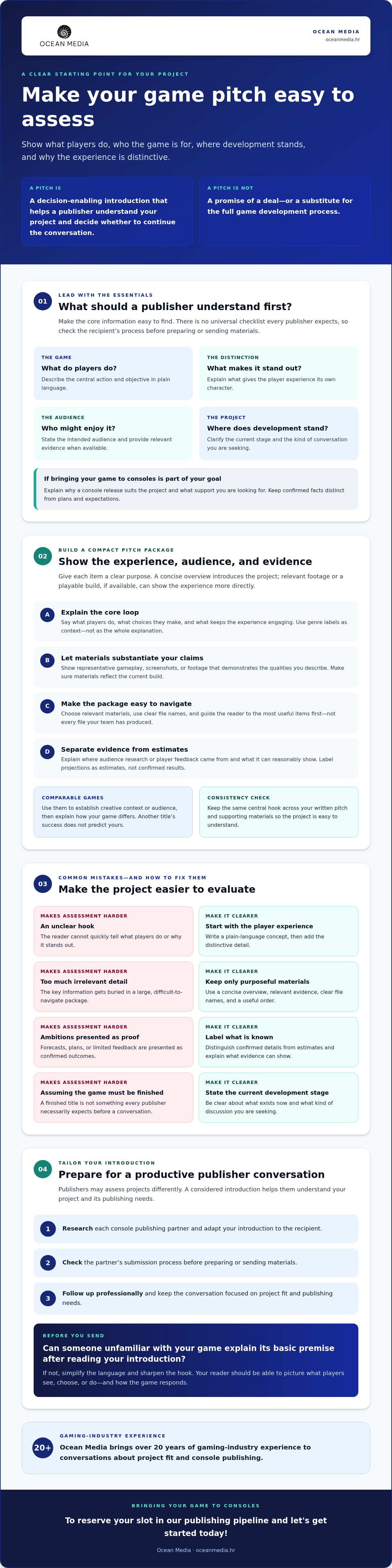
A strong pitch is clear, specific, and easy to evaluate. There isn’t one universal checklist every publisher expects. Publishers may assess projects differently, so make the core information easy to find and check the recipient’s own process before preparing or sending materials. This is especially useful when avoiding common mistakes when pitching a game: unclear information can make a promising project harder to assess.
Which questions should your pitch answer first?
Start with the player experience. Explain what players do, what makes that experience distinctive, and who might enjoy it. Then state where development stands and what kind of conversation you’re seeking, such as discussing publishing fit or bringing your game to consoles.
If a console release is part of your goal, explain why it suits the project and what support you’re looking for. Keep confirmed facts separate from plans or expectations. A publisher can then understand both the opportunity and what remains to be explored.
How to make the game’s identity immediately clear
Lead with a plain-language concept before adding genre labels, technical details, or production terminology. Describe the player’s central action and objective in a sentence, then explain what gives that experience its own character. The description should reflect your actual game, not a promise about what it will become.
Follow with a short gameplay description that helps the reader picture a moment of play: what the player sees, chooses, or does, and how the game responds. Keep the same central hook across your written pitch and supporting materials. If the summary describes one experience but a video or prototype suggests another, the publisher has to work harder to understand the project.
Before sending, ask someone unfamiliar with the game to explain its basic premise after reading your introduction. If they can’t tell what players do or why the experience stands out, simplify the language and sharpen the hook. You can also review Ocean Media’s developer information to understand its console publishing context. To explore project fit, start with the information for developers.
Build a game pitch that shows the experience, audience, and evidence
A useful pitch package is compact and easy to navigate, not a folder of every file your team has produced. Give each item a clear purpose: a concise overview explains the project, while gameplay footage or a playable build, if available, lets a publisher assess the experience more directly. Use clear file names and guide the reader to the most relevant materials first.
Pitch materials should substantiate your claims, not simply repeat them. If you describe the combat as tactical, show a representative moment where player decisions affect the outcome. If you describe the world as distinctive, select footage or screenshots that demonstrate its visual identity. Relevant evidence makes the pitch concrete without requiring grand claims.
Present the core game and its differentiation
Explain the core loop in plain language: what players do, what choices they make, and what keeps the experience engaging. Add the genre as useful context, but don’t rely on labels alone. A non-specialist should be able to picture the appeal without decoding production terminology.
Comparable games can help establish an audience or creative context, but use them carefully. Name what is genuinely comparable, then clarify how your game differs in its mechanics, setting, tone, or player choices. Avoid suggesting that another title’s success predicts your own. Screenshots and footage should accurately represent the current build, not an aspirational version that players or partners can’t yet experience.
Support audience and release claims responsibly
Include relevant audience research or player feedback when you have it, and explain where it came from and what it can reasonably show. A small feedback session, for example, may reveal reactions to a mechanic, but it doesn’t establish broad market demand. Label projections as estimates and distinguish them from confirmed results. This precision helps prevent common mistakes when pitching a game, such as presenting ambition as proven performance.
Describe platform ambitions as goals, not guarantees. Explain why bringing your game to consoles fits the experience and what you hope to explore with a publishing partner, without implying that platform approval, access, or release is already secured. For further guidance on pitching your game, see Game Developer’s industry advice.
As you prepare materials for a console publishing conversation, our developer information can help you understand Ocean Media’s publishing context.
Common mistakes when pitching a game: how to fix them
A pitch doesn’t need to hide unfinished edges or make claims the project can’t yet support. It needs to help a publisher understand what you’re making and assess whether it may fit. One common mistake when pitching a game is assuming every publisher expects a finished title before a conversation. Project stages and requested materials vary, so check each publisher’s process instead of treating one submission checklist as universal.
Avoid vague hooks and unsupported promises
Mistake: “Our game is for everyone.” The phrase sounds ambitious, but it gives a publisher little to evaluate. Correction: Describe the experience and the players most likely to enjoy it. For example, explain that players solve environmental puzzles by changing how objects interact, then identify the audience based on the game’s actual design, not a claim of universal appeal.
Mistake: “This will be the next major hit.” That’s a prediction, not evidence. Correction: Share relevant player feedback or research if you have it, explain its context, and label forecasts as estimates or hypotheses. Don’t promise commercial success, platform approval, or audience growth. For more insider tips for pitching your game, consult PocketGamer.biz’s guide to presenting a project to publishers.
You don’t need to apologize for a project’s stage. State what’s playable, what remains in development, and what kind of discussion you’re seeking. A publisher may want different materials depending on its process and the project’s status. Check before preparing a submission, and make sure your description matches the build or footage you share.
Do not make the pitch difficult to review
Mistake: Burying the game’s concept under a long studio history, dense production notes, or a large, unorganized file collection. Correction: Put the hook, player experience, audience, development stage, and request near the start. Add supporting details in a logical order so a reader can explore them as needed.
Mistake: Sending broken links, inaccessible files, or confidential and oversized materials without checking preferences. Correction: Test every link and file, confirm your contact details, and ask what format or access method the recipient prefers before sharing sensitive or unusually large assets. These checks make it easier to focus on the game, especially if you’re exploring a console release.
For console publishing context, review our developer information.
How to tailor your pitch to a console publishing partner
A tailored pitch shows that you understand the partner’s confirmed role and can explain how it relates to your project. Keep the process straightforward: research the partner, adapt your introduction, check the requested materials, send your pitch through the appropriate channel, then follow up professionally. This avoids a common mistake when pitching a game: sending the same generic message to every publisher.
Show why the project and partner may fit
Base your explanation on information the publisher has publicly confirmed. If a partner supports digital releases across console platforms and helps developers navigate platform requirements and certification, connect those capabilities to your release goals. For example, explain that you’re exploring bringing your game to consoles and want to discuss publishing fit and the support your project may need.
Be specific about what you’re asking to discuss. Generic praise such as “your company is a great fit” doesn’t show why. Instead, point to a relevant capability or area of experience, then explain how it connects to your project’s current stage or plans. Ocean Media has over 20 years of gaming-industry experience, with work supporting digital distribution across console platforms.
A publishing partner can help you navigate the console release lifecycle, including platform-specific requirements and certification. That support is not a guarantee of platform approval: certification decisions are not the publisher’s to promise. Keep your wording focused on the process and the conversation you’re seeking.
Prepare for useful follow-up questions
Be ready to discuss the game’s development status, platform plans, and unresolved needs. You don’t need to have every answer finalized. Clearly identify what’s confirmed, what you’re still evaluating, and where you’d value guidance. Useful questions include:
- How does your publishing process assess projects at this stage?
- What should our studio consider when bringing this game to consoles?
- Which platform requirements or certification questions should we plan to explore?
For broader context, consult Console Game Publishers: A Developer’s Guide to understand publisher roles, and How to Publish a Game on Console: The Complete Developer Roadmap for 2026 for a wider view of the release journey. These titles are useful starting points, but check each partner’s own process for its current expectations.
If Ocean Media’s confirmed publishing experience aligns with your goals, review our console publishing information for developers and share a concise account of your project and needs.
What to do after pitching your game to Ocean Media
After sending your pitch, make the next step straightforward. A concise, professional follow-up can clarify what you’re asking to discuss and make it easier to continue the conversation if there’s a potential fit. Don’t treat silence as a decision or assume a response, timeline, acceptance, or publishing deal. No outcome is guaranteed, so keep developing your project and follow the process provided by the publisher.
Make the next conversation easy to start
Check that your original message includes a clear contact person, working project links, and a specific request, such as discussing publishing fit or your console plans. If you follow up, briefly refer to your earlier pitch and ask whether any additional information would be useful. Avoid sending repeated messages without new context.
Share updates when they matter to the assessment, such as a meaningful change in development status or new gameplay material that clarifies the experience. Respond directly to questions and provide only the relevant details. This keeps the exchange collaborative and focused on your project’s needs, rather than adding more files simply to make the pitch feel substantial.
Bring your game to consoles with a publishing partner
Ocean Media is a console game publishing company with over 20 years of gaming-industry experience. Its work includes supporting digital releases across console platforms and helping developers navigate platform-specific requirements and certification. If you’re exploring bringing your game to consoles, explain what you’re aiming to release and where you’d value a publishing conversation. A partner can help navigate parts of the publishing process, but platform certification is a separate process and no partner can promise approval.
For a closer look at certification as its own part of console release planning, read Console Game Certification: What Devs Need to Know. You can also review our developer information to understand our console publishing context. Ocean Media supports digital publishing, not physical retail distribution or work-for-hire development.
Keep your follow-up measured, your materials current, and your questions specific. If you’re ready to discuss project fit, review Ocean Media’s developer information.
Take the next step toward your console release
A productive publisher conversation starts with a pitch that makes your game, audience, development status, and goals easy to understand. Keep the materials focused, support your claims with relevant evidence, and tailor your message to the partner’s confirmed publishing experience. These habits help you avoid common mistakes when pitching a game and give both sides a clearer basis for discussing project fit.
If you’re considering bringing your game to consoles, Ocean Media brings over 20 years of gaming-industry experience to digital console publishing, including support navigating platform requirements and certification. No pitch can guarantee a publishing deal or platform approval, but a clear conversation can help you understand possible next steps.
Frequently Asked Questions
What should you include in a game pitch to a publisher?
Include a clear overview of the game, its intended audience, development stage, and what makes the player experience distinctive. Explain the core gameplay loop in plain language, then support your description with relevant materials, such as representative screenshots, footage, or a playable build if available. State your console ambitions and the discussion you’re seeking. Keep confirmed facts separate from estimates or plans, and check the publisher’s submission preferences.
How do you pitch a game idea to a publisher?
Research the publisher’s publicly confirmed focus and process, then tailor your introduction to explain why your project may fit. Lead with a concise concept, describe what players do, identify the audience, and clarify the project’s current status and your request. Share only relevant, accessible materials. One common mistake when pitching a game is sending a generic pitch without connecting the project’s needs to the publisher’s confirmed experience.
Can you pitch a game that is still in development?
Yes, you can start a publisher conversation while your game is in development. You don’t need to present an unfinished project as complete. State what is playable, what remains in progress, and what you’re looking to discuss. Publisher expectations and requested materials differ, so check each publisher’s process. A clear account of your current stage helps them understand the project without mistaking future plans for completed work.
Should you send a playable build with a game pitch?
Send a playable build if it’s relevant, representative, and requested or accepted through the publisher’s process. A build can make the core loop and player experience easier to assess, but it isn’t automatically required for every initial conversation. If you don’t have one, concise gameplay footage or other accurate materials may help explain the game. Check access, links, and submission preferences before sharing files, especially sensitive or large ones.
What makes a game pitch stand out to publishers?
A pitch stands out by making the game’s identity and appeal specific, then backing up its claims with relevant evidence. Explain what players do, who is most likely to enjoy the experience, and what differentiates it from comparable games. Use materials that accurately represent the current project. Avoid broad promises about commercial success or audience growth. Clear, credible information gives a publisher a stronger basis for evaluating fit and asking follow-up questions.
How long should a video game pitch be?
Keep the spoken presentation concise and leave time for discussion. As a practical guide, a 5-to-6-minute presentation can work within a 30-minute meeting, but that isn’t a universal requirement. Follow the publisher’s instructions and adapt the length to the meeting format. Prioritize the hook, gameplay experience, audience, development stage, and request. Put supporting detail in accessible materials rather than trying to cover every project file aloud.
What should you do if a publisher does not respond to your pitch?
Send a brief, professional follow-up that refers to your original message and restates the discussion you’re seeking. Check that your contact details and project links work, and share a material update only if it adds useful context. Don’t assume silence means acceptance or rejection, and don’t expect a particular response timeline. If you’re ready to discuss console publishing with Ocean Media, review the developer information.


