

With digital downloads accounting for roughly 78% of all PlayStation game sales in the 2025 fiscal year, the path to a successful console launch is narrower than ever. You've likely felt the sting of high rejection rates or the overwhelming confusion of technical requirements (like the dreaded TRCs or XRs) that stand between your build and the storefront. It's frustrating to have a brilliant creative vision but lack the specific game publisher pitch deck structure that proves your team is ready for the rigors of console certification. We understand the fear of signing a bad deal or getting lost in the shuffle, but the right approach can turn those "no's" into a partnership.
Our 2026 guide is designed to bridge that gap, teaching you how to build a professional, console-focused deck that captures immediate attention and secures your digital distribution deal. We'll explore the essential components of a winning presentation, from demonstrating technical feasibility to showcasing a polished playable build that publishers now demand. You'll gain a clear understanding of the console publishing pipeline and the exact steps for bringing your game to consoles. It's time to stop guessing and start presenting with the confidence of a seasoned pro. Reserve your slot in our publishing pipeline and let's get started today!
Key Takeaways
- Grab immediate attention by mastering the 15-second hook and visualizing your core gameplay loop through high-quality assets.
- Build a professional game publisher pitch deck that highlights your business model and team expertise to secure a playable build request.
- Prove technical feasibility by addressing controller optimization and your awareness of platform-specific certification requirements.
- Use targeted publisher research and a sharp elevator pitch to align your game with the right partners and avoid high rejection rates.
- Leverage our 20 years of expertise in digital distribution to reserve your slot in our publishing pipeline and let's get started today!
What is a Game Publisher Pitch Deck and Why Does it Matter?
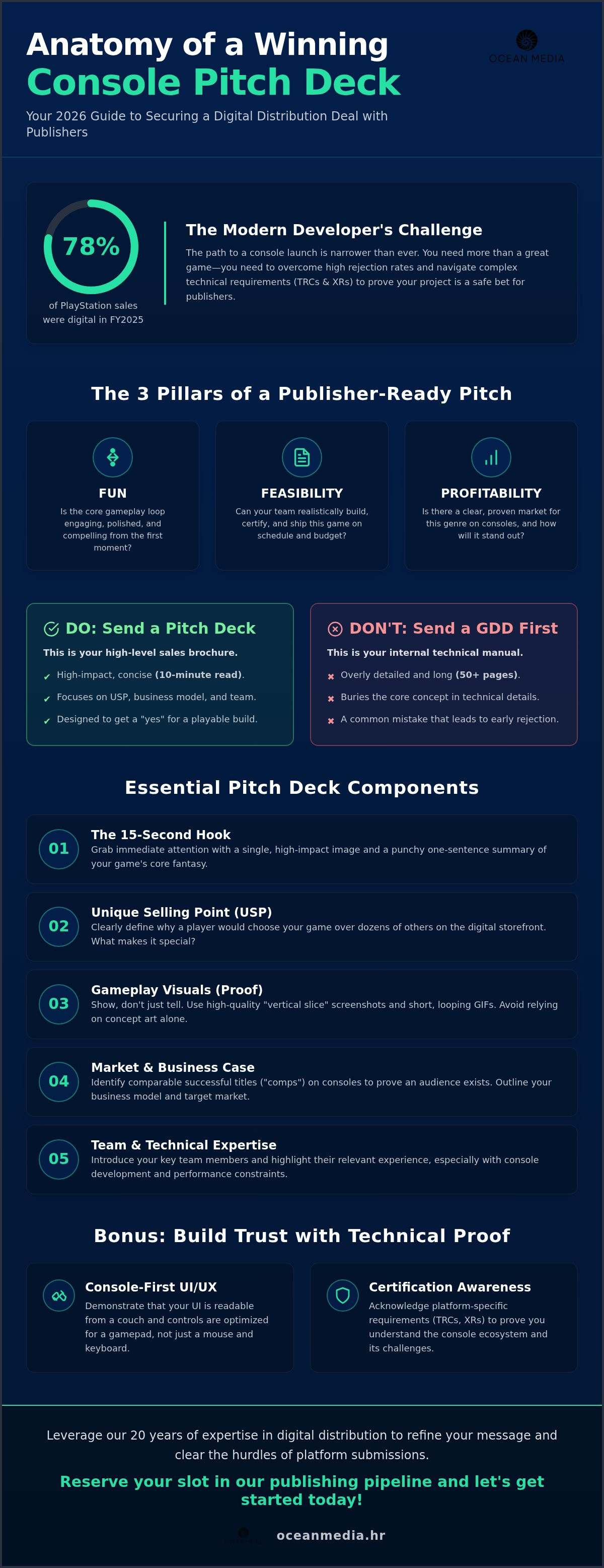
A game publisher pitch deck is your most critical sales tool. It's a visual presentation that summarizes your game's unique selling points (USP), business model, and team expertise. Before you can dive into the technicalities of What is a Game Publisher?, you need to understand that their primary goal is risk management. They aren't just looking for "fun"; they're looking for a project that won't fail during certification. While a PC pitch might focus heavily on community growth, a console-focused deck must prove technical stability and controller readiness from the start. This document is the first gate in the broader console game publishing process.
The Psychology of a Publisher Scout
Scouts receive hundreds of submissions every month. They naturally look for reasons to say "no" to quickly filter the noise. To survive this cut, your game publisher pitch deck must satisfy the "Three Pillars" of success: Fun (is the core loop engaging?), Feasibility (can your team actually finish this?), and Profitability (is there a clear market for this genre on consoles?). If a scout can't see how your game fits into the current digital storefront landscape within the first few slides, they'll move on. Essentially, the pitch deck is the bridge between creative vision and market reality. This transition from creative passion to structured business is a path shared by many industries; for example, those looking at maritime ventures can learn more about Maritime DAO to see how asset financing is handled in a compliant, regulated environment.
Pitch Deck vs. Design Document (GDD)
One common mistake is sending a 50-page Game Design Document (GDD) as an initial introduction. Don't do it. A GDD is a technical manual for development; a pitch deck is a high-level sales brochure. You should follow the "10-minute rule": design your deck to be consumed in a quick, high-impact read that highlights the most exciting parts of your project. This approach is a vital step in the how to publish a game on console roadmap. By keeping it concise, you respect the publisher's time while proving you understand the professional standards required for bringing your game to consoles.
Navigating these early stages is easier with a partner who understands the digital landscape. We've spent over 20 years helping developers refine their message and clear the hurdles of platform submissions. If you're ready to move beyond the drafting phase, reserve your slot in our publishing pipeline and let's get started today!
The 10 Essential Slides for an Indie Game Pitch Template
Your game publisher pitch deck functions like a high-speed trailer for your studio's potential. Scouts often make a preliminary decision within the first 15 seconds, so your opening "Hook" slide must be undeniable. It should distill your game's essence into a single, high-impact image and a punchy sentence. Following this, you need to define your Unique Selling Point (USP). In a crowded digital marketplace, publishers need to know exactly why a player would choose your title over a dozen others on the PlayStation Store or Xbox dashboard. To see how industry leaders structure these high-stakes narratives, review these Essential Slides for a Pitch Deck.
Visuals and Gameplay Presentation
Visual proof is the currency of a successful pitch. High-quality "vertical slice" screenshots are mandatory because they prove the final art style is achievable. Don't rely on concept art alone; publishers want to see the game in action. Short, looping GIFs are incredibly effective here. They demonstrate "game feel" and specific mechanics without requiring the scout to download a massive video file. Additionally, ensure your UI/UX looks native to a console screen. Text that's readable on a monitor often fails on a television across a living room, and showing you've accounted for this builds immediate professional trust.
The Business and Team Slides
A great game is only half the battle; the other half is a viable business case. Your market analysis slide should identify "Comps" (comparable titles) that have performed well on consoles within the last two years. This data proves there's an existing audience for your genre. When presenting your team, focus on your technical chops. Publishers need to know you can handle the specific performance constraints of console hardware. Finally, be transparent about your roadmap and funding needs. A clear timeline for development and certification shows you're prepared for the long-term publishing pipeline.
Building these slides correctly is the difference between a polite rejection and a signed deal. We specialize in helping studios refine their presentation to meet the high standards of global platform holders. If you're ready to show the world what you've built, reserve your slot in our publishing pipeline and let's get started today!
Proving Console Feasibility: Technical Slides that Build Trust
While your creative vision gets them in the door, technical feasibility keeps you in the room. Most developers focus on PC-first metrics, but a console publisher's biggest fear is a project that stalls during the certification phase. Your game publisher pitch deck must explicitly address how your title will function within the strict ecosystems of Sony, Microsoft, or Nintendo. Proving that your game is "cert-ready" from day one dramatically lowers the perceived risk for any potential partner. Publishers want to see that you understand the digital storefront model and are ready for the technical rigors of bringing your game to consoles.
Controller Support and Input Design
Don't just say your game supports gamepads; show how the mechanics translate to a controller. In 2026, publishers expect to see detailed plans for haptic feedback and vibration integration, especially for the PlayStation 5's DualSense features. You should also highlight your adherence to the latest Xbox Accessibility Guidelines (XAG). Demonstrating that you've already considered dead zones, aim assist, and radial menus proves you aren't just porting a PC game, but building a native console experience. This level of detail shows you've moved past the basics of Refining Your Hook and Market Analysis and into the realm of professional execution.
Certification and Compliance Awareness
The technical bars for entry are high. Every platform has its own unique requirements, such as Sony's Technical Requirements Checklist (TRC) or the Xbox Requirements (XR). If you already have access to development hardware (devkits), mention it. It's a massive trust builder that signals platform holders already take you seriously. If you're unsure how to handle these hurdles, we provide expert guidance on the Ocean Media developers page to help you navigate the complexities of platform submissions. Whether you plan to handle the porting in-house or need our expertise to manage the process, your deck should reflect a clear strategy for the 4 to 8 week certification windows typical for major storefronts.
Navigating the console landscape requires more than just a great idea; it requires a roadmap that accounts for every technical hurdle. We've spent two decades refining this process for indie studios, ensuring their games meet every platform standard. If you're ready to secure your digital distribution deal and reach a global audience, reserve your slot in our publishing pipeline and let's get started today!
Publishing Proposal Tips: Refining Your Hook and Market Analysis
Successful outreach starts with alignment. You don't pitch a visceral horror game to a family-friendly label; it's a waste of their time and yours. Researching your publisher's previous catalog is the first step in refining your game publisher pitch deck. Once you've identified the right partners, you need a sharp elevator pitch. This single sentence should define your game's identity so clearly that a scout can't wait to see the next slide. It's about showing you understand where your game sits in the global market.
Market validation is your next hurdle. You must back your vision with data from digital console storefronts. For example, Sony reported that approximately 78% of full-game sales on PlayStation were digital downloads in its 2025 fiscal year. This massive shift toward digital consumption means your strategy must prioritize storefront visibility and digital-first engagement. Finally, be explicit about your "Ask." Whether you need marketing support, technical porting, or direct funding, being clear here proves you're a serious business partner who understands the costs of bringing your game to consoles.
Finding Your Console Niche
To stand out, analyze the "New Releases" tab on PlayStation or Xbox. Look for genres that are underserved or market gaps where your title can shine. Positioning your game against genre giants requires a "Console-First" marketing hook. If you're an indie platformer, show how your haptic feedback or controller responsiveness beat the competition. Highlighting these native features makes your game feel like it belongs on the hardware, making it a much easier "yes" for a publisher's portfolio. To ensure your marketing materials and copy are as professional as possible, you can visit College of Media and Publishing for expert training.
Avoid over-promising features that won't survive the certification process. If you claim to have 120 FPS with split-screen on every console without testing it, you're setting yourself up for failure. Don't bury the lead with "Wall of Text" slides. Keep it visual. Ignoring the competitive landscape of the digital marketplace is another fatal error. Publishers need to know you've played the games you're competing against and have a plan to beat them in the digital storefront rankings.
We understand the nuances of the digital marketplace and can help you refine your proposal for maximum impact. If you're ready to move forward, learn more about our publishing services. Reserve your slot in our publishing pipeline and let's get started today!
Bringing Your Game to Consoles with Ocean Media
Success in the digital marketplace requires more than just a polished build; it requires a partner who understands the intricate dance of platform submissions. With over 20 years of industry experience, we've established ourselves as a seasoned guide for indie developers looking to make the leap from PC to console. Our specialization in digital distribution ensures that your project isn't just another entry on a storefront, but a well-positioned contender for global visibility. If you're looking to extend that visibility to physical events, you can check out VIP Outdoor Media for high-impact advertising at conventions like Comic-Con. By partnering with us, you gain access to a collaborative spirit that values your creative vision while providing the business-oriented rigor needed for a successful launch.
Our Publishing Pipeline Explained
The journey begins with a thorough review of your game publisher pitch deck. We don't just look at the art; we analyze the technical feasibility and market fit we've discussed throughout this guide. Once we move forward, our team handles the heavy lifting of the console publishing pipeline. This includes managing the administrative complexities of global digital launches and navigating the strict certification requirements of PlayStation, Xbox, and Nintendo. We act as the bridge between your studio and the platform holders (a role we've perfected over two decades), allowing you to focus entirely on your creative work while we manage the technical logistics and submission windows.
Ready to Pitch?
We're looking for indie partners who have a clear USP and a commitment to quality. When you're ready to submit, your materials should include your refined deck and a polished playable build that demonstrates your core gameplay loop. We value transparency and long-term consistency, positioning our partners for growth in an ever-evolving industry. If you have a project that's ready for the global stage, we want to see it. Don't let the complexities of platform certification or technical requirements hold your project back from reaching millions of players worldwide.
The path to a professional console release is a structured one, and we're here to walk it with you. Our expertise in navigating the technical hurdles of 2026's digital landscape ensures your game has the best possible chance for success. It's time to turn your hard work into a global digital distribution deal. To begin this collaborative journey, reserve your slot in our publishing pipeline and let's get started today!
Take Your Game to the Global Stage
Securing a digital distribution deal in 2026 requires a precise blend of creative brilliance and technical readiness. You've learned how a professional game publisher pitch deck must go beyond aesthetics to prove controller optimization and certification awareness. By focusing on your unique selling point and validating your market with current digital sales data, you position your studio as a low-risk, high-reward partner. These steps are essential for any developer moving from PC to the competitive console landscape.
Bringing your game to consoles is a complex journey, but you don't have to navigate it alone. We bring over 20 years of console publishing expertise to every partnership. Our team is specialized in digital distribution and provides the global reach necessary to succeed across all major platforms. We handle the submission logistics so you can stay focused on the creative process. It's time to stop drafting and start publishing. Reserve your slot in our publishing pipeline and let's get started today! We look forward to seeing your vision come to life.
Frequently Asked Questions
How long should a game publisher pitch deck be?
A professional game publisher pitch deck should ideally be 10 to 15 slides long. You want to follow the 10-minute rule to ensure scouts can digest your vision quickly. Each slide must serve a purposeful role, moving from your hook and gameplay loop to technical feasibility and team background. Keep it visual and punchy; if a slide doesn't immediately advance your case for bringing your game to consoles, it's better to leave it out.
Do I need a playable build before I start pitching to publishers?
Yes, a polished playable build is essentially mandatory in the 2026 market. While a high-quality deck starts the conversation, publishers are increasingly risk-averse and need to feel the game feel through a vertical slice. Having a demo ready proves your technical capability and significantly reduces the perceived risk of your project. It's the most effective way to move from the initial pitch to a serious discussion about your publishing pipeline.
What is the most important slide in a game pitch deck?
The Hook slide is the most critical element of your presentation. You have roughly 15 seconds to capture a scout's interest, so this slide must distill your game's unique selling point into one evocative image and a single sentence. If you can't clearly define why your game stands out on a digital storefront like the PlayStation Store or Xbox, the rest of your technical data won't matter during the initial review.
Should I include my revenue expectations in the deck?
You should generally omit specific revenue projections in your initial game publisher pitch deck. Instead, focus on market validation by identifying successful Comps (comparable titles) within your genre. Publishers have their own internal metrics for forecasting sales; your job is to prove there's an active audience for your game. Providing high-level market data shows you understand the business landscape without overstepping into speculative or unrealistic territory.
Can I pitch my game to multiple publishers at once?
You can and should pitch to multiple publishers simultaneously to increase your chances of success. A response rate of 3% to 5% from cold outreach is standard in the industry, so casting a wide net is a practical necessity. Ensure you've researched each partner to avoid pitching to a label that doesn't fit your genre. Once you've gathered interest, reserve your slot in our publishing pipeline and let's get started today!
How much does it cost to have a publisher handle my console release?
Most console publishing deals operate on a revenue share model rather than an upfront fee. This structure aligns the publisher's success with your own, as they invest their resources in marketing, porting, and certification. While specific percentages vary based on the level of support you need, the goal is always a collaborative partnership. We focus strictly on digital distribution to maximize your reach on modern storefronts while avoiding the complexities of physical retail.
What happens if my game fails console certification?
If your game fails certification, the platform holder provides a detailed report of the specific failure points. These usually involve technical issues like save data handling or performance drops. You'll need to address these bugs and resubmit the build for another round of testing. This process can take 4 to 8 weeks per submission, which is why having an experienced partner is vital for navigating the complexities of the console publishing pipeline.


