

In many game publishing revenue share models, publishers recoup agreed pre-release and marketing costs before the developer receives a share. The agreement defines eligible costs, how net revenue is calculated, and which share applies before and after recoupment. Payments generally begin after launch, once the contract’s conditions are met.
Revenue share can look straightforward on paper but be harder to forecast when you’re planning studio cash flow. This article explains how recoupment works, when payouts may start, which deductions affect net revenue, and how cash compensation can be combined with a share of game revenue. It also covers why clear terms for eligible costs, payment schedules, and reporting matter before you enter a publishing arrangement.
Key Takeaways
- Clarify who receives a share and whether it applies to game revenue, company profits, or another defined pool.
- Identify which pre-release and marketing expenses can be recouped, and how those costs affect the split before recoupment.
- Read payment timing, thresholds, duration, and caps together to understand when revenue may reach you and how long payments can continue.
- Define net revenue by listing allowable deductions, such as taxes, payment processing, and distribution fees.
- Consider whether cash compensation alongside revenue share better balances near-term project needs with participation in future performance.
What is a Game Revenue Share Model?
A revenue-share agreement gives developers or contributors an agreed portion of revenue from a game. Common game publishing revenue share models define the revenue pool and the parties entitled to share it. Self-publishing gives a studio more control over decisions and revenue, while requiring it to manage publishing responsibilities; a publisher may contribute resources or expertise, but the developer shares revenue under agreed terms.
Revenue Sharing in Game Development
Revenue sharing in game development means compensation calculated as an agreed portion of a game’s defined revenue. Your earnings depend on the agreement’s calculation method, not simply on the game’s total sales. For example, a contract might give a composer a share of game revenue, while a separate agreement determines the developer’s share.
Participants may include developers, publishers, creators, influencers, or technology partners. A freelancer’s share generally follows the performance of a specific game, not the wider company. To understand what your contribution earns participation in, identify the game, the revenue pool, and the conditions that trigger your entitlement before accepting.
Developer and Publisher Benefits
Revenue sharing connects collaborators’ compensation to a game’s commercial performance. Developers may work with contributors without paying the full cost upfront, while publishers can tie their return to a title’s results. Creators and technology partners can also participate when the agreement grants them that right. Each party’s benefit depends on its contribution, the revenue definition, and the negotiated share.
For a studio, this model can preserve cash for development needs. For a publisher, it can link investment recovery and later earnings to sales. Contributors may earn income tied to the game, alongside professional credit that can retain value even when revenue is limited. Weigh these potential benefits against the obligations: a share is not guaranteed payment, and its value depends on game revenue and the contract terms.
Developer Obligations and Milestones
Developer obligations define the work and deliverables required to earn or retain participation. A contract may tie a contributor’s share to accepted milestones, such as completed art, a playable build, or another defined deliverable. A clear acceptance process establishes when work qualifies and gives both parties a shared reference for progress, revisions, and entitlement.
List each deliverable, who accepts it, and how acceptance is recorded. For example, a milestone might specify a completed asset package and the review required for acceptance. An agreement can grant entitlements in stages after the commissioning party accepts deliverables. For services that are harder to measure, vesting may instead depend on time in service, sometimes with a cliff requiring an initial commitment.
Bargaining Leverage and Sweat Equity
Bargaining leverage reflects each party’s contribution, resources, and alternatives during negotiations. A developer with a finished game or substantial self-funding may have different leverage from a team seeking a publisher’s investment and publishing support. Compare each party’s contribution with the revenue rights, control, and obligations assigned in the agreement.
Sweat equity means contributing work instead of receiving full cash compensation upfront, in exchange for a potential share or ownership interest. It can help an early-stage team conserve cash, but the contributor faces uncertainty about future returns. Participation in one game’s revenue differs from company shares: the former follows the agreed game revenue, while the latter represents ownership in the company. Define which arrangement applies before work begins.
Are pre-release and marketing costs recouped first?
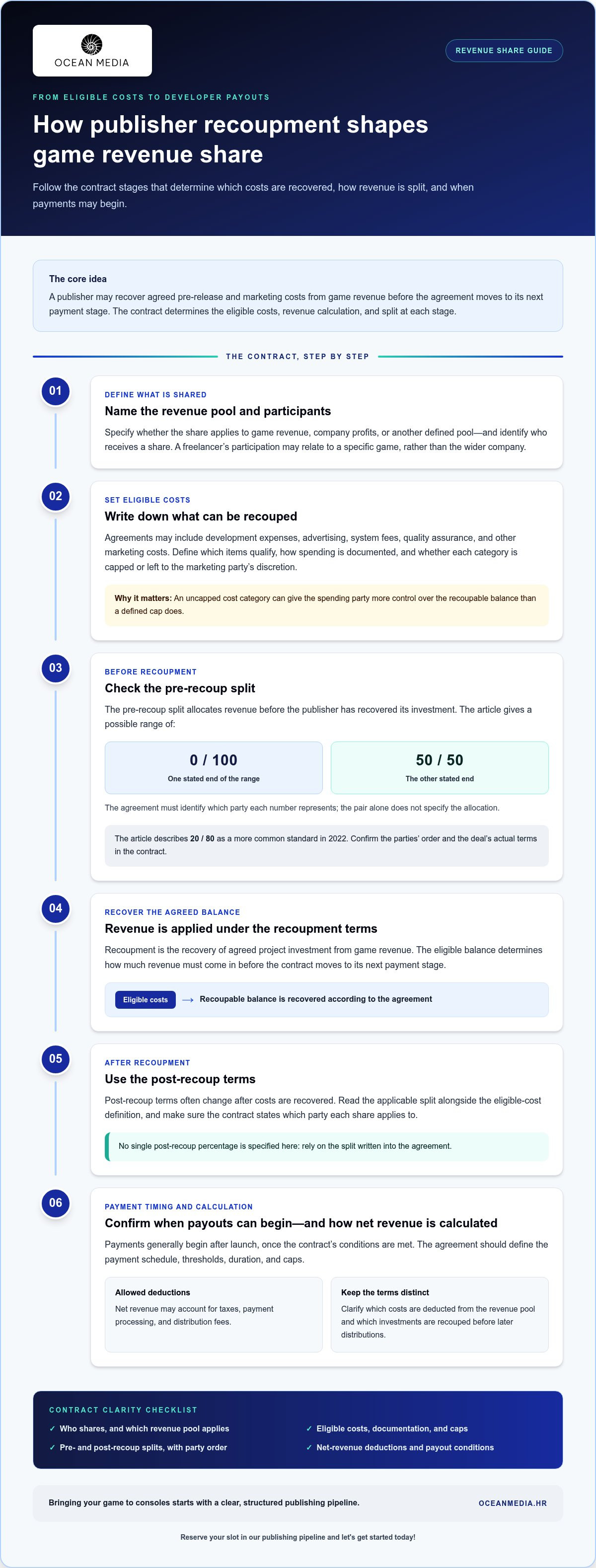
Often, yes: agreements commonly let publishers recover eligible pre-release and marketing expenses before other revenue-share payments. Typical percentages vary by deal, with pre-recoup splits ranging from 0/100 to 50/50 and post-recoup terms often changing after costs are recovered.
Recouping Publisher Investment
Recoupment lets a publisher recover agreed project investments from game revenue before the contract moves to its next payment stage. The eligible balance determines how much revenue must come in before the developer receives payments under the applicable terms.
Eligible pre-release costs may include development expenses, advertising, system fees, and quality assurance. Marketing costs may also be deductible, but the agreement should explain what qualifies and whether spending is capped or left to the marketing party’s discretion. An uncapped category, for example, gives that party more control over the recoupable balance than a defined cap does. State which costs are recoupable and how they are documented.
Deductible Expenses and Recoupment
Deductible expenses are costs the agreement allows a party to subtract or recover when calculating revenue available for sharing. Definitions matter: broad categories can increase deductions before the developer’s share is calculated, while narrow definitions limit eligible items.
Distinguish recoupment from ordinary deductions. A contract may let the publisher recover pre-release investment first while also defining marketing expenses that reduce the revenue pool. Specify whether advertising, development, system fees, and quality assurance count, and whether each is capped. Clear terms let both parties trace how gross receipts become the balance used for recoupment and later distribution.
Pre-Recoup Revenue Splits
A pre-recoup split determines how revenue is allocated before the publisher has recovered its investment. Identify which party each percentage represents so the figures cannot be misread.
Pre-recoup splits can range from 0/100 to 50/50. A 20/80 pre-recoup split was described as a more common standard in 2022, while 30/70 was described as the old standard for game publishing deals. Under a 0/100 pre-recoup split, the publisher pays no revenue to the developer until fully recouping its investment. A 50/50 pre-recoup split is relatively uncommon and mostly used for equal partnerships. The percentage alone doesn’t show the full deal: eligible costs and the recoupment balance also shape when payment begins.
Post-Recoup Revenue Splits
A post-recoup split determines how revenue is divided after the publisher has recovered the agreed investment. This stage can govern a title’s ongoing revenue allocation.
A post-recoup split of approximately 50/50, with a variation of 10% in either direction, was described as the most common arrangement at the time of writing. Approximately 60/40 in the developer’s favor may suit experienced teams or projects where the developer’s investment is greater. Approximately 40/60 in the publisher’s favor is a rarity that may be proposed to inexperienced developers. A 70/30 split in the developer’s favor is an older standard that may still be negotiable in some circumstances. As you plan a console release, console publishing support can help frame the release alongside these commercial terms.
When do revenue share payments usually begin?
Payments usually begin after launch, once the agreement’s conditions are met. These may include recoupment, a revenue threshold, or another defined trigger.
Exclusivity, intellectual property ownership, and sequel rights define the scope of a deal. Specify which rights the publisher receives, for which platforms and period, and whether sequel participation is included. These terms affect control and future revenue beyond the first game.
Payment Start Conditions and Frequency
Payment start conditions state when revenue becomes payable, while payment frequency sets the distribution schedule. Launch day does not automatically mean money arrives that day.
For example, a contract can require the publisher to recoup eligible investment before payments to the developer begin. Developers should expect pre-recoup payments to begin several months after launch, with an estimated delay of 3-5 months. The agreement determines payment frequency, so define the reporting period, payment date, and process for addressing late or disputed amounts.
A payment threshold can delay a transfer. If the amount due is below the contract’s minimum, the balance may roll over to the next payment period. Specify how that amount is tracked and when it becomes payable. This helps distinguish a delayed transfer from revenue that has not yet met the payment condition.
Delayed or Uncertain Payments
Launch timing, sales reporting, recoupment, or thresholds can delay an expected distribution. Clear contract terms matter because an unclear trigger can make it difficult to determine whether a payment is due.
Incorrect accounting, delayed revenue, or disputes over percentages can damage a partnership. A practical agreement identifies the revenue statement, payment calculation, schedule, and process for resolving discrepancies. It also says whether balances below a payment threshold carry forward. These details give both parties a shared basis for interpreting a missed or reduced payment.
Payment duration and caps also shape the value of a share. A contract can set payments for a specified number of years after launch or cap total payments at 2x or 3x the contributor’s original contribution value. Define whether the cap applies to all receipts or a particular entitlement, and whether the duration or cap ends first. That distinction helps developers model how long payments can continue.
International sales add payment and tax complexity. Developers selling globally need accurate sales tracking, tax handling, and timely payout distribution across markets. The agreement should explain how sales from different territories enter the calculation, how taxes affect payable revenue, and which records support each statement. For example, compare the reported sales period with the corresponding payout statement, then flag discrepancies through the agreed process.
Net revenue calculations and deductible costs
Net revenue is what remains after the deductions specified in the agreement. The definition matters because a share calculated from net revenue can differ substantially from one based on gross sales. For a game, the contract may deduct taxes, cost of goods sold, payment processing fees, and distribution fees. It should define each deduction and explain the order of calculation.
Consider an illustrative project with a US$200,000 budget, including service costs. If the publisher recoups at 70% of that remainder, it receives about US$200,000 toward its investment. The developer’s share is approximately US$85,000. These figures show how platform deductions and the recoupment percentage interact; the agreement’s own definitions determine the actual calculation.
Follow the calculation in stages. First, identify the revenue base, such as sales receipts before deductions. Next, subtract only costs permitted by the contract. Then apply the recoupment terms and relevant revenue split. This sequence shows whether a deduction reduces the pool before recoupment or affects a later distribution. If the order is ambiguous, the same sales report may produce different interpretations.
- Taxes: Define which taxes reduce the revenue pool and how they are recorded.
- Processing fees: State whether payment transaction charges are deducted before calculating shares.
- Distribution fees: Identify the distribution costs included in the net revenue calculation.
- Cost of goods sold: Clarify which sales-related costs fall within this category.
Define marketing costs carefully because agreements may allow them to be deducted. Specify eligible activities, who approves spending, which records support each expense, and whether a cap applies. A campaign cost outside the agreed definition should not be added silently. Clear boundaries show developers how marketing affects the revenue available for recoupment and sharing.
Reporting makes the formula usable. A revenue statement should let you trace reported game revenue through each deduction to the final share. Compare the sales period, listed platform fees, permitted expenses, recoupment balance, and resulting payment. For international sales, taxes and distribution deductions can vary by market, so consistent records help reconcile results by territory. When the agreement defines these steps precisely, both parties can assess the game’s commercial performance using the same calculation.
Cash compensation alongside revenue share
A hybrid arrangement combines a defined cash payment with a share of future game revenue. It can compensate a developer for delivered work while preserving participation if the title performs well. For example, a studio might receive milestone-based cash for completing a playable build, then earn an agreed revenue share after release. Cash can support production needs, while revenue share maintains a connection to the game’s commercial results.
Cash can be tied to a deliverable, milestone, or other agreed service. Revenue share, by contrast, depends on the contract’s revenue calculation and payment conditions. Keep the obligations distinct. If a payment is an advance against future royalties, specify how it is recovered and whether it reduces later share payments. If it pays for a completed deliverable, state when the work is accepted and whether the payment remains separate from revenue participation.
This distinction changes your forecast. A recoupable advance may provide funds earlier, but future revenue share may first go toward the outstanding advance balance. A separate milestone payment can provide cash for completed work without being treated as that advance. The agreement should state which structure applies, how statements show the balance, and when revenue share becomes payable. Clear labels help keep cash compensation separate from publisher recoupment.
- Milestone payment: Connect cash to a named deliverable and its acceptance process.
- Advance: Define whether later revenue share offsets the amount advanced.
- Revenue participation: Set the revenue base, calculation, and payment conditions.
- Combined structure: Explain how each component appears in reporting.
For developers, the trade-off is between more predictable compensation for specified work and potential future earnings. A creator contributing music or art might receive a defined fee, a share, or a combination. The agreement should match compensation to the contribution and explain what happens if the project changes, a milestone is rejected, or the game earns too little for a share to become payable.
Publishers and studios can use a hybrid structure to separate production funding from participation in a title’s results. Specify who funds each agreed task, what the cash payment covers, and whether the same expense enters the recoupment calculation. This separation makes it easier to compare immediate cash flow with longer-term revenue potential across platforms.
If you’re bringing your game to consoles, reserve your slot in our publishing pipeline and let's get started today!
Ocean Media: Console Game Publishing
Ocean Media helps developers bring games to consoles through Console Game Publishing. Turn to Ocean Media when your studio is preparing a console release and needs support with the technical and administrative complexities of platform submissions. Its publishing expertise helps connect your title with digital audiences across console platforms, while you focus on the game and your team’s goals.
As you assess publishing terms, pair the commercial agreement with a clear view of the release process. A structured publishing pipeline provides a practical path from preparation to platform submission. Contact Ocean Media to discuss bringing your game to consoles and getting started with its publishing pipeline.
Set Your Next Release in Motion
Your publishing agreement should support the game you’re building and the studio you want to sustain. Use the terms you’ve evaluated to guide your next conversation with potential publishing partners, and keep your release plan aligned with your team’s priorities. Choose a structure you can understand, forecast, and carry through development.
When considering game publishing revenue share models for a console launch, include your commercial questions in the wider release discussion. Ocean Media offers Console Game Publishing to help developers navigate the technical and administrative side of console submissions. Discuss your title and its path to consoles with the Ocean Media team.
Explore Console Game Publishing with Ocean Media, and move your project toward its next milestone with confidence.
Frequently Asked Questions
How can businesses manage revenue sharing effectively?
Businesses can manage revenue sharing with consistent records, clear responsibility for each task, and a repeatable reconciliation process. For example, assign someone to match storefront statements against internal sales records, then document adjustments before distributing payments. Keep supporting records with each calculation so partners can trace how a reported amount was reached. A shared reporting calendar and defined process for resolving discrepancies can reduce confusion as teams, platforms, and sales territories grow.
What should freelancers and partners consider before accepting a revenue share agreement?
Before accepting, freelancers should understand exactly what work earns participation and what events can end it. Compare the promised share with the deliverables, review process, payment conditions, and any cap or time limit. For example, a sound designer should clarify whether participation applies to the full game or only a named release. Consider what happens if the project changes direction, the game is sold, or the working relationship ends.
How do game publishers and developers typically split revenue?
There is no universal split: the agreement sets each party’s percentage and the revenue stage it applies to. A deal may use one allocation before the publisher recovers its investment and another afterward. To assess the terms, distinguish the publisher’s share from the developer’s, then compare each with the revenue definition and recoupment rules. The headline percentage alone cannot show how much either party ultimately receives.
What is the difference between gross revenue and net revenue in publishing deals?
Gross revenue is sales income before permitted deductions; net revenue is what remains after the deductions specified in the agreement. A storefront statement reporting sales before deductions, for example, may differ from the base used to calculate the developer’s share. Check whether the contract names gross or net revenue at each stage. The same percentage can produce different distributions when the revenue base changes.
How do recoupable advances and development funding affect revenue shares?
A recoupable advance or development funding can provide resources before release, while the contract determines how that funding affects later participation. Revenue, for example, may be applied against an advance balance before additional royalties become payable. Track funding separately from other project expenses, and make sure statements show the opening balance, deductions, and remaining amount. This helps distinguish new earnings from recovery against funds already provided.
What platform fees, taxes, and distribution costs are deducted before revenue splits?
Only costs permitted by the agreement should reduce the revenue base used for a split. Platform fees, applicable taxes, and distribution costs may be relevant, but the contract should explain how each is handled. Clarify whether a storefront statement already includes a fee before the publisher makes further deductions. This helps prevent the same charge from being deducted twice and makes the calculation easier to reconcile.
What contract clauses and reporting rules should developers review in a publishing agreement?
Review clauses on revenue definitions, permitted deductions, recoupment, payment timing, reporting, and the process for disputing a statement. Also consider rights granted for the game, sequel participation, and what happens if the project or paying entity is sold. For practical oversight, reporting should identify the sales period, adjustments, and calculation supporting each payment. Clear record-retention and discrepancy procedures give your studio a concrete way to follow up on differences.


