

A publishing deal should expand your work’s reach without leaving ownership and creative control unclear. Managing intellectual property with a publisher starts with the agreement: it should define which rights you license, how the work can be used, and where you retain decision-making authority. These details matter, especially when a project moves across formats, platforms, and markets.
You may already know that copyright protects creative work, but a publisher’s license, collaboration terms, and use of third-party material can shape what happens next. Clear terms help you understand what you’re granting, what approvals or attribution may apply, and how your work can be adapted or shared.
This guide explains copyright and moral rights, the difference between exclusive and non-exclusive licensing, and the practical value of written agreements and permission records. It also shows how these principles apply when bringing a game to consoles, so you can approach the publishing process with a clearer understanding of your rights and responsibilities.
Key Takeaways
- Define the rights a publishing agreement covers, including permitted uses, formats, platforms, and markets, so everyone understands the scope.
- Address approvals, attribution, and creative changes early to support collaboration while preserving the creator’s intended work.
- Understand how copyright ownership differs from the rights a publisher receives, and how registration can affect enforcement options in the United States.
- Compare exclusive and non-exclusive licenses by considering how each affects a publisher’s use and your ability to make other arrangements.
- Keep written agreements and permission records for third-party material, and consider how future format or market changes may affect those rights.
Moral rights and creative integrity
Moral rights concern how a creator is credited and how their work may be changed. For a game, that could involve a developer’s name, a translated title, or dialogue edits. A publishing agreement can distinguish these creative concerns from the commercial rights it grants. That distinction helps you understand which decisions call for discussion and which fall within the publisher’s agreed role.
Start with specific examples from your project. Identify key creative elements, such as the game’s title, characters, visual style, soundtrack, and narrative. Then clarify how credit will appear in platform listings, promotional materials, and later releases. If a publisher proposes editing dialogue for a new market, define the review process. Concrete examples make broad terms about creative integrity easier to interpret.
Set out a process for significant changes. The agreement can identify the materials covered, who raises a proposed change, and how both parties will discuss it. A revised character design, altered ending, or replacement soundtrack can affect a game’s identity. Recording the decision and approved version helps the team avoid confusion as development, localization, and release work progress.
How are royalties and advances calculated in publishing contracts? The contract sets the royalty basis, such as a selling price or revenue received, and explains how the advance is recouped from royalties. One guide’s example shows how a 10 percent royalty on a $20 selling price, with $10 in sales revenue received, effectively equals a 20 percent royalty on that revenue.
Reporting terms also affect a creator’s ability to track income. The guide recommends preparing royalty accounts at agreed times or regular intervals, such as every six months. It also says an advance rarely exceeds half the royalties expected from a complete sell-out of the first printing. These are publishing examples, not automatic terms for every game deal. Your agreement should define its calculation basis, reporting schedule, and treatment of deductions.
Creative integrity also involves third-party material. If a game includes a musician’s track, an actor’s performance, or a licensed character, record the relevant permission and approved uses. For an interview or quoted person, SIL Global obtains informed consent before using the interview, quote, or name. This example highlights a practical principle: consent and clear attribution support responsible collaboration.
Before signing, note the decisions that matter most to your project. For example, specify how proposed changes to the ending, credits, or soundtrack will be handled. Clear language gives you and the publisher a shared reference point, while documented approvals preserve a reliable record of creative decisions.
Collaboration across the IP life cycle
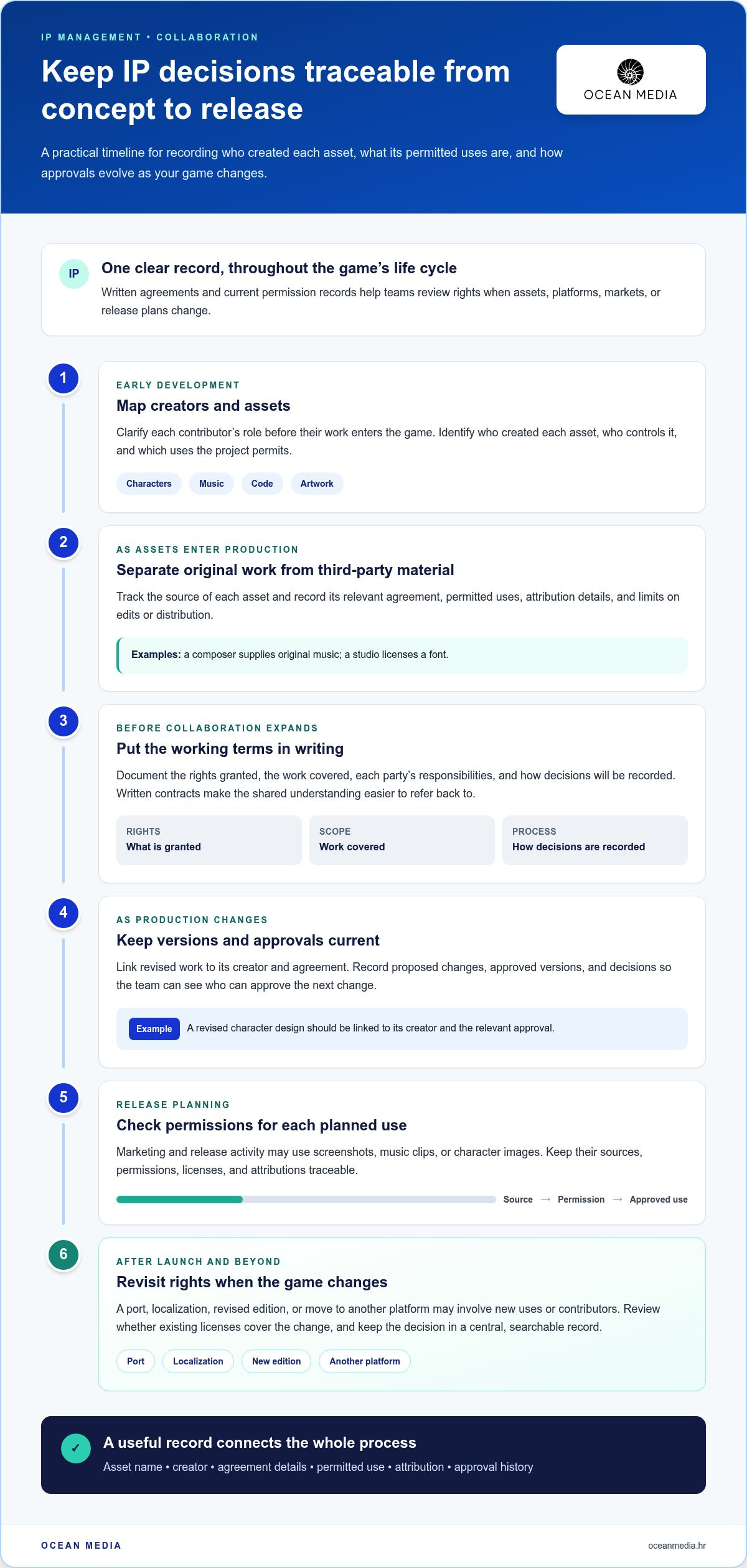
Game intellectual property develops through connected decisions, from early concepts to post-release updates. A studio might create characters, music, code, and artwork, while a publisher coordinates release activity. Clarify each contributor’s role before their work enters the game. A written record can identify who created each asset, who controls it, and which uses the project permits. This gives both parties a shared reference as the game changes.
During development, map assets to their creators and identify any third-party material. For example, a composer may supply original music, while a studio licenses a font. Record the relevant agreement, permitted uses, attribution details, and any limits on edits or distribution. This inventory helps the team distinguish studio-created material from assets with separate terms. It also gives the publisher useful context when preparing platform releases or promotional materials.
Written contracts support collaboration, even where verbal agreements are valid. They can explain the rights granted, the work covered, each party’s responsibilities, and how decisions will be recorded. A useful agreement also anticipates changes: a soundtrack might be replaced, a game might reach another platform, or a release might expand into a new market. Documenting these possibilities helps prevent teams from treating an old approval as automatic permission for a different use.
Keep the rights record current as production progresses. When an artist delivers revised character art, link the approved version to its creator and agreement. When a publisher proposes a platform migration, record the decision and review whether existing licenses cover the new use. These steps make IP management a working process, not a folder assembled only before launch. Clear ownership information also helps teams identify who can approve a proposed change.
Release planning brings new collaborators and uses into view. A marketing team may need screenshots, music clips, or character images; each asset should have a traceable source and approved use. Publishers should record permissions, licenses, and attributions for third-party content. If the game later gets a new edition or moves to another platform, those records help the team assess the relevant rights instead of relying on memory.
After launch, updates and new markets can change how the original work is used. A port, localization, or revised edition may involve additional creative contributors and agreements. Keep decisions in a central record, with searchable asset names, agreement details, and approval history. For teams planning the console publishing process, this organized record can help connect IP decisions with release preparation. The result is a clearer collaboration trail from concept through ongoing distribution.
Copyright ownership and registration
Copyright can protect original game material once it’s created and fixed in tangible form. Examples include source code, concept art, dialogue, and recorded music. A written document or saved digital file can capture that expression. Copyright doesn’t protect an idea by itself, such as a general concept for a fantasy adventure. Identifying the specific work helps you distinguish protected expression from broad ideas during a publishing discussion.
Copyright ownership and publishing permission are separate questions. The Berne Convention recognizes authors’ exclusive rights of reproduction and distribution, which publishers need to acquire to publish a work. For a game, the agreement should clarify whether the publisher can reproduce and distribute specified materials. The scope might cover a particular game build, artwork, or soundtrack. Read each grant alongside any limits on format, territory, or use.
Ownership can become complicated when a project combines work from several contributors. A studio might create the code, commission character illustrations, and license a music track. Keep those categories distinct in project records. For each asset, record its creator and relevant agreement. Then compare that agreement with the rights the publishing contract proposes to grant. This can reveal where permissions need clarification before an asset is included in a release.
Copyright protection generally lasts for the author's lifetime plus 70 years in most jurisdictions, according to the World Intellectual Property Organization. That broad term makes accurate ownership records relevant well beyond a game’s initial release. A team managing intellectual property with a publisher should identify the author or rights holder for each asset, rather than treating the entire game as one undifferentiated work. Different materials can have different creators and agreements.
Copyright protection for literary, artistic, and musical works doesn’t require compulsory registration formalities, and basic protection doesn’t require formal registration. In the United States, however, registering copyright with the U.S. Copyright Office enables copyright holders to pursue statutory damages and attorney fees in infringement cases. Registration therefore has a practical enforcement role. Keep records that identify the registered work and connect it to relevant project files and ownership information.
Public-domain status can also matter when a game adapts existing material. Classic literature published before 1928 generally falls into the public domain in the United States. A team considering a literary adaptation should still separate the original text from newer translations, illustrations, or recordings. For example, the age of a source novel doesn’t automatically establish the status of every later creative contribution associated with it.
International publishing adds another layer. Copyright terms and legal processes can differ by jurisdiction, so identify the markets covered by the agreement and the assets planned for release. The WIPO Copyright Treaty is relevant to publishing in the digital environment. For a game released digitally across markets, written rights records help connect the underlying work, authorized uses, and distribution plans without confusing ownership with permission.
Before signing, compare the contract’s rights language with your asset records. Mark each grant, identify the work it covers, and note any limits or retained rights. If a publisher’s proposed use includes game code, promotional artwork, or music, trace that asset to its creator and agreement. This focused review gives you a clearer basis for discussing ownership, registration, and permitted distribution.
Exclusive and non-exclusive licensing
A license lets another party use defined intellectual property without necessarily transferring ownership. For a game, you might authorize a publisher to distribute a specific title on selected platforms. An exclusive license gives that publisher sole use within the agreed scope. A non-exclusive license lets you grant similar rights to others, subject to the contract. The distinction affects your options for future releases, partnerships, and distribution.
Consider a game licensed exclusively for one console platform. The agreement should define the title, platform, territory, permitted uses, and duration. Those boundaries determine what the publisher can do and what remains available to you. If the license covers only distribution on that platform, other rights may remain outside its scope. Name those retained rights explicitly, such as the right to pursue another platform arrangement or separate adaptations, including live entertainment experiences developed with producers like Lar&Co.
A non-exclusive license can suit rights you plan to use through multiple channels. For example, you might authorize different partners to distribute a game on separate platforms. Authors also grant non-exclusive digital rights to multiple platforms while preserving flexibility for future arrangements. For game projects, specify which uses each license allows, and ensure overlapping grants don’t create conflicting commitments. Clear definitions help each partner understand the limits of their authorization.
Broad or perpetual rights grants can restrict your ability to make future deals, especially if they cover every format, platform, territory, and adaptation. Vague scope can also lead to disagreement over whether a later port, update, or new edition falls within the original grant. Define the covered work and permitted uses, then set out how the rights end or can be reviewed.
Read the grant alongside provisions for sublicensing, updates, and platform changes. If a publisher can authorize another party to use the game, the contract should clarify which rights may pass onward and for what purpose. For example, a platform migration may require a different technical release, but it shouldn’t silently expand unrelated rights. Documenting these boundaries makes later collaboration easier to assess.
Before agreeing, compare the proposed license with your release plans. List each platform, market, and intended use, then mark whether the publisher needs exclusivity for that specific area. Check for terms that combine several rights into one grant or continue beyond the project’s active release needs. A clear schedule can separate digital distribution from other uses and identify rights you retain. This makes managing intellectual property with a publisher a deliberate allocation of rights, not an all-or-nothing choice.
Firm use of intellectual property
A studio can treat its intellectual property as a business asset while avoiding unauthorized use of others’ work. That requires clear records and consistent decisions across development, marketing, and release. For example, a game may combine original code with licensed music, stock artwork, and a third-party font. Track each asset’s source, permitted use, and restrictions. This gives your team a practical basis for deciding what can appear in a build, trailer, store listing, or later release.
Written contracts make those decisions workable. Publishing agreements should identify the covered work, granted rights, responsibilities, and relevant permissions. A separate asset record can connect each third-party item to its license and attribution requirements. For example, a licensed track might be approved for gameplay but restricted in promotional use. Recording that distinction helps prevent a trailer from using material beyond its authorized purpose.
U.S. fair use does not provide a simple percentage test. Whether a use qualifies depends on all the circumstances and how the owner views it. SIL Global describes an informal guideline of no more than 10% for portions of a work, but U.S. law sets no specific word-count or percentage threshold. Treat that guideline as an example, not automatic permission. For a recognizable song, image, or passage, obtaining permission is the safer practical course.
Secure permissions before third-party material enters a submitted manuscript or game publication. SIL Global requires written permissions for third-party intellectual property included in submitted manuscripts. Apply the same recordkeeping principle to a game’s soundtrack, character art, voice performance, or embedded text. Keep the permission, credit wording, and approved use together. If a later update changes the asset or its context, review the record before release.
Attribution matters, but a credit line doesn’t replace permission. Record who owns an asset, what the permission allows, and where attribution must appear. For example, a credit required in game menus may not meet a separate requirement for promotional materials. A consistent permissions log gives development, marketing, and publishing teams the same reference. It also helps identify assets that need attention before a platform submission or campaign is prepared.
When infringement appears online, the U.S. DMCA provides a takedown-notice mechanism. A rights holder can use that process to request action against allegedly infringing material. Keep relevant files, ownership records, licenses, and examples of the disputed use together. Those records help explain the claim and support an organized response. For publishers, a searchable system also makes it easier to locate permissions and attribution information during reporting or review.
Make IP stewardship part of the release workflow. Before each build or campaign, identify new third-party assets, check their recorded permissions, and confirm required credits. If your next milestone is bringing your game to consoles, reserve your slot in our publishing pipeline and let's get started today! A clear rights record can support a smoother handoff as your game moves toward release.
Ocean Media: Console Game Publishing
Ocean Media supports developers through Console Game Publishing when bringing a game to consoles calls for focused release expertise. Its services include digital distribution across console platforms and guidance through the technical and administrative complexities of platform submissions. This support connects publishing decisions with the practical requirements of preparing a title for release, while helping you keep the game’s rights and approved uses clear.
If your team is preparing a console release, consider how publishing support fits your project’s goals and rights plan. A clear understanding of what you own, what you license, and what the release requires gives you a stronger basis for collaboration. Contact Ocean Media to discuss your publishing plans, or visit oceanmedia.hr.
Set Your Game Up for Its Next Release
Your next step is to turn your rights plan into clear decisions for the project ahead. Before bringing your game to consoles, align the release scope with the permissions, approvals, and agreements your team relies on. This gives collaborators a shared basis for moving forward and keeps creative and publishing decisions connected.
Managing intellectual property with a publisher is an ongoing part of building a game’s future, not just a contract-stage task. As your plans develop, revisit how rights apply to the release you’re preparing and the platforms you’re targeting. A publishing partner can help you navigate the technical and administrative work involved in console submissions.
Reserve your slot in our publishing pipeline and let's get started today! Bring your project goals into the conversation, and take the next step toward your console release with confidence.
Frequently Asked Questions
What intellectual property rights does an author typically retain when signing with a publisher?
A game creator retains rights the agreement doesn’t grant or transfer. For a studio, this may include uses outside the agreed console release, depending on the contract’s wording. For example, if a publisher’s authorization covers one game build, clarify how it applies to a later sequel or a separate adaptation. Identify retained rights explicitly so your team can plan future projects without confusing them with the current release.
What rights does a publisher need to publish and distribute a book?
For a game release, a publisher needs permission for the specific publishing activities it will perform. These may include preparing the authorized build for digital release and making it available through the agreed console channels. The agreement should also address related materials, such as store descriptions or screenshots, if the publisher will use them. Matching the rights grant to actual release tasks helps your studio understand what the publisher can do.
How do publishing contracts handle copyright ownership and licensing?
A contract can leave game copyright with its creator while licensing defined uses to the publisher, or transfer rights through explicit assignment language. Check how the agreement treats studio-created assets and work contributed by outside creators. For example, a studio’s rights in its game code may differ from its permission to use a contractor’s artwork. Clear terms help your team identify who can authorize each use.
What is the difference between granting exclusive and nonexclusive publishing rights?
Exclusive rights reserve the defined use for one publisher; non-exclusive rights allow you to authorize multiple parties for that scope. For example, an exclusive agreement for a particular console release may limit your ability to appoint another publisher for the same release. A non-exclusive arrangement may allow separate partners to handle distinct platforms. The contract’s scope determines the effect, so compare the rights, platforms, and uses it names.
How should authors protect their work and document ownership before submitting it to publishers?
Before sharing a game build, organize records that identify its creators and the permissions supporting its assets. Keep a submission copy, note its version, and connect included music, artwork, fonts, and other third-party materials to their applicable agreements. If a publisher receives a build for review, record what materials you shared and the purpose of the submission. This creates a clear trail for later release planning and asset questions.
How do U.S. copyright registration and publisher agreements affect enforcement of an author's rights?
U.S. copyright registration can support enforcement options, while the publisher agreement defines which rights the publisher may exercise. For a game studio, keep registration records tied to the specific work and compare them with the contract’s grant. If a dispute concerns a game asset, those documents can help distinguish the studio’s ownership claim from the publisher’s authorized use. Registration doesn’t expand the publisher’s permission or replace clear contract terms.


