

A strong console launch is built well before release day. The right indie game console launch strategy connects your audience, positioning, storefront presentation, and release preparation, so each decision supports the next. But when development already demands your team’s focus, it can be difficult to know what to prioritize or how to coordinate the work.
You don’t need to solve every launch question at once. You need a clear sequence of decisions, practical milestones, and a plan that links what players see to the work required to bring your game to consoles. This guide will help you build that plan, from defining your audience and sharpening your positioning to preparing your storefront, coordinating the publishing pipeline, and learning from performance after release.
We’ll focus on manageable steps that help you prepare with confidence while keeping your creative direction at the center. Use the guidance to identify what your team can own and where publishing coordination may be useful.
Key Takeaways
- Build your indie game console launch strategy around connected decisions, not a release-day checklist.
- Clarify the qualities console players will value, then keep your store page, trailers, and updates aligned.
- Use flexible milestones to coordinate preparation, release communications, and post-launch review around your team’s capacity.
- Set clear priorities and ownership to decide which launch tasks your team can manage and where publishing support may help.
- Connect your launch goals to a repeatable publishing pipeline, with clear owners for decisions and dependencies.
Indie game console launch strategy starts with a clear definition of success
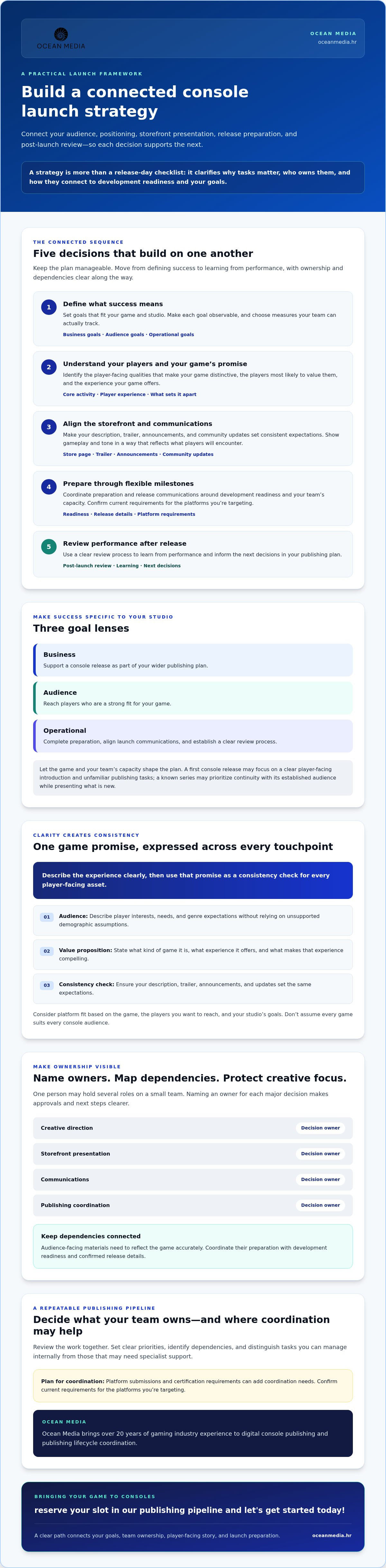
An indie game console launch strategy is the set of connected decisions that guides your game’s release preparation, launch activity, and post-launch review. It aligns what success means for your studio with the work, people, and player-facing messages needed to bring your game to consoles.
That’s broader than a release-day marketing checklist. A checklist might track announcements or promotional assets; a strategy explains why those tasks matter, who owns them, and how they connect to development readiness and your goals. The video game development process involves creative and production decisions shaped by a project’s scale and team. Launch planning should reflect that reality, not assume every studio has the same capacity.
Choose launch goals that fit your game and studio
Before choosing tactics, separate your goals into three categories. Business goals might focus on supporting a console release as part of your wider publishing plan. Audience goals could include reaching players who are a strong fit for your game. Operational goals might include completing preparation, keeping launch communications aligned, or establishing a clear review process. Make each goal observable, then choose measures your team can actually track. You don’t need an industry benchmark to decide what matters to your studio.
Priorities also depend on the game’s context. For a studio’s first console release, a useful focus may be building a clear player-facing introduction and managing unfamiliar publishing tasks. A known series may instead prioritize continuity with its established audience while presenting what’s new in this release. Let the game and your team’s capacity shape the plan.
Map the people and decisions behind the launch
Assign an owner to each major decision: creative direction, storefront presentation, communications, and publishing coordination. One person may hold several roles on a small team, but naming an owner makes approvals and next steps clearer. Then map dependencies. For example, audience-facing materials need to reflect the game accurately, so coordinate their preparation with development readiness and confirmed release details.
Review the work as a team and distinguish tasks you can manage internally from those that may need specialist support. Platform submissions and certification requirements can add coordination needs, so confirm current requirements for the platforms you’re targeting. Ocean Media brings over 20 years of gaming industry experience to digital console publishing and publishing lifecycle coordination. Learn more about console publishing for developers and how publishing support can fit alongside your studio’s creative direction.
Position your indie game for console players before planning promotion
Promotion works best when players can quickly understand why your game is for them. Start with its most distinctive, player-facing qualities: the core activity, the experience it creates, and the elements that set it apart. Then consider which players are most likely to value those qualities. Platform fit is part of this assessment, but don’t assume every game suits every console audience. Base your decision on the game, the players you want to reach, and your studio’s goals.
Define the audience and the game’s clearest promise
Describe your intended audience by their interests, needs, and genre expectations, rather than relying on unsupported assumptions about age or other demographics. For example, identify whether players are drawn to thoughtful exploration, competitive challenges, or a particular style of storytelling. Then write a concise value proposition: what kind of game is it, what experience does it offer, and what makes that experience compelling?
Use that promise as a consistency check. Your game description, trailer, announcements, and community updates can each highlight different details, but they should set the same expectations. If a trailer suggests fast-paced action while the description emphasizes reflective exploration, players may receive a confusing impression. For more on reaching audiences across regions, see our guide to preparing an indie game for a global console launch.
Shape a storefront presence that supports discovery
Your storefront materials should help players understand both gameplay and tone. A clear description explains the central experience in direct language. Visual materials should reinforce that description, showing the game in a way that reflects what players will actually encounter. Check the current official documentation for each target platform’s asset requirements before preparing or publishing storefront materials. Requirements can differ, so verify rather than assume.
Keep claims grounded in what your team can deliver. Strong presentation can help the right players assess whether a game interests them, but it can’t guarantee featuring, visibility, or sales. Focus instead on making the game’s appeal clear wherever you speak to players. That discipline also helps a small team use its limited attention well; GamesIndustry.biz explores how indie studios can survive industry volatility through resilience and collaboration.
A focused indie game console launch strategy gives your audience-facing work a shared foundation. For help coordinating the publishing side of a console release, explore our console publishing for developers.
Build an indie console launch plan around milestones, not one release-day push
A console launch is easier to coordinate when you treat it as a sequence of milestones rather than a burst of activity on release day. A flexible indie game console launch strategy can move from aligning goals to preparing materials, coordinating release readiness, communicating with players, and reviewing results. The order and lead time will vary with your game, team, and current platform requirements, so confirm what applies to your release instead of relying on a fixed calendar.
Protect your team’s capacity by separating essential work from optional promotion. Essential tasks are those needed to prepare and coordinate the release, such as confirming who approves key materials and tracking submission-related work. Optional activity might include extra campaign assets or additional announcements. Prioritize based on your goals and available resources; don’t let bonus promotion distract from core readiness.
Coordinate readiness across development and publishing
Map the dependencies between the game build, submission materials, storefront content, and communications. If release messaging depends on confirmed details or approved assets, mark that relationship in your plan. Assign an owner for each workstream and name who makes the final decision, even if one person fills several roles. This gives your team a clear route for questions and approvals.
Keep technical approval details tied to current platform guidance. For a deeper look at that part of the process, consult the console certification guide for developers. A publishing partner can also help coordinate platform submissions and release preparation while your studio retains its creative direction.
Prepare launch communications that match the game
Choose communication channels based on where your intended players already engage, not on a generic checklist. Build announcements around information you’ve confirmed and materials your team can deliver. If a release detail changes, identify which messages or assets need updating so players receive a consistent picture of the game.
For releases aimed at players in multiple regions, include localization considerations in the plan early enough to coordinate the relevant content and approvals. The scope will depend on your game and release plans. Use the global console launch localization guide to explore factors to consider.
Keep the plan visible and review progress at each milestone. A shared tracker with task owners, dependencies, approval status, and open questions makes it easier to spot delays and adjust priorities. It also gives your team a useful record for the post-launch review.
Can a small indie team manage a console launch without losing focus?
Yes. A small team can manage a console launch by setting clear priorities, assigning ownership, and keeping the plan focused on what supports readiness and helps players understand the game. You don’t need to pursue every promotional idea. The aim is to coordinate the work of bringing your game to consoles without letting optional activity compete with essential development tasks.
Start by ranking launch work according to its impact on three areas: release readiness, player understanding, and coordination. If a task doesn’t meaningfully support one of these, consider whether it can wait. This keeps your indie game console launch strategy realistic for the capacity you have, rather than built around an idealized team size.
Prioritize launch tasks when your team has limited capacity
Use a simple responsibility tracker to make workload visible. For each task, record an owner, relevant dependencies, and current status. A storefront description, for example, may depend on confirmed game details; communications may depend on approved assets. Clear ownership helps prevent tasks from being overlooked or repeatedly discussed without a decision.
Keep the scope focused on audience clarity, release readiness, and consistent communication. If an additional promotional activity pulls people away from development or unresolved release work, defer it. You can revisit it when capacity allows.
Decide when publishing support could help
Managing tasks internally can work well when your team has the relevant experience, available capacity, and a clear process for making decisions. Publishing support may be worth considering if platform submissions, certification coordination, or recurring publishing administration are creating pressure or drawing attention from development. Neither route is right for every studio. Choose based on the gaps you need to address and the responsibilities you want to retain.
Before entering a publishing partnership, clarify who owns each workstream, who approves decisions, and how your team will stay informed. Confirm which responsibilities are handled by the studio and which are covered by the publishing arrangement. A publisher should support coordination, not replace your creative direction.
Ocean Media focuses on digital console game publishing and supports developers through platform submissions and the publishing lifecycle. Learn more about console publishing support for developers and consider whether that coordination fits your team’s needs.
Turn your console launch strategy into a repeatable publishing pipeline
A reliable launch process gives your team a path to follow, then improves with each release. Carry the decisions from your indie game console launch strategy into a repeatable sequence: define goals, prepare the release, coordinate publishing work, communicate with players, and review what happened. The sequence provides structure without assuming every game or platform requires the same steps.
That’s where the publishing pipeline connects planning to execution. Ocean Media specializes in digital console game publishing, supports developers with platform submissions and certification requirements, and coordinates the publishing lifecycle. With over 20 years of experience in the gaming industry, our role is to support the release process while your studio leads its creative direction. This focuses on digital console releases, not physical retail distribution or work-for-hire development.
Use post-launch learning to inform the next release decision
Review available performance signals against the goals you set before launch. Consider relevant storefront or audience feedback available to your team, and collect player comments from the channels you use to communicate. Look for patterns, but separate what you observed from what you think caused it. A change in a signal doesn’t prove that a particular announcement or asset produced the result.
Then identify which findings are actionable. If players repeatedly misunderstand a feature, for instance, you could review how it’s explained in your description or communications. Record the decision, its owner, and what you’ll check next time. This turns review into a practical input for future publishing plans, rather than a collection of untested assumptions.
Start a conversation about bringing your game to consoles
Prepare a concise overview of your game, its current development status, and the consoles you’re considering. Note your goals, what work is already underway, and where your team sees coordination needs. That gives you a useful starting point for discussing fit, responsibilities, platform submission support, and the publishing pipeline.
Before moving forward, make sure expectations are clear: which decisions remain with your studio, what publishing responsibilities are relevant, and how the work will be coordinated. A focused conversation can help establish whether the publishing approach fits your project and team.
For information about Ocean Media’s publishing work, visit console publishing for developers.
Turn your console launch plan into your next step
A focused indie game console launch strategy connects clear goals, a consistent message for players, and practical release milestones. Keep priorities realistic for your team, assign ownership, and use post-launch feedback to inform what you do next. That structure helps you coordinate the work without losing sight of the game itself.
Bringing your game to consoles also means coordinating publishing work alongside development. Ocean Media brings over 20 years of experience in the gaming industry, with a dedicated focus on digital console publishing and distribution. We support developers through platform submission and certification complexities as part of the publishing lifecycle, while your studio remains at the center of its creative direction.
Have a game in development or ready to explore console release plans? Share your project and goals with Ocean Media to discuss fit, responsibilities, and the publishing pipeline. Contact us about console publishing for developers.
Frequently Asked Questions
What is an indie game console launch strategy?
An indie game console launch strategy connects the decisions behind your audience, positioning, release preparation, communications, and post-launch review. It helps you decide what needs to happen, how work depends on other tasks, and who owns each decision. Unlike a release-day promotion plan, it covers the wider path to release and follow-up. Shape the strategy around your game, your studio’s capacity, and current platform requirements.
How early should I start planning an indie game console launch?
Start planning once you can make meaningful decisions about your game, intended audience, and release work. There’s no universal lead time that fits every project or platform. Map dependencies between development readiness, submission materials, storefront content, and communications. Confirm current platform requirements through official sources, then update your plan as details change. Starting with the decisions you can make now helps you identify open questions without locking into an unsuitable schedule.
Can a small indie studio launch a console game without a publisher?
Some studios may manage console launch responsibilities internally, while others may benefit from publishing support. The right choice depends on your team’s experience, available capacity, and readiness to coordinate digital publishing work. Compare the responsibilities involved, including platform submissions and release coordination, then clarify who will own each task. Self-publishing and working with a publisher are different approaches, and neither is automatically the right fit for every game or studio.
What should an indie studio prioritize before a console game launch?
Prioritize release readiness, clear audience positioning, accurate storefront materials, and ownership of key tasks. Check current requirements for each target platform rather than relying on an old checklist. Plan communications around confirmed information and channels your intended players use. Keep optional promotional activity separate from essential release work. This helps your team protect development focus while making sure players receive a consistent, accurate picture of the game.
How do I make my indie game stand out on a console storefront?
Make your game’s audience, core experience, and strongest qualities easy to understand through clear descriptions and consistent visual materials. Ensure promotional claims reflect the actual game, so players know what experience to expect. Review current storefront requirements for each relevant platform before preparing assets. A strong, accurate presentation helps players assess whether the game interests them, but no specific asset or description can guarantee visibility, featuring, or sales.
What happens if my console game launch plan changes?
Revisit your priorities, dependencies, and task owners when development or release circumstances change. Identify which platform tasks, materials, and communications are affected, then share the updated plan with everyone involved. Confirm current information before adjusting commitments, and don’t preserve a milestone simply because it appeared in an earlier draft. A flexible publishing pipeline helps your team coordinate changes while keeping the launch goals and essential work in view.
How can a console publisher help with an indie game launch?
A console publisher may support digital publishing work, including lifecycle coordination and navigating platform-specific submission and certification requirements. Responsibilities depend on the partnership, so clarify scope, decision-making, and task ownership before proceeding. Ocean Media focuses on digital console publishing and distribution, helping developers coordinate releases across major console platforms. Learn more about Ocean Media’s console publishing services.


