

What if your studio's most ambitious project never reaches a single player simply because of a documentation error? In a global console market projected to hit $91 billion this year, the distance between a finished build and a successful storefront presence has never been wider. The strategic benefits of a game publisher for console become most apparent when you're staring down the latest Xbox Requirements (XR) version 16.3 or the complexities of a Sony Technical Requirements Checklist (TRC) submission. It's a high-stakes environment where a single technical oversight can delay your revenue for months.
We understand that your passion lies in the creative process, not in deciphering global digital tax laws or fighting for devkit access. You want your game to shine on every major platform without the crushing weight of administrative bureaucracy. This guide reveals why a dedicated publishing partner is the difference between a stalled project and a global digital hit. We'll break down how to navigate the certification moat, secure platform featuring, and ultimately reclaim your time to focus on what matters: the game polish that defines your legacy.
Key Takeaways
- Understand why the 2026 digital-first landscape makes the "Console Barrier" more restrictive than open platforms like PC.
- Master the technical requirements of the major gatekeepers by demystifying Sony's TRC and Xbox's XR 16.3 certification processes.
- Evaluate the true benefits of a game publisher for console through a framework that accounts for hidden expenses like age ratings and localization.
- Learn how to choose a partner with the technical depth and platform relationships necessary to turn a submission into a global hit.
- Focus your studio's energy on game polish and creativity while a seasoned guide handles the administrative burden of global storefront laws.
The Console Barrier: Why Digital Publishing is a Different Beast
The console market has evolved into a $91 billion powerhouse, but for many developers, the gate remains locked. Unlike the open nature of PC platforms where anyone can upload a build, consoles operate as curated ecosystems with strict entry requirements. This "Console Barrier" isn't just about hardware; it's a complex layer of technical and administrative standards that must be met before a single player sees your game. Understanding the role of a video game publisher is essential here, as they act as the expert keyholder to these digital storefronts.
One of the primary benefits of a game publisher for console is their ability to bridge this gap. While PC development allows for rapid iteration and self-publishing with minimal oversight, consoles require a high level of compliance. You're not just selling a game; you're entering a partnership with platform holders who have reputations to protect. They expect your title to be stable, secure, and fully integrated with their specific network features from day one.
The Evolution of Console Storefronts in 2026
Digital-only distribution has become the primary engine for indie growth. By 2026, the PlayStation Store, Xbox Games Store, and Nintendo eShop have refined their algorithms to favor games that meet specific technical benchmarks. Just "being on the store" isn't enough to secure visibility among thousands of competing titles. Storefronts now demand optimized metadata, regional compliance, and specific store-page assets that align with ever-changing platform policies. A publisher ensures your game doesn't just exist on the store but thrives within its specific ecosystem by managing these shifting requirements in real-time.
Administrative Weight: The Hidden Time-Sink
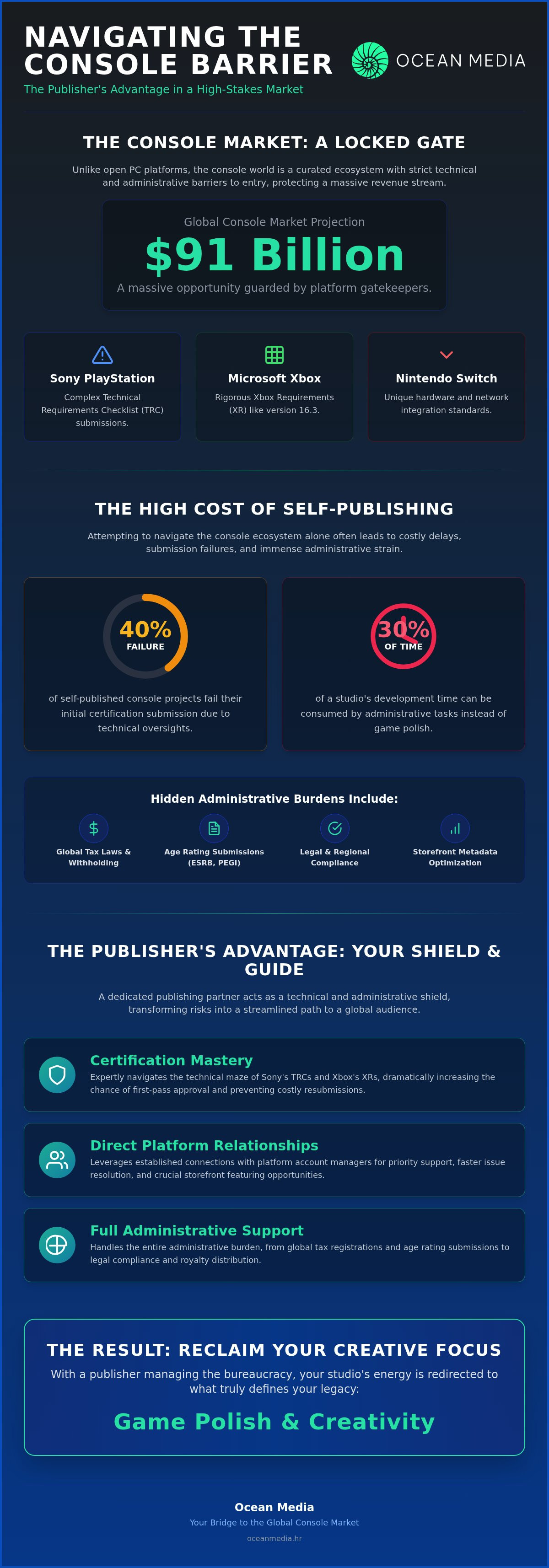
The bureaucracy involved in a global launch is a significant drain on resources. Administrative tasks, such as managing global tax requirements and royalty distributions, often consume up to 30% of a studio's development time. Navigating the maze of age rating systems like ESRB, PEGI, and CERO requires meticulous documentation and localized knowledge that many small teams lack. Trying to learn these systems on the fly often leads to submission rejections and missed launch windows.
A dedicated console publisher handles these critical tasks. They manage:
- Tax ID registrations and withholding forms across multiple territories.
- Age rating submissions for ESRB, PEGI, and IARC systems.
- Legal compliance for global digital storefronts and consumer protection laws.
- Direct communication with platform account managers for featuring opportunities.
By acting as a technical and administrative shield, a publisher allows your creative team to stay focused on the game polish. You shouldn't have to choose between fixing a game-breaking bug and filing a cross-border tax form. This partnership transforms an overwhelming administrative burden into a streamlined path to market, ensuring your game reaches its audience without the typical friction of self-publishing.
The Technical Advantage: Navigating the Certification "Black Box"
Getting a game onto a console isn't just about finishing the code. It's about passing a rigorous series of tests known as certification. For many independent developers, this process feels like a "black box" where builds go in and rejection notices come out. One of the primary benefits of a game publisher for console is their ability to demystify this technical gauntlet, ensuring your project doesn't stall at the final hurdle. They provide the expertise needed to translate vague error reports into actionable fixes.
Certification is the process where platform holders verify that your game meets their specific standards for performance, security, and user experience. Industry estimates suggest that approximately 40% of self-published console projects fail their initial submission due to technical oversights. This isn't surprising given the evolution of video game revenue models and the resulting complexity of platform infrastructure. Publishers provide a technical shield, leveraging their direct relationships with platform holders to secure faster turnaround times and priority support when issues arise.
Sony, Microsoft, and Nintendo: Different Rules, One Goal
Each platform has its own set of technical bibles. Sony utilizes the Technical Requirements Checklist (TRC), which focuses heavily on system-level interactions and trophy functionality. Microsoft enforces the Xbox Requirements (XR), with the current version 16.3 (dated July 1, 2026) demanding strict adherence to cloud saves and network stability. Nintendo's Technical Certification Requirements (TCR) for the eShop are equally specific, particularly regarding controller configurations and sleep mode behavior. Just as industrial projects require precision components from specialists like ogvalves.com to ensure safety and performance, a publisher ensures your build is "pre-flighted" against these rules long before the official submission date.
Securing hardware is the first physical barrier to entry. Devkits are expensive, restricted, and usually require a registered legal entity to acquire. A publisher streamlines this by facilitating hardware access and managing the logistical burden. They handle constant firmware updates and platform-specific development tools that can break a build without warning. When "the build just won't run on hardware," having a partner with 20 years of experience means you get a solution rather than a dead end. If you want to bypass the bureaucracy and focus on your game's performance, partnering with a seasoned console guide is the most efficient path forward.
Self-Publishing vs. Partnering: A Cost-Benefit Framework
The decision to self-publish often stems from a desire to retain 100% of revenue after the platform's 30% cut. However, this logic frequently collapses when faced with the actual benefits of a game publisher for console. While a 100% share sounds appealing, it's a percentage of a potentially smaller pie. Research shows that for console-only publishing deals, the average developer share is 66%. Understanding the gaming industry value chain helps clarify that a publisher isn't just a middleman; they're an engine for scale that handles the upfront financial risk, including a median advance of $270,000.
The true cost of self-publishing isn't just monetary; it's measured in developer hours. Every hour spent on administrative compliance is an hour not spent on gameplay mechanics. For a small team, this opportunity cost can be the difference between a "Mixed" and "Overwhelmingly Positive" review score on launch day. If your team is buried in paperwork, the core game experience inevitably suffers.
The Real Cost of Console QA and Localization
Console-specific Quality Assurance (QA) is notoriously more complex than PC testing. You aren't just looking for visual bugs. You're testing for platform-specific requirements like controller disconnect behavior, account switching, and suspend-resume cycles. This often makes console QA three times more expensive than standard PC testing. Professional localization is another hurdle. To get featured on global storefronts, your game needs to speak the local language. A publisher typically absorbs these upfront costs, providing a financial cushion that allows you to focus entirely on the build.
Launch Momentum: Multi-Platform vs. Staggered Release
Hitting all major platforms on Day One is the gold standard for marketing momentum. It allows you to consolidate your PR efforts and capitalize on the combined 2025 shipment totals of over 20 million PlayStation 5 and Xbox Series X|S units. Maintaining three separate codebases for simultaneous submission is a technical nightmare for most indie teams. A publisher provides the infrastructure to handle these parallel workflows. This scalability ensures you don't have to stagger releases, which often leads to "platform fatigue" where the hype has died down by the time you reach the second or third console. By leveraging the benefits of a game publisher for console, you ensure your game makes the biggest possible splash across the entire $91 billion market.
How to Evaluate a Console Publisher’s Value
Selecting a publishing partner is one of the most consequential decisions a studio will make. To maximize the benefits of a game publisher for console, you must look beyond surface-level marketing promises. A true partner provides more than just a logo on a splash screen; they offer a deep technical infrastructure and established human relationships within platform holder organizations. You need to verify that they've successfully navigated the certification gauntlet on your target platforms within the last year (especially given the July 2026 update to Xbox Requirements version 16.3).
Technical depth is a non-negotiable foundation of this evaluation. Ask potential partners if they have in-house engineering teams capable of diagnosing platform-specific crashes or if they simply relay automated error logs back to you. A publisher who lacks technical expertise is merely an administrative middleman. You're looking for a team that has direct lines to "Storefront Editors" at Sony, Microsoft, and Nintendo. These relationships are what secure those coveted "New Releases" or "Indie Spotlight" banners that drive organic discovery in crowded digital stores.
The Importance of a "Digital-First" Strategy
In 2026, physical retail can often be a "poisoned chalice" for independent budgets. The overhead of manufacturing, shipping, and inventory management often drains the very funds needed for digital visibility. A digital-only publisher optimizes specifically for long-tail sales and seasonal discount strategies. They understand the nuances of digital storefront management, from A/B testing store assets to timing price drops for maximum algorithm impact. Much like how marketing firms partner with Omega Odyss to manage the technical complexities of SEO and PPC, a dedicated publisher allows you to outsource the intricate details of digital growth. Ensure your partner isn't distracted by work-for-hire projects or the logistical nightmares of physical distribution, as this focus ensures their primary incentive is the long-term digital success of your title.
A high-quality publisher acts as a collaborator, not a controller. Look for a track record that demonstrates a "Creative-First" philosophy. Longevity is a key indicator here; a company with 20 years of experience has survived multiple console cycles and market shifts, proving their reliability. When reviewing a contract, look for console-specific red flags like excessive "marketing recoupment" clauses that aren't tied to verifiable digital performance or lack of clarity on devkit ownership. If you're ready to see how a veteran team can streamline your path to market, reach out to Ocean Media today for a professional evaluation of your project's console potential.
Ocean Media: Your Bridge to the Global Console Market
Ocean Media stands as a 20-year veteran in an industry that moves at lightning speed. We've witnessed the transition from experimental digital downloads to the multi-billion dollar storefronts of today. This longevity isn't just a number; it's a deep repository of technical institutional knowledge. By focusing exclusively on digital publishing, we avoid the logistical distractions of physical retail. This ensures our team is entirely dedicated to your game's performance on PlayStation, Xbox, and Nintendo platforms.
One of the most significant benefits of a game publisher for console is the ability to offload the technical weight of certification. Our "Creative-First" philosophy means we take ownership of the Sony TRCs, Microsoft XRs, and Nintendo TCRs. We act as your specialized technical arm. While your developers focus on refining mechanics and narrative, our experts navigate the certification gauntlet. This collaborative spirit ensures your creative vision remains intact while meeting the rigorous standards of the platform holders.
The Ocean Media Publishing Lifecycle
Our partnership begins with a comprehensive build review. We don't just wait for a final version; we provide feedback early to identify potential certification blockers. Once the build is ready, we handle the entire submission process across all major regions. This includes managing technical metadata, storefront assets, and direct communication with platform account managers. After launch, our support continues. We manage the pipeline for patches, updates, and DLC, ensuring your game stays relevant and visible in the long-tail digital market. This end-to-end coverage allows you to maintain momentum without getting bogged down in administrative tasks.
Ready to Take Your Game to Console?
We look for indie partners who push boundaries and offer unique experiences. If you have a project with high polish and a distinct creative voice, we want to hear from you. Our evaluation process focuses on technical feasibility and market potential within the digital ecosystem. We value transparency and long-term collaboration over transactional deals. When you're ready to transform your build into a global digital hit, partner with Ocean Media for your console launch. Let our 20 years of experience serve as the bridge between your studio and players on every continent.
Secure Your Legacy in the Digital Console Era
The path to a successful console launch is paved with technical requirements and administrative hurdles that can easily overwhelm even the most talented creative teams. We've explored how the certification "black box" and the hidden costs of self-publishing often act as barriers to entry. Realizing the strategic benefits of a game publisher for console ensures your project moves from a local build to a global digital hit without the typical friction of rejection cycles.
You've poured your passion into your game; don't let it stall at the final hurdle. With over 20 years of industry experience, Ocean Media specializes in the digital-only distribution lifecycle. We provide expert navigation of Sony, Microsoft, and Nintendo certification processes so you can stay focused on the creative vision that defines your studio. It's time to bridge the gap between development and a worldwide audience. Your game deserves a global stage, and we have the tools to help you reach it.
Launch Your Game Globally with Ocean Media
Frequently Asked Questions
What are the main benefits of a game publisher for console compared to self-publishing?
The primary advantages include technical expertise in certification, absorbing upfront costs like localization, and securing storefront visibility. While self-publishing allows for 100% revenue retention, it often results in lower total sales due to administrative friction. The benefits of a game publisher for console include handling the complex requirements of the "Big Three" (Sony, Microsoft, and Nintendo) while allowing your developers to focus entirely on game polish and creative mechanics.
How much does it cost to publish a game on consoles in 2026?
Console publishing involves platform fees (typically 30%), devkit acquisition, and administrative expenses like age ratings and localization. While platform holders take a standard cut, the hidden costs of self-publishing can be substantial for a small team. A publisher typically absorbs these upfront expenses, including professional QA and regional compliance fees, in exchange for a revenue split. This financial buffer allows your studio to scale without depleting your development budget on non-creative bureaucracy.
Do I really need a publisher to get on the PlayStation Store or Xbox Games Store?
You don't strictly need a publisher to list on these stores, but you must be a registered legal entity to apply. Individual developers cannot typically self-publish on these platforms. You'll need to pass the same rigorous technical certification as major studios, which requires significant time and hardware investment. Most independent teams find that a publishing partner is necessary to navigate these technical barriers and secure the platform relationships required for meaningful storefront featuring.
What is the "certification process" and why is it so difficult for indie devs?
Certification is the technical gatekeeping process where platforms verify that a game meets their specific quality, security, and performance standards. It's difficult because each platform has unique checklists (Sony's TRC, Xbox's XR, and Nintendo's TCR) that are confidential and complex. A single error in how your game handles controller disconnects or cloud saves can trigger a rejection. Publishers use their deep technical knowledge to "pre-flight" builds and avoid these costly submission delays.
Will a console publisher take away my creative control?
A professional publisher acts as a collaborative partner rather than a controller. Their goal is to maximize the commercial potential of your vision, not rewrite it. While they may suggest technical or UI adjustments to meet platform standards, the core gameplay and narrative remain yours. Vetting a publisher for a "Creative-First" philosophy ensures that the benefits of a game publisher for console support your artistic goals instead of hindering them.
How does a publisher help with game visibility on digital storefronts?
Publishers secure visibility through direct relationships with platform account managers and storefront editors. They pitch your game for high-impact placement in "Indie Spotlights" or "New Release" banners that drive organic discovery. Beyond pitching, they optimize your digital storefront assets (trailers, screenshots, and metadata) to favor platform algorithms. This strategic positioning is often the difference between a game that gets lost in the noise and one that achieves global digital success.
What is the difference between a digital publisher and a traditional retail publisher?
Digital publishers focus exclusively on the online storefront lifecycle, optimizing for long-tail sales and digital-only promotional strategies. Traditional retail publishers manage physical manufacturing, logistics, and inventory for brick-and-mortar stores. The digital-only model is often more efficient for indies because it removes the financial risk of unsold physical stock. This specialized focus allows for a more agile approach to global updates and localized digital storefront management across all major territories.
Can a publisher help me get devkits for Sony, Xbox, or Nintendo?
Yes, a publisher is often the most reliable way to secure devkits for Sony, Xbox, and Nintendo. These restricted hardware units are expensive and prioritized for established partners with a proven track record. A publisher handles the logistics of acquisition and management, ensuring your team has the necessary hardware for platform-specific testing and optimization. This access is a critical advantage for teams that want to launch on all major consoles simultaneously.


