

Did you know that 77% of parents regularly consult ESRB ratings before buying a game for their children? That is a massive segment of your potential market that simply won't engage with your title without those familiar black and white icons. We understand that learning how to get an esrb rating often feels like a daunting administrative hurdle, especially when you're balancing final bug fixes with the anxiety of a looming launch date. You might worry about hidden certification fees or whether a minor submission error will lead to a costly storefront delay.
Our team is here to simplify this transition, turning a complex regulatory requirement into a structured step in your publishing pipeline. This 2026 guide provides a clear roadmap for bringing your game to consoles by explaining the zero-cost IARC digital path, the traditional long form process for physical releases, and the specific disclosures required for modern storefront approval. We believe in a collaborative approach to navigating these complexities. If you want to ensure your submission is handled with seasoned expertise, reserve your slot in our publishing pipeline and let's get started today!
Key Takeaways
- Master the specific requirements of how to get an esrb rating for PlayStation, Xbox, and Nintendo storefronts to ensure a smooth North American launch.
- Distinguish between the cost-free IARC digital path and the traditional long-form submission process required for physical console releases in 2026.
- Identify common submission pitfalls and disclosure errors that often lead to expensive certification delays or post-launch rating revisions.
- Discover how a professional publishing pipeline handles the administrative heavy lifting of bringing your game to consoles.
- Gain a clear, actionable roadmap for successful storefront approval; reserve your slot in our publishing pipeline and let's get started today!
The Role of ESRB Ratings in Your Console Publishing Pipeline
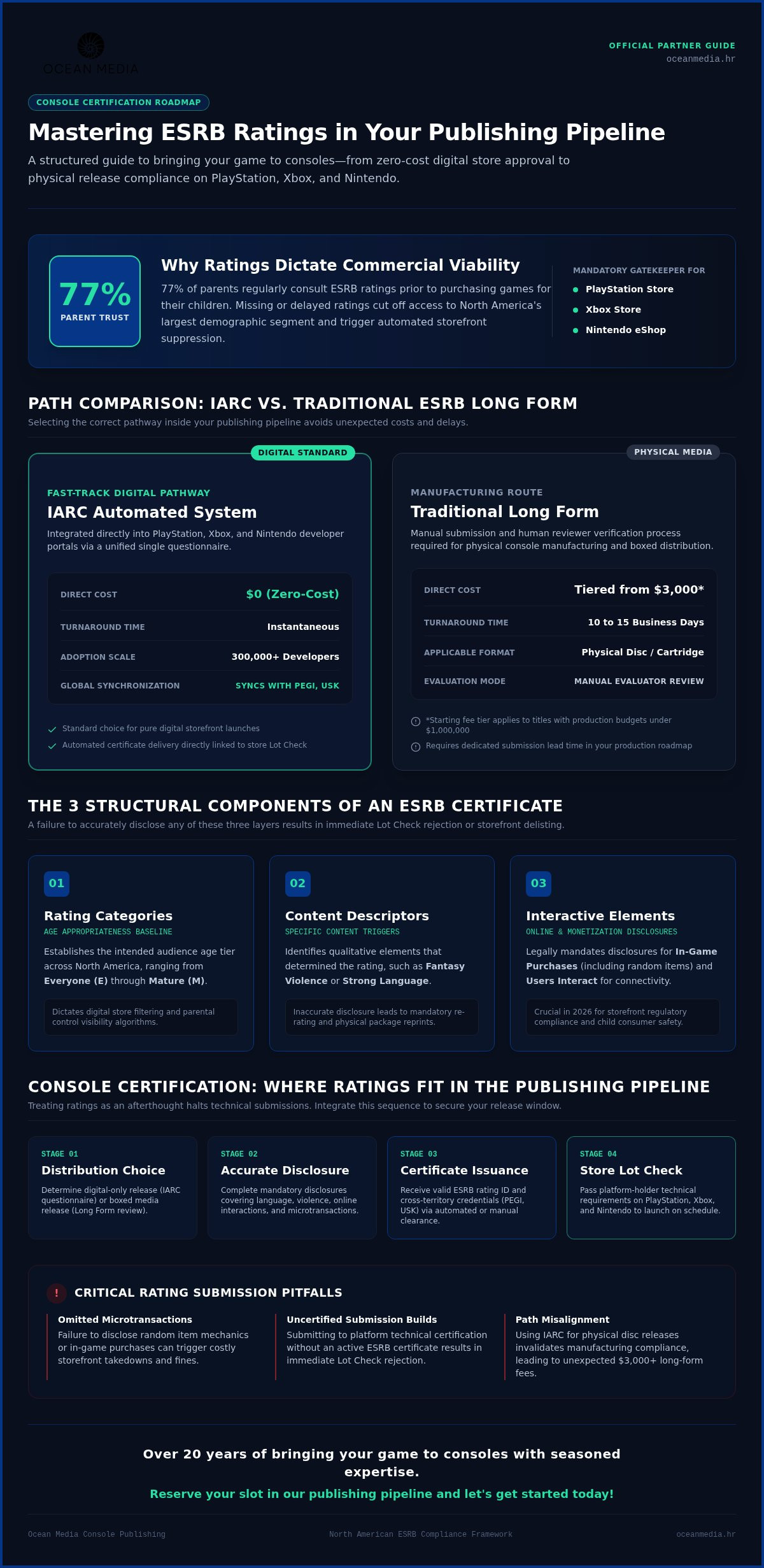
The Entertainment Software Rating Board serves as the primary gatekeeper for the North American gaming market. In 2026, this body does more than just slap a label on a box; it provides a vital framework of trust between you and your players. For developers, understanding how to get an esrb rating is a critical early step in the publishing pipeline. It isn't just about age appropriateness anymore. It's about transparency regarding data privacy, online interactions, and monetization models.
A valid rating is a non-negotiable requirement for PlayStation, Xbox, and Nintendo storefronts. Without it, your game won't even reach the "Lot Check" or technical certification phase. We see many studios treat ratings as an afterthought, but we integrate this process early to avoid launch day disasters. Your rating impacts everything from your metadata to your marketing reach, as storefront algorithms often use these labels to determine which audiences see your game. It's a strategic asset that defines your game's position in the digital marketplace.
Why You Can't Skip Ratings for Console Release
Console platform holders require these ratings to comply with regional consumer protection standards. If you attempt to submit a build without a valid ESRB certificate, you'll face immediate rejection from the submission portal. This can set your schedule back by weeks. Modern systems are highly integrated; through the IARC portal, your submission often links directly to global counterparts like PEGI or USK. This means a single, accurate disclosure can clear your path across multiple international markets simultaneously, provided you understand the nuances of each territory's requirements.
Understanding the Three Parts of an ESRB Rating
A complete rating consists of three distinct components that you must accurately disclose during the submission process. Missing even one can lead to a failed certification:
- Rating Categories: These suggest age appropriateness, ranging from Everyone (E) to Mature (M).
- Content Descriptors: These highlight specific triggers like "Fantasy Violence" or "Strong Language" that influenced the final category.
- Interactive Elements: These are critical in 2026, covering "In-Game Purchases" (including random items) and "Users Interact" for online connectivity.
Navigating these categories requires a deep understanding of how specific gameplay mechanics translate into legal definitions. We've spent over 20 years bringing your game to consoles, and we've seen how even minor omissions can lead to significant fines or storefront takedowns. Don't leave your launch to chance. You can learn more about our approach here. When you're ready to move forward, reserve your slot in our publishing pipeline and let's get started today!
Choosing the Right Path: IARC vs. Traditional ESRB Long Form
Deciding how to get an esrb rating effectively depends entirely on your distribution strategy. You have two primary paths to consider: the streamlined, automated IARC system for digital titles or the traditional Long Form process required for physical manufacturing. Choosing the wrong one early in your publishing pipeline can lead to wasted budget or missed release windows. We help our partners evaluate these options to ensure the most efficient route for bringing your game to consoles.
The differences in speed and cost are stark. While IARC is instantaneous and free for digital storefronts, the Long Form process requires 10 to 15 business days for review. It also carries tiered fees (starting at $3,000 for titles with budgets under $1,000,000). Understanding these nuances is essential for any studio aiming for a professional launch without the sting of hidden certification costs.
The IARC Advantage for Digital Indie Devs
IARC is the primary tool for rapid digital console deployment. This system integrates directly into the developer portals for PlayStation, Xbox, and Nintendo. By completing a single questionnaire, you receive an instantaneous rating for North America alongside other global territories. This path is the standard choice for the over 300,000 developers who have utilized the system to date. It removes the friction of manual review while maintaining high standards of consumer transparency across the Nintendo eShop, PlayStation Store, and Xbox Store.
When the Traditional Long Form is Required
If you plan on releasing a physical "boxed" edition, the official ESRB rating process mandates the traditional Long Form review. Unlike the automated IARC questionnaire, this route involves a detailed manual audit by at least three independent raters. You'll need to provide a comprehensive video disclosure of all pertinent content, ranging from the most extreme violence to the most suggestive themes. This ensures that every physical disc or cartridge meets the strict standards of retail partners before it ever hits a shelf.
High-profile indie titles often opt for this route even for digital releases to receive a "Rating Summary." This is a detailed public explanation of the rating that can assist with marketing and PR efforts by providing parents with more context. Managing these administrative complexities is where a dedicated publishing partner adds significant value. If you want to navigate these choices with a seasoned guide, reserve your slot in our publishing pipeline and let's get started today!
Step-by-Step: Navigating the ESRB Submission Process
Once you've determined your path, the actual mechanics of how to get an esrb rating begin with registration. You can register as an individual publisher, but many studios prefer the streamlined approach of working with a partner already established in the console ecosystem. This ensures your submission aligns perfectly with your broader publishing pipeline. The process starts with a comprehensive questionnaire that demands absolute transparency about your game's content and features.
Accuracy here isn't just about avoiding a re-rating; it's about mitigating console rating and certification delays that could derail your entire launch. While you wait during the 10 to 15 business day review period for a traditional Long Form submission, raters are meticulously evaluating your disclosures against your provided footage. We treat this phase as a collaborative effort, ensuring every detail is documented before the raters even open the file.
Preparing Your Submission Materials
Capturing the right footage is the most critical technical step in bringing your game to consoles. You must provide a "Rating Video" that showcases the "worst-case scenario" for every content category. If your game features combat, don't just show the exploration; show the most graphic finishers. If you have "Interactive Elements" like randomized loot boxes or unrestricted internet access, these must be clearly demonstrated in the B-roll. Your game's metadata, from the storefront description to the keywords, must match these submission descriptions exactly to pass the audit.
The Post-Submission Phase: Finalizing Your Rating
After the review, you'll receive a "Rating Certificate." Check this document immediately. It lists your age category, content descriptors, and interactive elements. If you feel a rating is unnecessarily restrictive, there is an appeal process, though it's often faster to adjust the offending content if your launch date is close. Once finalized, you must implement the official icons across all marketing materials and storefront assets. Managing these administrative complexities is part of what we do best at Ocean Media. To ensure your game stays on track, reserve your slot in our publishing pipeline and let's get started today!
Managing ESRB Costs and Avoiding Certification Delays
Understanding how to get an esrb rating without breaking your budget is a vital skill for any studio. In 2026, the financial barrier for digital-only titles remains remarkably low. If you are strictly bringing your game to consoles via digital storefronts, the IARC path is currently available as a zero-cost option. This prevents small indie teams from being priced out of the market. However, the moment you decide to manufacture physical discs or cartridges, you enter a tiered fee schedule. These costs are determined by your total development budget, with separate tiers for low-budget "Value" projects and larger commercial titles.
Consider whether the investment is worth it for your studio. The data is clear: 77% of parents regularly consult these ratings. Skipping a formal rating for a physical release isn't just a missed opportunity; it's a barrier to entry. Major retail partners simply won't stock unrated products. We help you weigh these costs against your projected reach to ensure your publishing pipeline remains profitable and professional.
Hidden Costs and Re-Rating Risks
DLC is a common trap for the unwary. If you add new content after receiving your initial rating, you must ensure it doesn't cross into a more restrictive category. If it does, you may face re-rating fees or even storefront takedowns. Misrepresenting content in your initial submission is an even greater risk. The ESRB maintains strict enforcement, and failure to disclose pertinent scenes can lead to corrective mandates or significant financial sanctions. These administrative complexities can quickly spiral if you don't have a seasoned guide to oversee the disclosures.
Timing Your Submission for a Global Launch
Lead times are the silent killer of launch dates. You should initiate the Long Form process at least 4 to 6 weeks before your gold master is due. This accounts for the 10 to 15 business days required for review, plus the initial 5 business days for publisher registration. Syncing these efforts with other regional boards is easier than you think. You can find more details in our Global Console Game Age Rating Guide for Developers 2026.
We specialize in navigating these administrative complexities to keep your project on track. Don't let a paperwork error delay your global debut. Reserve your slot in our publishing pipeline and let's get started today!
Streamlining Your Global Launch with an Experienced Publishing Partner
You've poured years of creative energy into your project, and now you stand at the threshold of the global market. While understanding the technicalities of how to get an esrb rating is essential, executing that process flawlessly alongside a console platform's "Lot Check" is where many independent studios struggle. The rating isn't a standalone milestone; it's a integrated gear within your broader publishing pipeline. Mismanaging this synchronization can lead to a domino effect of delays that push your launch date back by months.
We act as your seasoned guide, handling the administrative heavy lifting so you can stay focused on what matters most: your game. By treating the submission process as a collaborative partnership rather than a cold transaction, we ensure that every disclosure, video capture, and metadata entry is optimized for first-time approval. Our goal is to remove the friction that typically slows down the journey of bringing your game to consoles, providing a clear and reliable path to North American storefronts.
Why Professional Submission Support Matters
The technical pitfalls of console storefront requirements are often subtle. A minor discrepancy between your in-game monetization and your ESRB "Interactive Elements" disclosure can trigger a total storefront rejection during certification. We leverage our 20+ years of industry experience to anticipate these hurdles before they become roadblocks. We don't just fill out forms; we audit your content to ensure it meets the rigorous standards of PlayStation, Xbox, and Nintendo. You can learn more about our services for developers and how we integrate rating management into a successful global strategy.
Start Your Journey to Console Success
Moving from a finished build to a global digital release should be an exciting evolution, not a source of administrative anxiety. We bridge the gap between your creative vision and the complexities of the global market by providing a structured, transparent environment for your release. Whether you're navigating the free IARC path or the detailed Long Form process for a physical edition, our team ensures your project maintains its momentum. Success on console requires more than just a great game; it requires a professional approach to the logistics of distribution. Don't leave your certification to chance. To secure your place in the 2026 release calendar, reserve your slot in our publishing pipeline and let's get started today!
Ready Your Game for North American Success
Your journey toward a successful launch hinges on navigating administrative complexities with precision. We've explored the critical differences between the automated IARC path and the rigorous Long Form process; choosing the right route for your distribution strategy is the first step in protecting your release window. Mastering how to get an esrb rating is about more than just compliance. It's about building trust with your audience and ensuring your title meets the strict standards of major console storefronts.
With our 20+ years of industry experience and a vast global digital distribution network, we provide the expert guidance you need to survive the certification process. We take the administrative heavy lifting off your shoulders, allowing you to focus on the creative process while we handle the logistics of bringing your game to consoles. Our structured publishing pipeline is designed to turn your vision into a global reality. Don't let certification hurdles slow your momentum. To ensure a smooth transition to the professional market, reserve your slot in our publishing pipeline and let's get started today! We're ready to help you reach players across North America and beyond.
Frequently Asked Questions
How much does an ESRB rating cost for an indie game in 2026?
For digital-only titles, the cost is currently zero through the IARC system. If you're planning a physical release, the ESRB Long Form process involves tiered fees. The Value tier for games with budgets under $1,000,000 costs $3,000; larger projects pay $10,000 or more. We help you navigate these administrative complexities and learn how to get an esrb rating without hidden costs disrupting your budget.
Can I self-publish on consoles without an ESRB rating?
You cannot launch on North American console storefronts without a valid rating. PlayStation, Xbox, and Nintendo strictly mandate ESRB or IARC certification before any title can be listed. This requirement applies to both digital downloads and physical media. Our team simplifies the process of bringing your game to consoles by managing these platform-specific requirements so you don't face storefront rejection during the final certification phase.
What is the difference between ESRB and IARC for digital games?
IARC is an automated, questionnaire-based system designed specifically for digital storefronts like the Nintendo eShop or PlayStation Store. It generates an ESRB rating instantly alongside other global classifications. Traditional ESRB review is a manual, human-led process required for physical releases. Understanding how to get an esrb rating through the right path is essential for a smooth launch. Let's work together; reserve your slot in our publishing pipeline and let's get started today!
How long does it take to get an ESRB rating assigned?
Digital ratings via the IARC system are assigned instantaneously upon completion of the questionnaire. However, if your project requires the traditional Long Form review for a physical release, you should budget at least 10 to 15 business days for the audit. Initial publisher registration can take an additional 5 business days. We recommend starting this process at least 6 weeks before your gold master date to avoid any launch delays.
Do I need a separate rating for PlayStation, Xbox, and Nintendo?
You don't need a unique rating for each platform, as a single ESRB certificate covers all console storefronts in the North American region. The IARC system further streamlines this by allowing one questionnaire to generate ratings for all participating consoles simultaneously. This efficiency is a core part of our publishing pipeline, helping you reach a global audience without redundant administrative work. We ensure your metadata remains consistent across every storefront you target.
What happens if I forget to disclose certain content to the ESRB?
Failing to disclose pertinent content can lead to severe consequences, including fines of up to $1,000,000 or immediate storefront takedowns. The Advertising Review Council may also mandate corrective stickers or full product recalls for physical editions. We leverage our 20 years of experience to audit your content thoroughly before submission. This transparency protects your reputation and prevents the financial impact of post-launch rating revisions or delistings.
Can I change my game's content after it has been rated?
You can update your game, but adding content that exceeds your current rating's descriptors requires a formal update or re-submission. Significant changes via DLC or patches must be disclosed to ensure the rating remains accurate. If a post-launch audit finds undisclosed content, the ESRB will modify your rating, which can trigger storefront alerts. We help you manage these updates within your publishing pipeline to maintain compliance throughout the game's lifecycle.
Is an ESRB rating valid for European or Asian markets?
An ESRB rating is specifically for the North American market, including the United States, Canada, and Mexico. European markets require PEGI or USK ratings, while Asian territories have their own boards like CERO or GRAC. While the IARC system can generate multiple regional ratings from one questionnaire, physical releases always require separate, territory-specific submissions. Our global digital reach ensures your game meets the administrative requirements for every region in your launch plan.


