

What if the biggest hurdle in your budget isn't the platform fee, but the "Certification Tax" you didn't see coming? Even with Microsoft's 2026 onboarding process now taking only 30 minutes, the cost to publish game on Xbox remains a source of confusion for many studios. You've likely heard that publishing is technically free through the ID@Xbox program, yet your spreadsheet is still full of expensive uncertainties. It's a common pain for developers who fear wasting their limited budget on failed certification rounds or unexpected hardware needs. We understand that you want a clear, professional path to the Series X|S without the financial guesswork.
In this 2026 guide, you'll discover the real financial requirements for bringing your game to consoles, including the $2,000 commercial dev kit pricing and the truth about age rating fees like ESRB or PEGI. We'll provide a transparent roadmap to help you navigate the trade-offs between self-publishing and partnering with a seasoned guide. Our goal is to simplify your transition into the console market and ensure your budget stays on track. If you're ready to bypass the confusion, reserve your slot in our publishing pipeline and let's get started today!
Key Takeaways
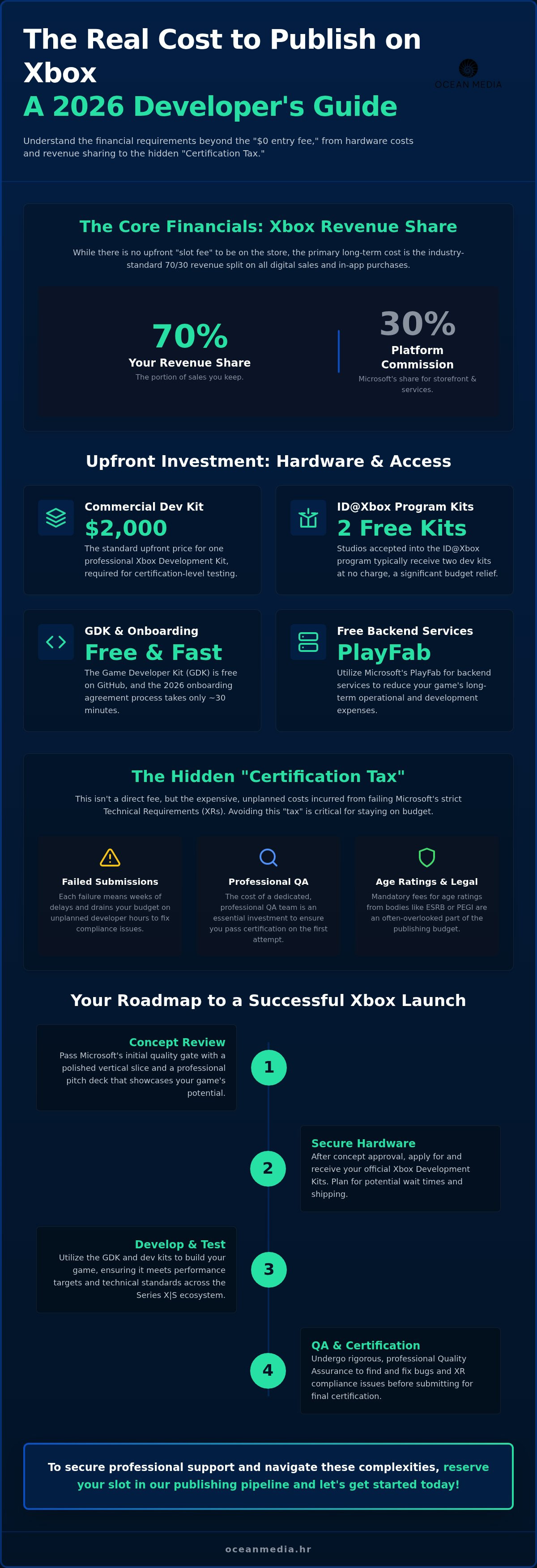
- Understand the 70/30 revenue split and how it defines the real cost to publish game on Xbox in the current digital-only market.
- Learn the difference between the $2,000 commercial hardware fee and the free dev kit opportunities available through the ID@Xbox program.
- Identify the hidden costs of the "Certification Tax" and why professional QA is essential to avoid expensive submission failures.
- Discover how to utilize free PlayFab backend services to reduce your game's long-term operational and development expenses.
- Prepare your vertical slice for immediate concept review; reserve your slot in our publishing pipeline and let's get started today!
Does Microsoft Charge a Fee to Publish on Xbox?
Microsoft often advertises a $0 entry fee for developers, and technically, they're right. There is no flat invoice or "slot fee" required just to host your game on the digital storefront. However, calculating the total cost to publish game on Xbox involves more than just looking at the initial sign-up. For professional studios, "free" is a deceptive term; it ignores the significant capital required to survive the rigorous publishing pipeline. While you don't pay to play, you certainly pay to succeed through preparation, hardware, and long-term revenue sharing.
The ID@Xbox Program vs. Traditional Publishing
The ID@Xbox program serves as the primary gateway for independent creators bringing their games to consoles. By 2026, Microsoft has streamlined the onboarding process, reducing the time for developer agreements from 30 days to approximately 30 minutes. Despite this speed, you must still pass the "Concept Review" stage. This is the first major gate where Microsoft evaluates your project for quality and platform fit. Many games are rejected here before costs even enter the conversation, usually because they lack the technical polish or market appeal required for a professional console release. Success at this stage requires a solid vertical slice and a professional pitch deck.
Understanding the Xbox Revenue Share Model
Once your game is live, the financial relationship transitions to a standard revenue share. Microsoft charges a 30% commission on all digital game sales and in-app purchases made through the Xbox Store. While this is the industry standard, it represents a significant portion of your gross income that must be accounted for in your budget. Some studios mitigate these costs through Game Pass deals, which can provide upfront licensing fees to help offset development expenses. The 70/30 revenue split represents the primary long-term cost of publishing on the platform.
Beyond the storefront commission, your budget must account for the "Certification Tax." This isn't a fee paid directly to Microsoft, but rather the cost of the developer hours needed to align your game with strict Technical Requirements (XRs). Failing certification can set your timeline back by weeks and drain your remaining budget. We act as your partner to eliminate these risks and ensure your game meets every standard on the first try. To secure professional support and navigate these complexities, reserve your slot in our publishing pipeline and let's get started today!
Hardware and Account Costs: Dev Kits and GDK Access
To begin your journey, you first need a Microsoft Partner Center account. While the registration fee is a nominal entry point, it's the hardware acquisition that often catches developers off guard. For commercial studios, the cost to publish game on Xbox includes an upfront investment of $2,000 per Xbox Development Kit, a price point established in late 2025. If you're accepted into the ID@Xbox program, Microsoft typically provides two kits at no charge, which is a massive relief for your initial budget. However, you should still account for shipping and local taxes, which vary by region.
The Xbox Game Developer Kit (GDK) itself is available for free on GitHub, allowing you to start coding without spending a dime upfront. This open-access model is a significant shift that lowers the barrier for entry. Despite this, professional development requires more than just code. You'll need specific hardware to test your game's performance across the entire Series X|S ecosystem. Relying on a single kit is a risk; redundancy is your safety net when debugging hardware-specific crashes or testing local multiplayer features.
Securing Your Xbox Dev Kit
Applying for hardware happens through the ID@Xbox portal after your project passes the initial concept review. You might be tempted to use a standard retail console in "Dev Mode" to save money. While Dev Mode is excellent for early prototyping, it lacks the full system resources and debugging tools required for final certification. Professional hardware allows you to simulate different network conditions and storage speeds, which is vital for meeting Microsoft's strict performance standards. Wait times for official kits can vary, so we recommend starting this process as soon as your concept is approved.
Ongoing Software and Middleware Licensing
Beyond the hardware, your budget must account for the software that powers your game. Many developers overlook the hidden costs of self-publishing, such as the mandatory "Pro" or "Enterprise" tiers required by engines like Unity or Unreal for console export. These licenses often include access to specific Xbox plugins for achievements, cloud saves, and matchmaking. Hardware is a one-time cost, but middleware is often a subscription. These recurring fees can add up quickly if your development cycle extends beyond a year.
Managing these logistical hurdles is where a partner makes the difference. We help you navigate the technical requirements and ensure you have the right tools from day one. To avoid the common pitfalls of hardware management and licensing, reserve your slot in our publishing pipeline and let's get started today!
The Hidden Costs: Certification, QA, and Ratings
While the initial storefront access might seem like a bargain, the real cost to publish game on Xbox often hides in the technical and legal preparation. These "soft costs" represent the bridge between a finished game and a market-ready product. For many studios, the biggest financial drain isn't a fee paid to Microsoft, but the developer time lost to the certification process. Professional console QA is a non-negotiable expense in this stage. Skimping on testing leads to failed submissions, which pushes back your launch date and burns through your remaining capital.
Experienced developers often refer to this as the "Certification Tax." It covers the extensive man-hours required to ensure your title adheres to every specific Xbox guideline. These requirements are rigorous, and failing to meet them means you'll be stuck in a loop of bug fixes and resubmissions. We understand these hidden costs of console self-publishing and focus on streamlining this phase to keep your budget intact. Our team acts as your final shield, catching technical issues before they reach the platform holder's desk.
Passing the Xbox Technical Requirements (XRs)
The Xbox Technical Requirements, or XRs, are the definitive rules your game must follow to live on the Series X|S. Each rejection results in a stall that can delay your project for weeks. Common failure points include:
- Improper handling of controller disconnects during active gameplay.
- Save data corruption or loss during user profile switching.
- Failure to resume correctly from a suspended or "Quick Resume" state.
- Incorrect implementation of Xbox Live social features or achievements.
To help you prepare, we've compiled a detailed list of common console certification failures that you should review before your first submission. Understanding these pitfalls early saves you from expensive late-stage pivots.
Budgeting for Global Age Ratings
Navigating age ratings is another critical part of your financial planning. For digital-only Xbox titles, the International Age Rating Coalition (IARC) system simplifies the process, often providing ratings for ESRB and PEGI at no additional cost. However, if you're targeting specific markets or planning a more complex release, you might encounter fees for a "Full Rating" or manual review. It's essential to consult our Global Console Game Age Rating Guide to determine which path your title requires. Localization also plays a role here, as bringing your game to global Xbox markets requires professional translation and cultural adaptation to ensure it resonates with international audiences.
Eliminating the "cost of failure" is our specialty. We provide a structured path through the certification maze, ensuring your game meets every XR and rating requirement on the first try. To lock in this professional support, reserve your slot in our publishing pipeline and let's get started today!
Self-Publishing vs. Partnering with a Publisher
When you weigh the cost to publish game on Xbox, you're choosing between spending your cash or spending your time. For a solo dev or small studio, self-publishing is often significantly slower. You aren't just making a game; you're becoming a QA lead, a marketing manager, and a submission specialist. This friction can delay a launch by six months or more. In the fast-moving digital market of 2026, that delay carries a massive opportunity cost that many developers fail to track on their initial spreadsheets.
Standing out on the Xbox Store is another hidden expense. The storefront is crowded. Without a dedicated marketing budget and a strategy for visibility, even a polished title can disappear within hours of launch. A partner provides the structured support of a publishing pipeline, ensuring your game doesn't just exist on the store but actually finds its audience. This roadmap turns a chaotic release into a methodical, professional launch.
The True Value of a Publishing Partner
Access to established relationships with platform holders is a primary benefit of partnering. These connections can lead to featuring opportunities and better dashboard placement that are difficult to secure as an unknown entity. Beyond visibility, professional porting and optimization are critical. Poor performance on the Series S can sink your user reviews instantly. By working with experts, you avoid the high cost of bad performance and technical debt. You can learn more about bringing your game to consoles with our specialized team to see how these efficiencies protect your brand.
Revenue Splits vs. Out-of-Pocket Expenses
Comparing the financial risk of your own money versus a publisher's resources is eye-opening. A royalty share is often cheaper than hiring a 5-person launch team to handle QA, localization, and global marketing. When a publisher absorbs the cost of certification and testing, they're taking on the financial burden that would otherwise drain your studio's runway. A seasoned publisher acts as an investment in success rather than a cost. This shift in perspective allows you to focus on what you do best: creating the game.
We've spent over 20 years helping creators navigate these exact choices. Our goal is to eliminate the risk of certification failure and maximize your game's global reach. If you want to bypass the logistical hurdles and focus on your creative vision, partner with a console expert who understands the landscape. To lock in professional support for your next release, reserve your slot in our publishing pipeline and let's get started today!
Your Roadmap to Xbox: How to Start Today
Transitioning from development to a commercial release requires a shift in focus from pure creativity to platform compliance. While we've covered the technical cost to publish game on Xbox, your success depends on how you execute the final miles of development. You don't want to reach the finish line only to realize your budget is depleted by avoidable certification delays. A structured approach ensures every dollar is spent on growth rather than fixing preventable errors that should've been caught months ago.
Your first priority is finalizing a high-quality vertical slice and a professional pitch deck. This isn't just for your own team; it's the core of your Concept Review application. Microsoft needs to see that your game is a fit for the ecosystem before they grant access to the full suite of publishing tools. Once approved, you should secure your hardware and GDK access immediately. The 33% price increase for commercial kits seen in late 2025 makes early procurement a vital budgetary step for studios not entering the ID@Xbox program. Following this, conduct an internal audit of the Xbox Technical Requirements (XRs). Identifying these risks early is the most effective way to protect your runway. Finally, prepare your digital storefront assets, including high-definition trailers and localized descriptions, to ensure you're ready for the spotlight.
Joining the Publishing Pipeline
Timing your launch is a strategic move that costs nothing but yields significant returns. You need to avoid major "triple-A" release windows where your game might be overshadowed by massive marketing spends. Vetting a publishing partner like Ocean Media is about finding a team that respects your vision while providing the technical backbone you lack. We've spent two decades refining the cost to publish game on Xbox by eliminating the trial-and-error phase of certification. Don't navigate this alone; reserve your slot in our publishing pipeline and let's get started today!
Final Launch Checklist for 2026
Before you hit the launch button, there are a few administrative hurdles to clear. Confirm your IARC status to ensure your age ratings are accurate for every region. While digital-only titles often benefit from free ratings, you must still verify that your regional pricing is competitive and accounts for local taxes. We recommend setting up "Pre-order" and "Wishlist" campaigns at least four to six weeks before launch. These campaigns are essential for driving day-one revenue and signaling to the Xbox storefront algorithms that your game is in demand. Xbox publishing is a journey of precision, not just a transaction.
Launching Your Vision on Xbox Series X|S
Navigating the financial landscape of console development doesn't have to be a source of anxiety. We've explored how the cost to publish game on Xbox is shaped by hardware investments, the 70/30 revenue split, and the technical rigors of certification. While the entry barriers are lower than ever, the difference between a hidden gem and a storefront success often comes down to professional execution. You don't need to tackle the certification maze or global distribution logistics alone.
With over 20 years of console publishing expertise, we specialize in digital-only launches that bypass the "Certification Tax" and maximize visibility. Our team provides the expert certification guidance and global digital distribution network required to turn your creative project into a market leader. Let's transform your vertical slice into a global release with a structured, reliable roadmap. To secure your place and lock in professional support, reserve your slot in our publishing pipeline and let's get started today! We're ready to partner with you for a successful launch.
Frequently Asked Questions
How much does an Xbox dev kit cost in 2026?
Commercial Xbox Development Kits cost $2,000 as of the price adjustment in October 2025. This upfront expense applies to larger commercial studios that don't qualify for specific indie support programs. If you're an independent developer accepted into the ID@Xbox program, Microsoft typically provides two kits at no charge. Beyond the hardware itself, you should also budget for shipping and taxes, which can vary based on your studio's global location.
Is it free to publish a game on the Xbox Store?
While there's no flat fee to host your title, the real cost to publish game on Xbox comes from the 30% commission Microsoft takes from every digital sale. You also need to account for the "soft costs" of development, such as QA testing and meeting Technical Requirements. Many studios find that while storefront access is free, the preparation required for a professional launch requires significant upfront investment.
Do I need a publisher to get my game on Xbox?
You can self-publish through the ID@Xbox program, but partnering with a seasoned guide like Ocean Media simplifies the process. We help you navigate the technical hurdles of the publishing pipeline and ensure your game passes certification without expensive delays. A publisher acts as a bridge to the global market, absorbing the risk of failure and providing the visibility your game needs to stand out on the store.
How long does the Xbox certification process take?
The actual review by Microsoft usually takes one to two weeks, but the total timeline depends on your game's technical health. If you fail a round of certification due to XR violations, you must fix the issues and resubmit, which adds several weeks to your schedule. We aim to eliminate these loops by conducting deep internal audits before submission. Reserve your slot in our publishing pipeline and let's get started today!
What are the requirements for the ID@Xbox program?
To join, you must submit a "Concept Review" that includes a playable vertical slice and a professional pitch deck. Microsoft looks for high-quality, polished titles that offer a great experience for their players. Once your project is approved, you gain access to development kits and the GDK. This program is the primary pathway for independent creators bringing their game to consoles without high upfront hardware costs.
Do I have to pay for ESRB or PEGI ratings for Xbox digital games?
Digital-only titles on Xbox generally utilize the IARC (International Age Rating Coalition) system, which provides ratings for most regions at no cost. This is a significant saving for indie developers. However, if you plan to target specific markets or require a manual review for complex content, you might encounter separate filing fees. It's best to check the specific requirements for your target global territories during pre-production.
What percentage does Xbox take from game sales?
Microsoft retains a standard 30% commission on all digital game sales and in-app purchases. This revenue share is the industry standard across most major console platforms. The remaining 70% goes to the developer or is split between the developer and publisher. When calculating your long-term cost to publish game on Xbox, this percentage is the most important factor to include in your financial projections.
Can I use a retail Xbox Series X as a dev kit?
You can activate "Dev Mode" on a retail Xbox Series X for early prototyping and testing, but it isn't a substitute for official hardware. Retail consoles in Dev Mode lack the full system resources and advanced debugging tools required for final certification. To ensure your game meets all Technical Requirements (XRs) for a commercial release, you'll eventually need an official Xbox Development Kit from the ID@Xbox portal.


