

What if the biggest barrier between your game and a global audience isn't your code, but a 500-page technical requirements checklist? You've poured your heart into every mechanic and pixel, yet the leap from a finished build to a live storefront on PlayStation, Xbox, or Nintendo often feels like an impossible climb. Many developers find themselves asking, what do game publishers do to bridge that gap? It's a valid question in an era where digital storefronts are technically open to everyone (at least on paper), but visibility and compliance remain massive hurdles.
We understand the technical anxiety that comes with porting and the overwhelm of console certification. This guide reveals how a professional publishing partner transforms your project from a folder on a computer into a global console success story. We will break down the modern publishing pipeline, explain how to move through the current market, and give you the confidence to choose a collaborative partner. The console market is projected to reach $91 billion this year, and we want to help you claim your piece of it. If you're ready to scale, reserve your slot in our publishing pipeline and let's get started today!
Key Takeaways
- Understand what do game publishers do to transform your local project folder into a commercially viable product on the global stage.
- Identify the specific technical certification hurdles, such as TRCs and TCRs, required by platform holders and learn how to clear them efficiently.
- Explore global distribution strategies that go beyond social media to secure crucial storefront featuring on major digital platforms.
- Gain a clear view of the financial revenue stack, covering platform fees, royalties, and the recoupment phase of your partnership.
- Simplify your studio's transition to a professional console environment; reserve your slot in our publishing pipeline and let's get started today!
Defining the Role: What Does a Game Publisher Do for Indie Devs?
Your game build is a masterpiece in waiting. It sits as a finished folder on your computer, ready for the world, yet the path to a PlayStation or Xbox storefront remains obscured by technical and bureaucratic fog. Many creators find themselves asking, what do game publishers do to turn that local directory into a global hit? In the current market, the role has shifted from a traditional gatekeeper to a strategic partner. We don't just provide a platform; we provide an accelerator for your creative vision.
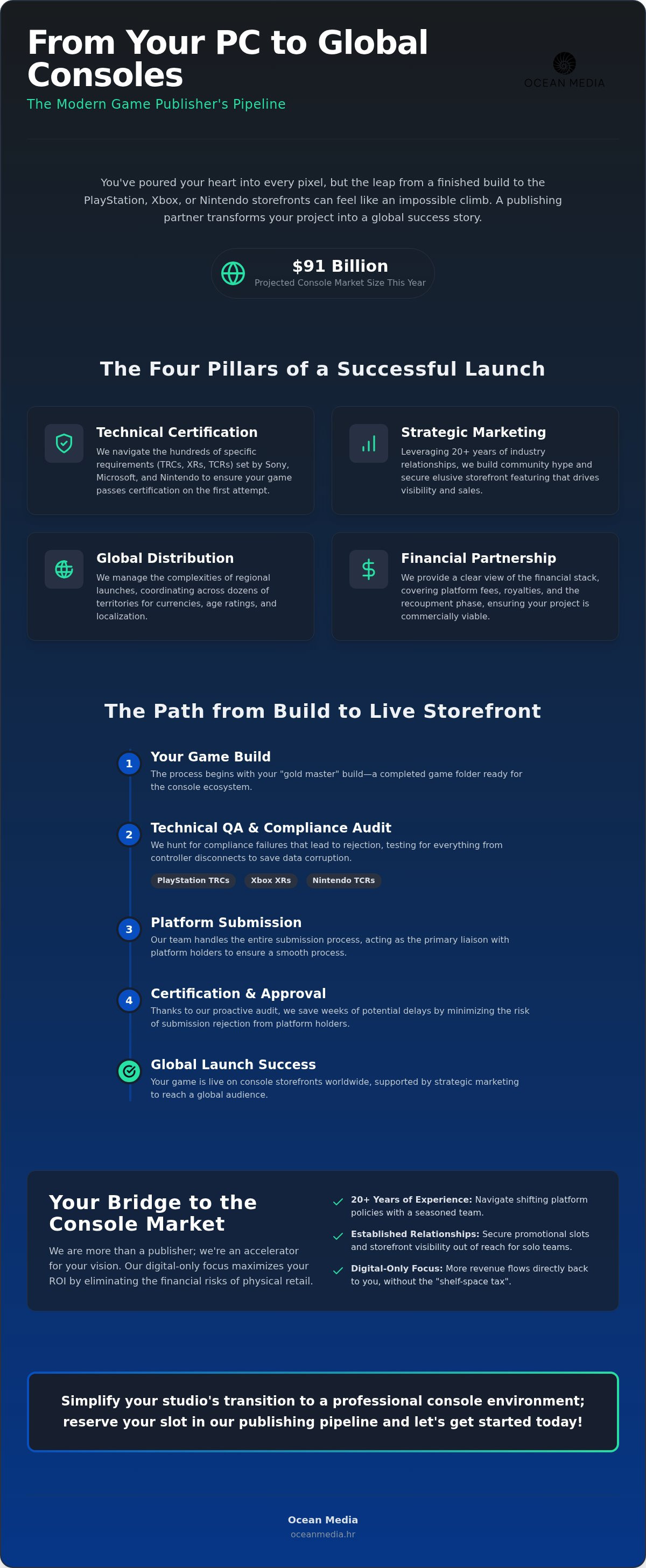
Bringing your game to consoles is significantly more complex than hitting a publish button on a PC storefront. It requires a professional transition into a high-stakes environment. Understanding what do game publishers do involves mastering the four pillars of the industry: technical certification, strategic marketing, global digital distribution, and financial support. Each pillar is essential to ensure your game doesn't just launch, but thrives.
- Technical Certification: Clearing the hundreds of specific requirements set by Sony, Microsoft, and Nintendo.
- Marketing: Building community hype and securing that elusive storefront featuring.
- Global Distribution: Coordinating regional launches, currencies, and age ratings across dozens of territories.
- Financial Support: Navigating the revenue stack to ensure the project remains commercially viable.
The Bridge to Global Console Markets
We serve as the primary liaison between your studio and the platform holders. These relationships are the lifeblood of a successful release. Leveraging our 20+ years of industry experience allows us to navigate shifting platform policies that often catch independent teams off guard. We use these established connections to secure promotional slots and storefront visibility that are typically out of reach for solo efforts. This seasoned guidance ensures your game receives the professional spotlight it deserves.
Digital vs. Physical: Why Focus Matters
The modern landscape favors digital agility. We focus strictly on digital-only publishing because it maximizes developer ROI and eliminates the "shelf-space tax" associated with physical retail. Manufacturing discs and boxes introduces significant financial risks and logistical headaches that can drain a studio's resources. By prioritizing digital storefronts, we ensure more revenue flows directly back to you. You can explore our philosophy further in this Console Game Publishers: A Developer’s Guide.
A successful launch is about more than just code; it is about a structured path to the player. We invite you to reserve your slot in our publishing pipeline and let's get started today!
The Publishing Pipeline: Technical Certification and Platform Management
The transition from a gold master build to a live storefront is rarely a straight line. It is a rigorous, multi-stage gauntlet known as the publishing pipeline. When developers ask what do game publishers do, the most technical answer lies in managing this transition. We act as your specialized technical lead, ensuring your project meets the uncompromising standards of Sony, Microsoft, and Nintendo. Without a structured path, even the most polished games can languish in a cycle of submission rejections and launch delays.
Technical QA is the backbone of this process. We don't just look for gameplay bugs; we hunt for compliance failures that lead to immediate rejection. This includes testing how your game handles controller battery death, network timeouts, and save data corruption during unexpected shutdowns. Our goal is a "day one" experience that is stable and professional, protecting your studio's reputation from the start. You can learn more about our approach to technical excellence and how we support your team.
Navigating Console Certification Requirements
Every platform holder has a massive, proprietary set of rules. You will encounter Technical Requirements Checklists (TRC) for PlayStation, Xbox Requirements (XR), and Technical Certification Requirements (TCR) for Nintendo. Developers often miss the granular details, such as specific button iconography or mandatory system software overlays. We use our 20+ years of experience to audit your build before it ever reaches the platform holders. This proactive approach saves weeks of wasted time. For a deeper look at these milestones, see our guide on How to Publish a Game on Console.
Global Compliance and Age Ratings
Regional compliance is the unseen job of a game publisher. Managing the administrative weight of IARC, ESRB, PEGI, and CERO is a full-time commitment. We handle the paperwork and the specific cultural requirements for different territories, ensuring your game is legally ready for a global audience. Console certification is the technical gatekeeper to digital success. By letting us manage these complexities, you remain the creative lead while we handle the logistics. We make bringing your game to consoles a predictable, manageable process. To secure your launch window, reserve your slot in our publishing pipeline and let's get started today!
Strategic Marketing and Global Digital Distribution
Marketing a console game is vastly different from promoting a PC title. While social media builds community, it rarely moves the needle on a digital storefront without platform support. When people ask what do game publishers do, they often overlook the "platform relations" aspect. We don't just buy ads; we act as your advocate to the editorial teams at Sony, Microsoft, and Nintendo. This advocacy is the difference between a quiet launch and a commercial success. Understanding what do game publishers do in terms of marketing requires looking beyond simple ad buys and focusing on earned visibility.
Maximizing Storefront Visibility
There is a massive chasm between being "on the store" and being "on the front page." Thousands of games launch every year, and most vanish into the depths of the search bar within days. We bridge this gap by pitching your game directly to platform editors to secure storefront featuring. This visibility is earned through professional presentation and a proven track record. By leveraging our 20+ years of experience, we position your game as a priority for the storefront's curated slots. We know what these editors want to see, and we help you package your game to meet those high standards. To ensure your game is ready for this level of scrutiny, check out our 2026 Global Console Launch: Indie Game Localization Guide.
Global Release Execution
Managing a global launch means coordinating 50+ regional storefronts simultaneously. This isn't just about clicking "upload." It involves syncing time zones, managing currency fluctuations, and aligning regional promotional windows. Global distribution is about accessibility, not just availability. We ensure your game is localized and priced correctly for every market, from Tokyo to London. This meticulous coordination prevents "dead zones" where your game might be available but effectively invisible due to poor regional optimization. We handle the heavy lifting of regional pricing parity, ensuring that your game remains competitive regardless of where the player lives.
Our work doesn't stop at launch. We manage the "long tail" of your game's lifecycle by scheduling sales, participating in platform-wide events, and maintaining visibility months after the initial release. This persistent strategy keeps your revenue stream healthy long after the first-week hype fades. We act as your guide through the complexities of the digital marketplace. If you're ready to bring your game to consoles with a partner that understands the global landscape, reserve your slot in our publishing pipeline and let's get started today!
Financial Partnership: Funding, Royalties, and Recoupment
Understanding the financial mechanics of a release is often the most stressful part of the process for independent studios. When investigating what do game publishers do, you need to look past the top-line numbers to understand the "revenue stack." This stack begins at the storefront. The standard console platform fee is 30% of every sale, which is deducted immediately by Sony, Microsoft, or Nintendo. After these fees and regional taxes are removed, you are left with the net revenue. This net figure is the actual pool of money that is shared between the developer and the publisher.
The "Recoupment" phase is a standard part of the publishing pipeline. If we invest upfront in technical QA, localization, or specific porting requirements, these costs are typically recovered from the initial net sales. Once these direct investments are recouped, the long-term royalty split kicks in. This model allows your studio to access professional resources and 20+ years of industry experience without the immediate financial burden of devkits or certification costs. It turns the publisher into a partner with a vested interest in your game's long-term commercial performance.
There is a persistent myth that self-publishing is free. In reality, the "free" path often costs thousands in devkit hardware and hundreds of hours in administrative labor. By choosing a collaborative model, you trade a portion of the revenue for a significant reduction in risk and a massive increase in professional reach. We handle the financial complexities so you can stay focused on the creative process.
Console Game Publishing Royalties Explained
Industry royalty splits vary significantly based on the level of publisher involvement. In 2026, agreements can range from a 50/50 split to much higher developer shares depending on whether an advance was provided. We prioritize transparent reporting and monthly royalty payouts, ensuring you have a clear view of your game's performance across every territory. Because we focus strictly on digital distribution, we eliminate the manufacturing risks and "shelf-space taxes" of physical retail. This digital-only focus maximizes the total revenue pie, ensuring more money stays with the creators. You can learn more about our developer partnership approach to see how we structure these agreements for mutual success.
Protecting Your Intellectual Property
We believe a publishing partner should be a bridge, not an owner. In a modern, professional partnership, you should retain 100% of your intellectual property rights. We act as a seasoned guide for bringing your game to consoles, but the world you built remains yours. This distinction is critical; we are here to amplify your work, not to acquire it. This collaborative spirit ensures that your studio remains the creative lead for any future sequels or spin-offs. If you are looking for a partner that respects your vision while navigating the global market, reserve your slot in our publishing pipeline and let's get started today!
Bringing Your Game to Consoles: Why the Right Partner Matters
Transitioning your studio into a professional console environment is a significant milestone. It marks the moment your creative project becomes a commercial entity on the world’s most prestigious platforms. Many developers reach this stage and still wonder, what do game publishers do to ensure this transition doesn't disrupt the creative flow? The answer lies in the quality of the partnership. Choosing a seasoned guide with 20+ years of industry experience means you aren't just getting a service; you are gaining a structured path from your final build to a successful global launch.
We specialize in simplifying the administrative and technical weight of console releases. By acting as your primary liaison with Sony, Microsoft, and Nintendo, we allow you to remain the creative lead while we manage the complexities of the publishing pipeline. This collaboration transforms your studio into a global player. You gain the backing of a partner that has navigated every shift in the digital landscape since the early 2000s, ensuring your debut is handled with professional precision.
The Ocean Media Collaborative Model
Our approach is built on high-efficiency digital distribution. We focus strictly on the digital market because it provides the highest developer ROI and the fastest path to the player. This is the core of what do game publishers do in a modern context: we act as a force multiplier for your studio. We handle the technical certification audits, the regional age ratings, and the platform editorial pitches that define a professional release. This focus ensures that your game isn't just another file on a storefront; it is a curated, featured product optimized for global success. We take care of the heavy lifting of platform management so you can focus on what you do best: making great games.
Ready to Get Started?
Timing is everything in the console release calendar. Storefront featuring slots and promotional windows are often planned months in advance. Our seasoned authority acts as your guide, helping you navigate these windows to find the perfect launch moment. We have spent two decades building the relationships and technical expertise necessary to make bringing your game to consoles a seamless experience. The digital landscape moves fast, but with a reliable leader by your side, you can move with confidence. If you are ready to see your game on the front page of the PlayStation Store, Xbox, or Nintendo Switch, reserve your slot in our publishing pipeline and let’s get started today!
Step Into the Global Console Spotlight
We've explored the intricate path from a local build to a live storefront. Understanding what do game publishers do is about recognizing the technical and strategic bridge required for commercial success. Our approach focuses on navigating the complex certification requirements of Sony, Microsoft, and Nintendo while maximizing your revenue through specialized global digital distribution. By removing the administrative weight of age ratings and platform compliance, we allow you to stay focused on your creative vision.
With over 20 years of console publishing experience, we act as your seasoned guide through the digital landscape. Our partnership model ensures you retain your intellectual property while gaining the visibility needed to thrive on the front page. The transition into a professional environment is a major milestone, and we're here to ensure it's a seamless one. If you're ready to see your project reach its full potential, reserve your slot in our publishing pipeline and let’s get started today! Your game is ready for the world, and we're ready to help you get it there.
Frequently Asked Questions
What is the main difference between a game publisher and a game developer?
A developer focuses on the creative process and technical build of the game. In contrast, when asking what do game publishers do, the focus shifts to the commercial and technical lifecycle of the release. We act as your bridge to the global market, managing platform relationships and technical certification. While you build the world, we ensure that world is accessible to millions of players on their preferred console storefronts.
Does a game publisher own my intellectual property (IP)?
In a collaborative partnership model, you retain 100% of your intellectual property. We believe that the developer should always remain the creative lead. Our role is to provide the professional infrastructure and expertise needed for a successful launch, not to take ownership of your vision. We act as a seasoned guide, helping you navigate the digital landscape while your studio keeps full control over its creative future.
What is the standard royalty split for indie console games in 2026?
Revenue sharing in 2026 varies significantly based on the level of upfront investment. While the standard console platform fee remains 30%, the remaining net revenue is split between the developer and publisher. Agreements often range from a 50/50 share to higher developer percentages if no funding advance is involved. We focus strictly on digital distribution to maximize the total revenue pie, ensuring higher returns for your studio's hard work.
How much does it cost to work with a game publisher?
Working with a publisher typically involves a revenue share model rather than an upfront fee. This aligns our goals with your success; we only earn when your game sells. This model covers the cost of technical QA, localization, and the administrative burden of platform submissions. If you're ready to move from a local build to a professional release, reserve your slot in our publishing pipeline and let's get started today!
Can I self-publish on consoles without a publisher?
You can technically self-publish, but the hurdles are significant for independent teams. You must secure platform approval, sign strict NDAs, and purchase expensive devkit hardware for every console. Navigating the hundreds of technical requirements alone often leads to costly submission rejections. Most developers find that a publishing partner simplifies this transition into a professional environment, allowing the team to stay focused on game polish rather than paperwork.
What is console certification, and why do I need a publisher for it?
Console certification is the technical gatekeeper to digital success. Every platform has a rigorous checklist, such as Sony's TRCs or Nintendo's TCRs, that your game must pass before launch. When developers ask what do game publishers do, our expertise in these requirements is often the most valuable asset. We audit your build to ensure it meets every standard for stability and compliance, preventing launch delays and protecting your reputation.
Do game publishers handle marketing and PR for indie games?
Yes, but the focus is different from traditional consumer PR. We specialize in platform relations, which means pitching your game directly to the editorial teams at Sony, Microsoft, and Nintendo. Securing storefront featuring is more impactful than social media ads alone. We leverage our 20 years of experience to position your game for maximum visibility, ensuring it reaches the right audience at the perfect moment in the release calendar.
How long does the console publishing process typically take?
The timeline depends on your build's technical readiness and the specific platform's submission window. Generally, the transition from a gold master build to a live storefront launch takes several months. This period includes technical QA, clearing certification gauntlets, and coordinating global age ratings. We provide a structured path to speed up this process, helping you hit your target launch window without the stress of navigating the digital landscape alone.


