

Passing PlayStation certification is often a more grueling marathon than the actual development of your game. You've likely spent years refining every pixel and mechanic, only to feel overwhelmed by the technical jargon of TCRs and the logistical maze of devkit procurement. It's a common anxiety; the fear that a single regional rating error with PEGI or ESRB could derail your entire global launch is real. We understand that you want to focus on your creative vision, not get lost in administrative bottlenecks.
Our guide explains exactly how to get a game on the PlayStation store in 2026, offering a clear roadmap to navigate these professional hurdles. We will explore the critical differences between self-publishing and finding a seasoned partner, helping you master the digital publishing pipeline with confidence. Whether you're a solo dev or a growing studio, our goal is to simplify the transition to a professional console environment. To ensure your project receives the expert attention it deserves, reserve your slot in our publishing pipeline and let's get started today! We'll show you how to transform your build into a successful global release.
Key Takeaways
- Understand how the 2026 digital landscape has evolved and why navigating the PlayStation Partner Network is essential for indie success.
- Identify the critical Technical Certification Requirements (TCRs) that often trip up developers during their first submission attempt.
- Follow a professional roadmap on how to get a game on the PlayStation store, covering everything from concept approval to SDK integration.
- Evaluate the administrative benefits of partnering with a digital specialist to bypass the hidden complexities of the console publishing process.
- Streamline your path to a global digital launch by leveraging our 20 years of industry expertise; reserve your slot in our publishing pipeline and let's get started today!
Understanding the PlayStation Store Submission Landscape
By 2026, the digital marketplace has matured into a sophisticated ecosystem where quality and compliance are the primary currencies. Learning how to get a game on the playstation store isn't just about finishing a build; it's about entering a high-reward partnership with a platform known for its strict quality control. Sony maintains a high barrier to entry to ensure players receive a premium experience. This makes a professional strategy indispensable for any indie studio looking to make a global impact.
The distinction between the consumer-facing PlayStation Store and the backend Partner Network is significant. While players see a curated list of titles, developers interact with a complex portal designed for project management, financial reporting, and technical certification. Successfully bringing your game to consoles requires a shift from a purely creative mindset to a business-oriented one. If you want to move quickly through these requirements, reserve your slot in our publishing pipeline and let's get started today!
Registering as a PlayStation Partner
The journey begins with the PlayStation Partner application. Sony looks for established studios with a clear vision and the technical capacity to deliver. They prioritize developers who demonstrate a professional roadmap and a unique creative hook. You'll need a registered corporate entity; individual hobbyist applications are rarely successful in this high-stakes environment. Once accepted, you'll be assigned to the Global Developer Relations team. These professionals act as your guides, vetting your studio to ensure you can handle the technical demands and security requirements of the platform.
Procuring Development Hardware
A common misconception is that a retail console can be used for development. In reality, you must procure specialized devkits and testkits. These units allow you to run unassigned code and access platform-specific debugging tools. Managing this hardware involves strict security protocols; Sony requires you to keep these units in a secure, non-public environment. Budgeting for these costs is essential, as is accounting for shipping timelines. In 2026, lead times for hardware can fluctuate based on regional demand, so early planning is vital for how to get a game on the playstation store without hitting unnecessary delays. We help our partners manage these logistics to keep development on track.
Navigating PlayStation Technical Certification Requirements (TCRs)
Technical Certification Requirements, or TCRs, represent the non-negotiable standards every piece of software must meet before it can go live. While many developers focus solely on gameplay, these requirements act as the final gatekeeper for quality and system stability. Understanding the difference between a simple build submission and the formal certification process is a vital part of learning how to get a game on the playstation store. Certification is a rigorous test of how your game interacts with the console's operating system, hardware, and network services.
Industry professionals often report that a significant portion of first-time submissions are rejected due to minor technical oversights rather than major gameplay bugs. These failures usually stem from a lack of familiarity with platform-specific protocols. By adopting a structured publishing pipeline approach, you can identify these issues during development rather than in the final hour. This proactive testing ensures that controller layouts, trophy systems, and save-data protocols are fully compliant before Sony's testers even see the build.
The Functional Requirements
Functional TCRs focus on the user experience and system integrity. Your game must maintain a consistent frame rate and remain entirely crash-free during extended play sessions. One common hurdle is the 'suspended state' transition; your game must handle the console entering and exiting rest mode without losing data or hanging. Additionally, trophy integration is mandatory. Every title must feature a robust trophy set that triggers correctly according to platform rules, making your project feel like a native, high-quality PlayStation experience. Ensuring these features work seamlessly is a core step in how to get a game on the playstation store.
The Brand and UI Requirements
Brand compliance is often where indie studios face the most unexpected delays. Sony requires exact naming conventions for all hardware and services. For example, you cannot simply refer to a 'controller'; you must use the specific terminology for the DualSense wireless controller. Button prompts and iconography must be pixel-perfect and accurate across all regions to pass inspection. Localization also extends to your digital storefront assets. Your descriptions, screenshots, and legal text must be professionally translated and formatted for each territory you target. To navigate these complexities with a seasoned partner, reserve your slot in our publishing pipeline and let's get started today!
Self-Publishing vs. Partnering with a Console Publisher
Deciding whether to go it alone or seek a partner is a pivotal moment in your studio's journey. While the allure of total control is strong, the reality of 2026 digital distribution involves a massive administrative tail. Many developers ask how to get a game on the playstation store only to realize that coding the game was the easy part. Managing a global launch requires juggling dozens of non-development tasks that can easily consume months of your time.
A professional partner acts as a seasoned guide through this certification labyrinth. It's not just about getting the game live; it's about ensuring it stays live and performs across all regions. When you evaluate royalty shares, consider the cost of your own time. Every hour spent on tax forms is an hour not spent on your next creative breakthrough.
The Administrative Burden
The logistics of a global release are exceptionally daunting. You'll need to navigate the IARC system while securing individual age ratings from the ESRB and PEGI for specific territories. Beyond ratings, digital storefront accounting involves complex tax forms and regional compliance that vary significantly by country. Setting up store pages in 15 or more languages isn't just about translation. It requires cultural metadata optimization and precise formatting. If you're curious about the full scope of these responsibilities, explore what do console game publishers do to see how a partner absorbs these pressures.
The Technical Advantage
A publishing partner provides more than just paperwork help. You gain access to seasoned QA teams who live and breathe the Technical Certification Requirements (TCRs). These experts identify potential rejections before they ever reach Sony's desk. Having direct communication lines with platform holders can shave weeks off your timeline. This technical support extends to post-launch updates and DLC management, ensuring your game remains stable and profitable long after the initial release. This is a critical component of how to get a game on the playstation store successfully. To move forward with a team that has 20 years of experience, reserve your slot in our publishing pipeline and let's get started today!
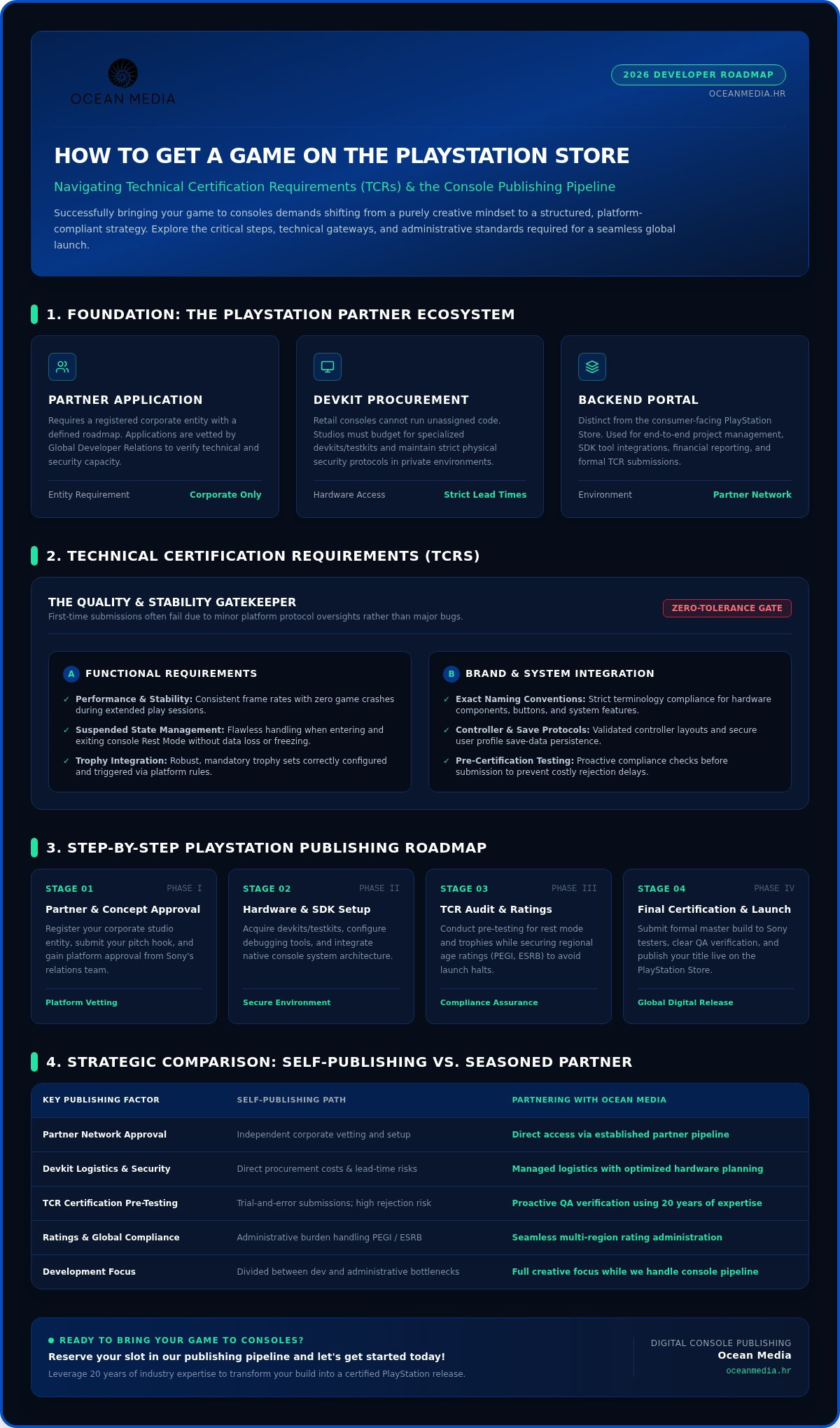
Step-by-Step: The PlayStation Store Submission Roadmap
Understanding the chronological roadmap is the most effective way to learn how to get a game on the playstation store without losing momentum. The process is a structured sequence of milestones that transform your code into a globally available product. While the technical requirements are strict, following a set path prevents the administrative fatigue that often plagues indie projects. We've refined this sequence over 20 years to ensure every release moves through the system with professional precision.
The submission journey follows five distinct phases:
- Phase 1: Concept Approval: Registering your project ID and securing Sony's greenlight for your game's premise.
- Phase 2: SDK Integration: Implementing platform-specific APIs for trophies, cloud saves, and social features.
- Phase 3: Master Submission: Delivering your build for formal Functional Quality Assurance (FQA) testing.
- Phase 4: Storefront Setup: Finalizing regional metadata, marketing trailers, and price point configurations.
- Phase 5: The Go-Live: Executing the global release and transitioning into post-launch patch management.
Preparing the Master Build
Reaching 'Gold' status means your build is functionally complete and ready for the world. At this stage, you must compile a comprehensive submission package that includes more than just the game executable. You'll need high-resolution screenshots, localized trailers, and accurate metadata for every territory. As you reach this stage, consult our guide on navigating console certification to ensure your regional age ratings and store descriptions are flawless. A clean package at this phase significantly reduces the risk of rejection during the final review.
The Approval Countdown
Once you hit the submit button, the 1-2 week review period begins. During this time, Sony's certification team will stress-test your build against all TCRs. It's common to receive a 'Bug Report' identifying minor non-compliance issues. Don't panic if this happens; it's a standard part of how to get a game on the playstation store. The key is having a resubmission strategy that allows you to fix and pivot quickly. We maintain direct lines with platform holders to clarify these reports and accelerate the fix cycle. If you want to ensure your build is handled by experts who know how to clear these hurdles, reserve your slot in our publishing pipeline and let's get started today!
Streamlining Your PlayStation Release with Ocean Media
Bringing your game to consoles is a defining moment for any studio. It represents years of hard work and creative dedication. However, the technical and administrative weight of a major platform release can be crushing for independent teams. At Ocean Media, we've spent over 20 years refining the digital distribution process. We focus exclusively on digital publishing. This specialization ensures maximum efficiency for your title. We don't get distracted by the logistics of physical retail. Instead, we concentrate on maximizing your reach in the digital marketplace.
We operate as your creative partner rather than a cold, transactional service provider. Our team manages the technical certification labyrinth and the mountain of administrative paperwork on your behalf. This collaborative spirit allows you to stay focused on what you do best: making great games. We bridge the gap between your creative vision and the global market, providing the seasoned authority needed to handle platform-specific complexities. We know how to get a game on the playstation store because we've done it hundreds of times for developers just like you.
Your Global Digital Launch Partner
Our expertise is particularly deep in international markets. If you are seeking console game publishing Europe, we provide the localized knowledge required to succeed across diverse territories. We believe in transparent communication and simplified royalty structures that respect the developer's contribution. You'll always have a clear view of your project's progress within our publishing pipeline. We handle the regional age ratings, tax compliance, and storefront metadata so your global launch is as smooth as possible.
Start Your Journey Today
The roadmap for how to get a game on the playstation store is complex, but our structured path removes the guesswork. We've built a system that simplifies the transition from a finished build to a live storefront listing. There has never been a more vibrant time to join the PlayStation ecosystem. The audience is hungry for unique indie experiences, and we have the tools to help you reach them. We invite you to join our growing portfolio of successful international collaborations. To secure your place in our upcoming release cycle, reserve your slot in our publishing pipeline and let's get started today!
Launching Your Creative Vision on the Global Stage
We've explored the intricate requirements of the PlayStation ecosystem; from mastering Technical Certification Requirements to managing the administrative hurdles of a global digital release. Success in 2026 requires more than just a polished build. It demands a professional strategy that accounts for regional age ratings and platform-specific SDK integration. Understanding how to get a game on the playstation store is the first step toward transforming your indie title into a worldwide success.
With over 20 years of console publishing experience, our team specializes in digital-only global distribution. We have a proven track record of helping indie developers navigate this complex landscape with ease. We don't just act as a service; we are your approachable creative partner. To ensure your project receives the expert guidance it deserves, reserve your slot in our publishing pipeline and let's get started today! The global market is waiting for your unique perspective. Let's make your console debut a reality.
Frequently Asked Questions
How much does it cost to publish a game on the PlayStation Store?
Sony doesn't charge a flat "listing fee" for digital submissions, but you'll face costs for hardware and administrative setup. You must budget for devkits, which are essential for testing, and the registration of a legal corporate entity. If you partner with us, we manage the financial complexities of the digital storefront, allowing you to focus on your build. To streamline these costs, reserve your slot in our publishing pipeline and let's get started today!
Do I need a devkit to get my game on PlayStation?
Yes, a devkit is mandatory for anyone learning how to get a game on the playstation store. These specialized units allow you to run unassigned code and test platform-specific features like trophies and cloud saves. Retail consoles lack the necessary debugging tools and security permissions required for certification. We assist our partners with the procurement process, ensuring you have the right hardware to meet Sony's strict technical standards.
How long does the PlayStation certification process take in 2026?
The formal certification review typically takes between one and two weeks once your master build is submitted. Understanding this timeline is a key part of how to get a game on the playstation store. However, this period only covers the final check. You should account for several months of pre-certification testing. If your build is rejected, resubmission adds significant delays. Our seasoned team helps you clear these hurdles on the first attempt.
Can an individual developer publish on PlayStation without a company?
Sony requires you to operate as a registered corporate entity to access the PlayStation Partner Network. Individual hobbyists cannot submit games under their personal names. You'll need to provide business registration documents and proof of tax compliance during the application process. We specialize in helping indie studios navigate these administrative barriers, providing a professional roadmap that bridges the gap between a creative project and a commercial console release.
What is the royalty split for games on the PlayStation Store?
The standard platform fee for digital sales is 30%, meaning developers typically receive 70% of the gross revenue. This split is consistent across most major console storefronts. When you work with a publisher, a separate royalty share is negotiated to cover the costs of certification, marketing, and global distribution management. These partnerships often lead to higher overall revenue by ensuring your game reaches a much wider international audience through professional optimization.
Does my game need to be localized to be sold in different regions?
While you aren't always required to translate every line of dialogue, your digital storefront assets must meet regional standards. This includes localized descriptions, legal text, and age rating iconography for territories like Europe or North America. Providing a localized experience significantly increases your chances of being featured and improves player engagement. We manage these translations across 15 or more languages to ensure your global launch is professional and inclusive.
What happens if my game fails the PlayStation certification (TCRs)?
If your build fails, Sony provides a detailed bug report highlighting the specific TCR violations. You must then fix these issues and resubmit the package for a new round of testing. Frequent rejections can damage your relationship with platform holders and delay your marketing campaign. Our publishing pipeline includes rigorous internal QA to catch these errors early, ensuring your game is "PlayStation-ready" before it ever reaches the formal certification team.
How do I get a publisher like Ocean Media to notice my game?
We look for indie titles with a strong creative hook and a stable, playable build. Demonstrating that you have a clear professional roadmap and an understanding of your target audience makes your project stand out. We value international collaboration and long-term partnerships. If you're ready to bring your game to consoles with a team that has 20 years of experience, reserve your slot in our publishing pipeline and let's get started today!


