

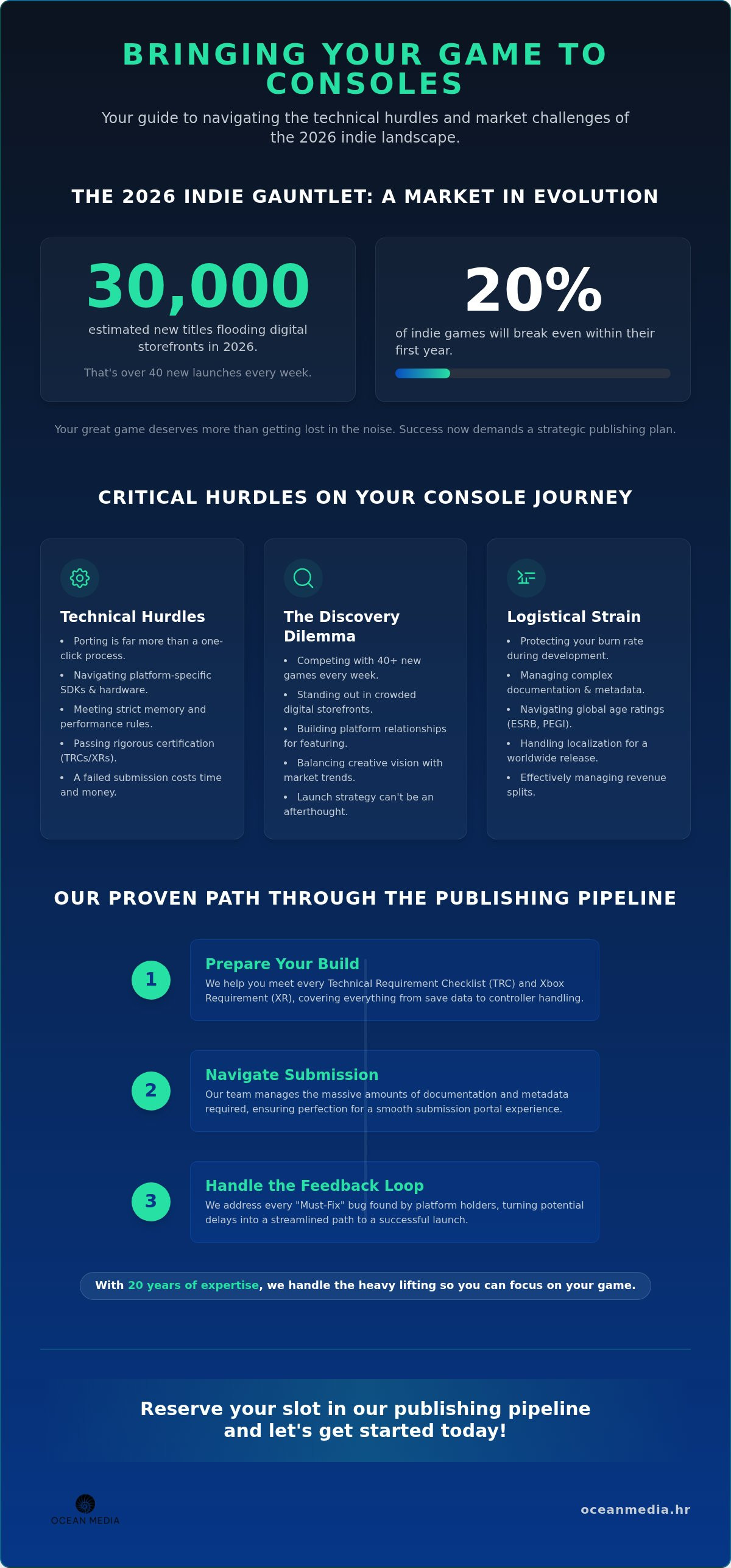
With an estimated 30,000 new titles flooding digital storefronts in 2026, only 20% of indie games will break even within their first year. You have likely spent years perfecting your mechanics and art, yet the modern market demands more than just a great game. The various challenges for indie game developers have shifted from simple asset creation to a complex gauntlet of platform-specific certifications and the logistical strain of bringing your game to consoles. It is a daunting environment where even the most polished projects can get lost in the noise without a clear strategy.
We understand that your passion shouldn't be buried under technical requirements or administrative hurdles. You will learn how to identify and overcome the most critical technical, financial, and visibility hurdles facing indie studios in today’s competitive console market. We are going to explore the intricacies of the console publishing pipeline, offer proven strategies to manage your limited resources, and show you how a seasoned partner can handle the heavy lifting. Our goal is to simplify your transition into a professional release environment. Reserve your slot in our publishing pipeline and let's get started today!
Key Takeaways
- Explore why console platforms remain the gold standard for revenue in an increasingly saturated global market.
- Identify the most pressing technical challenges for indie game developers, from debunking porting myths to mastering platform SDK requirements.
- Learn how to combat low visibility on digital storefronts by building the platform relationships necessary for featuring.
- Master the logistics of the publishing pipeline to protect your burn rate and manage complex revenue splits effectively.
- Rely on our 20 years of expertise to simplify the administrative burden of bringing your game to consoles; reserve your slot in our publishing pipeline and let's get started today!
The Evolving Landscape of Indie Game Development in 2026
The "Indiepocalypse" has been a topic of debate for years, but the reality in 2026 is more nuanced than a simple market crash. It is not an end; it is an evolution. While the indie market is projected to reach $5.54 billion this year, the sheer volume of content makes success harder to capture. There is a fundamental shift in how we view the Indie game development landscape. Finishing your title is no longer the finish line. It's just the beginning of a complex lifecycle. Players now demand a level of polish and post-launch support that rivals AAA productions.
The Rise of Digital-Only Console Storefronts
Digital distribution has become the lifeblood of the industry. With Sony announcing it will phase out physical discs for new releases by January 2028, the PlayStation Store and Xbox Marketplace are the primary arenas for growth. You shouldn't limit your horizons to Steam. Bringing your game to consoles offers a level of prestige and revenue stability that PC-only releases often lack. However, transitioning from a hobbyist project to a commercial success requires a specific what is an indie game mindset. You are building a business, not just a passion project. At Ocean Media, we've spent 20 years helping studios bridge this gap. You can explore our developer resources to understand how we navigate the technical requirements and platform-specific SDKs.
Player Discovery in a Crowded Market
One of the biggest challenges for indie game developers in 2026 is the "discovery dilemma." With projections suggesting up to 30,000 new releases this year, standing out among the 40+ weekly launches on digital storefronts is a monumental task. Your launch strategy can't be an afterthought. It must begin months before you even think about certification. You must balance your unique creative vision with market-driven features that players expect in a competitive field.
Success in this environment requires more than just talent; it requires a structured path. Managing the administrative burden of console submissions shouldn't distract you from making a great game. We are here to act as your seasoned guide through the entire process. If you are ready to elevate your project, reserve your slot in our publishing pipeline and let's get started today!
Technical Hurdles: From Porting to Console Certification
Many developers believe modern engines make porting as simple as a single click. Reality tells a different story. The technical challenges for indie game developers often begin the moment you move from a PC build to a dedicated dev kit. While an Xbox Development Kit costs $2,000, owning the hardware is just the start. You'll need to navigate specific SDK requirements that differ wildly between PlayStation, Xbox, and Nintendo. These aren't just suggestions; they are hard requirements for your game to even boot on retail hardware.
Hardware bugs are inevitable during this transition. Optimization isn't just about frame rates. It's about meeting strict memory constraints and platform-specific controller handling rules. A "failed" certification submission isn't just a delay; it's a financial and emotional blow. Failing a submission can set your launch back by weeks or months, draining your remaining runway. This is one of the 7 Major Challenges that can break a studio's momentum before they even reach the storefront.
The Console Certification Process Explained
Certification is a rigorous gauntlet designed to ensure platform stability. Our team helps you navigate this by breaking it into manageable steps:
- Step 1: Prepare your build to meet Technical Requirement Checklists (TRCs) or Xbox Requirements (XRs). These cover everything from save data integrity to how the game handles a disconnected controller.
- Step 2: Navigate the submission portal. This involves massive amounts of documentation and metadata management that must be perfect.
- Step 3: Handle the feedback loop. Platform holders will find bugs you didn't know existed, and you must fix every "Must-Fix" item to pass.
Understanding the nuance of navigating console certification is vital because it remains the primary technical barrier for small teams.
Global Age Ratings and Localization
Releasing globally means dealing with age rating boards like ESRB, PEGI, and the IARC system. Each has its own criteria and legal implications. Localization also goes beyond simple text translation; you need to ensure your UI scales for different languages and that your content respects regional regulations. Our global console game age rating guide provides a strategic roadmap for this phase. Don't let technical debt or administrative confusion sink your project. We can help you navigate these hurdles through our dedicated developer support. Reserve your slot in our publishing pipeline and let's get started today!
Market Saturation and the Discovery Dilemma
Building a great game is only half the battle. One of the most persistent challenges for indie game developers is the "Invisible Game" syndrome. This occurs when a high-quality title fails to find an audience because it lacks a dedicated visibility strategy. Digital storefronts are crowded. You need to secure featuring spots, which often depends on your ability to navigate platform relationships that take years to build. Without that direct line to platform holders, even the most innovative mechanics can get buried under a mountain of weekly releases.
Professional marketing assets are another significant hurdle. High-quality trailers, key art, and screenshots are expensive to produce, yet they are mandatory for a console release. These assets don't just sell the game to players; they act as your resume for platform holders. If your store page looks amateur, you won't get the "Spotlight" or "New Release" visibility your project deserves. You must manage community expectations across multiple social channels while simultaneously producing these high-end assets.
Storefront SEO and Metadata Optimization
Console search algorithms operate differently than PC-centric ones. You can't simply replicate your Steam tags and expect results. Successful studios use A/B testing for their key art to see what drives the highest click-through rate. We help you optimize your metadata to leverage platform-specific sales and spotlight events. This ensures your game appears in front of the right audience at the right time, maximizing your organic reach without a massive ad spend.
The Importance of a Launch Timeline
Timing is everything in a crowded market. We recommend a console game publishing timeline of at least 6 to 9 months. This window allows you to coordinate press releases with storefront updates and manage the community buzz that builds before launch. It also gives you enough breathing room to finalize your Day One patch and prepare for post-launch support. Managing these challenges for indie game developers is what we do best. We've spent two decades refining this process so you don't have to guess. Reserve your slot in our publishing pipeline and let's get started today!
Financial Sustainability and Resource Management
Managing cash flow is perhaps the most silent of the challenges for indie game developers. The "Burn Rate" trap is a real threat to your studio's longevity. While your game sits in the certification queue, your overhead continues. You are paying for server costs, team salaries, or simply your own living expenses while waiting for a platform's green light. If you fail a submission, that wait doubles, and your financial runway disappears. With only about 20% of indie games breaking even in their first year, every dollar must be spent with precision.
Hidden costs add up quickly. While Sony provides a complimentary PS5 dev kit loan, an Xbox kit costs $2,000. Setting up a legal entity to sign console contracts can cost between $500 and $1,500. Then there's the 30% commission taken by platform holders on all digital sales. When you factor in taxes and marketing, your actual take-home pay is often much smaller than the gross sales figure suggests. Self-publishing might seem like a way to save money, but the administrative burden often leads to costly mistakes that a seasoned partner would avoid.
Budgeting for a Global Release
Localization is more than a line item; it's a necessity for survival. Translating for EFIGS (English, French, Italian, German, Spanish) and Asian markets is essential for global reach, but it requires professional QA to ensure the UI doesn't break in different languages. Compliance testing is another expense that catches teams off guard. Understanding what console game publishers do is vital here. They often absorb these upfront costs, saving studios from bankruptcy before the first copy is even sold.
Revenue Management and Post-Launch Support
Once the game is live, the financial work doesn't stop. You have to manage royalty payments, financial reporting, and the ongoing costs of DLC or system updates. As of March 2026, PS5 digital games require monthly license validation, and Xbox has stricter storefront policies regarding new releases. Maintaining your game in this environment takes resources away from your next project. We can handle the administrative weight of console publishing and financial management so you can stay focused on your creative vision.
Don't let the administrative burden of a release drain your resources. Reserve your slot in our publishing pipeline and let's get started today!
Navigating the Publishing Pipeline with a Strategic Partner
Bridging the gap between a finished build and a successful console launch is the final, most demanding stage of development. While many vendors offer isolated services like QA or art assets, they often lack the skin in the game required to see a project through the rigorous certification process. Overcoming the various challenges for indie game developers requires more than technical skill; it requires a navigator who understands the unspoken expectations of platform holders. With 20 years of industry experience, we act as that bridge, transforming your creative vision into a globally distributed console title.
Our role is to absorb the administrative and technical stress that typically leads to launch delays. We speak the language of Sony, Microsoft, and Nintendo, ensuring that your submission doesn't just meet the bare minimum but aligns with the high standards of 2026 storefronts. By identifying potential "Must-Fix" bugs before they reach a platform's certification team, we significantly reduce the risk of rejection. This proactive approach protects your studio's reputation and keeps your financial runway intact.
Focus on Development, Let Us Handle the Rest
We believe your time is best spent in the creative zone, not buried in submission portals or age rating documentation. Our partnership model is built on a collaborative spirit where we take the lead on the logistical hurdles. We manage the entire publishing pipeline, including:
- Technical Compliance: We handle the intricacies of TRCs and XRs to ensure platform stability.
- Global Administrative Support: From securing IARC and PEGI ratings to managing storefront metadata.
- Strategic Distribution: Leveraging our global reach to place your game in front of the right audiences across PlayStation, Xbox, and Switch.
This allows you to maintain your momentum and start planning your next project while we secure the success of your current release. We don't just provide a service; we share the journey of bringing your game to consoles.
Start Your Console Journey Today
The transition into a professional console environment doesn't have to be a painful or solitary experience. By partnering with a seasoned guide, you gain access to decades of expertise and a structured path to success. We help you navigate the unique challenges for indie game developers with confidence and clarity. If you're ready to see your game on the big screen, check out our developer resources for more insights into our process. The path to a global release is ready for you. Reserve your slot in our publishing pipeline and let's get started today!
Securing Your Studio's Legacy on Global Consoles
The 2026 market is competitive but not impenetrable. We've explored how mastering technical certification and building a sustainable financial roadmap can turn a passion project into a commercial reality. The challenges for indie game developers are significant; however, they're manageable with the right guidance. By shifting your focus from simple completion to long-term lifecycle management, you position your studio for lasting success.
Our team brings 20+ years of digital console publishing expertise to every partnership. We've established a proven track record with PlayStation, Xbox, and Nintendo Switch. We provide comprehensive management of the technical certification process to ensure your launch is seamless and professional. Reserve your slot in our publishing pipeline and let's get started today! Your creative vision deserves a global audience. Let's build something extraordinary together.
Frequently Asked Questions
What are the biggest challenges for indie game developers in 2026?
The biggest challenges for indie game developers in 2026 involve navigating extreme market saturation and meeting strict technical requirements. With roughly 30,000 games projected to release this year, standing out is harder than ever. Developers must also handle the "certification tax," which refers to the immense labor hours required to meet platform-specific standards. Managing these hurdles while maintaining a sustainable burn rate is critical for survival in a professional release environment.
How much does it cost to publish an indie game on consoles?
Publishing costs vary, but initial overhead includes dev kits and legal fees. For example, an Xbox Development Kit costs $2,000, while Nintendo Switch kits are approximately $450 to $500. You also need between $500 and $1,500 to set up a legal entity like an LLC. Platform holders typically take a 30% commission on digital sales. Working with a partner helps you manage these expenses without the risk of costly certification failures.
How long does the console certification process take for indie games?
The console certification process typically takes several weeks per submission, but you should plan for a much longer lead time. Most successful releases follow a 6 to 9 month publishing pipeline. This window accounts for potential rejections, mandatory bug fixes, and the coordination of marketing beats. Rushing this stage often leads to launch delays that can drain your studio's remaining financial resources and damage your community's trust.
Is it better to self-publish or find a game publisher?
Choosing between self-publishing and a publisher depends on your team's technical and administrative bandwidth. Self-publishing gives you total control but forces you to handle certification, age ratings, and platform relationships alone. A partner like Ocean Media uses 20 years of expertise to handle these complexities for you. This allows your team to focus strictly on creative development. Reserve your slot in our publishing pipeline and let's get started today!
What is the "discovery problem" in indie game development?
The discovery problem refers to the "Invisible Game" syndrome where high-quality titles fail to gain traction on crowded storefronts. Only about 20% of indie games break even in their first year because they lack visibility. To solve this, you need more than social media; you need direct relationships with platform holders to secure featuring. Optimizing metadata and leveraging platform-specific sales events are essential strategies to ensure your game reaches its target audience.
Can a small indie studio get their game on the Nintendo Switch?
Yes, small indie studios can successfully release games on the Nintendo Switch by meeting Nintendo's specific quality and technical standards. While the hardware is accessible, you must still pass rigorous certification and manage global age ratings. We specialize in helping smaller teams navigate these administrative hurdles. Our global digital distribution reach ensures that even the smallest studio can compete on the same stage as established industry leaders.
What is console porting and why is it so difficult?
Console porting is the process of adapting a game's code and assets to run on specific hardware like the PlayStation 5 or Xbox Series X. It is difficult because "one-click exports" are a myth. You must optimize performance for limited memory, adjust UI for television screens, and implement platform-specific controller APIs. These technical challenges for indie game developers often require specialized knowledge that goes beyond standard PC development practices.
How do indie developers handle global age ratings like PEGI and ESRB?
Handling global age ratings involves submitting your game to boards like the ESRB, PEGI, and the IARC system. Each region has unique content regulations that can impact your release date or storefront visibility. Managing this documentation is a significant administrative burden. We handle the submission process for you, ensuring your game meets all legal requirements across different international markets so you can achieve a truly global digital launch without the stress of paperwork.


