

You have spent years polishing your indie masterpiece, but the final hurdle isn't a complex boss fight; it's a dense spreadsheet of technical requirements from a platform holder. It's a common frustration. You might hit a wall when bringing your game to consoles because of the sheer volume of console game QA testing requirements (the rigid standards that determine if your title is ready for a digital storefront). We understand the fear of a failed certification and the launch delays that follow. It's daunting to decode platform-specific jargon like TRCs and XRMs when you have limited resources for a dedicated QA team.
Our goal is to simplify this transition, drawing on our 20+ years of industry experience, and provide you with a clear roadmap for compliance. You'll learn how to master the technical QA standards needed to get your game approved on major consoles the first time. We'll explore the specific checklists you need to follow and explain how a seasoned publishing partner can handle the heavy lifting for you. Let's turn that confusion into a successful launch. Reserve your slot in our publishing pipeline and let's get started today!
Key Takeaways
- Differentiate between functional stability and platform compliance to avoid unexpected certification failures during the submission process.
- Gain clarity on platform-specific checklists, such as Sony's TRCs and Microsoft's TCRs, to ensure your system-level functions perform perfectly.
- Master the core console game QA testing requirements by building a robust test plan that addresses the most stringent platform standards.
- Simplify the process of bringing your game to consoles by integrating a professional bug-tracking system that aligns with global digital market standards.
- Partner with seasoned experts to navigate the technical submission maze; reserve your slot in our publishing pipeline and let's get started today!
Understanding Console Game QA: Beyond Simple Bug Hunting
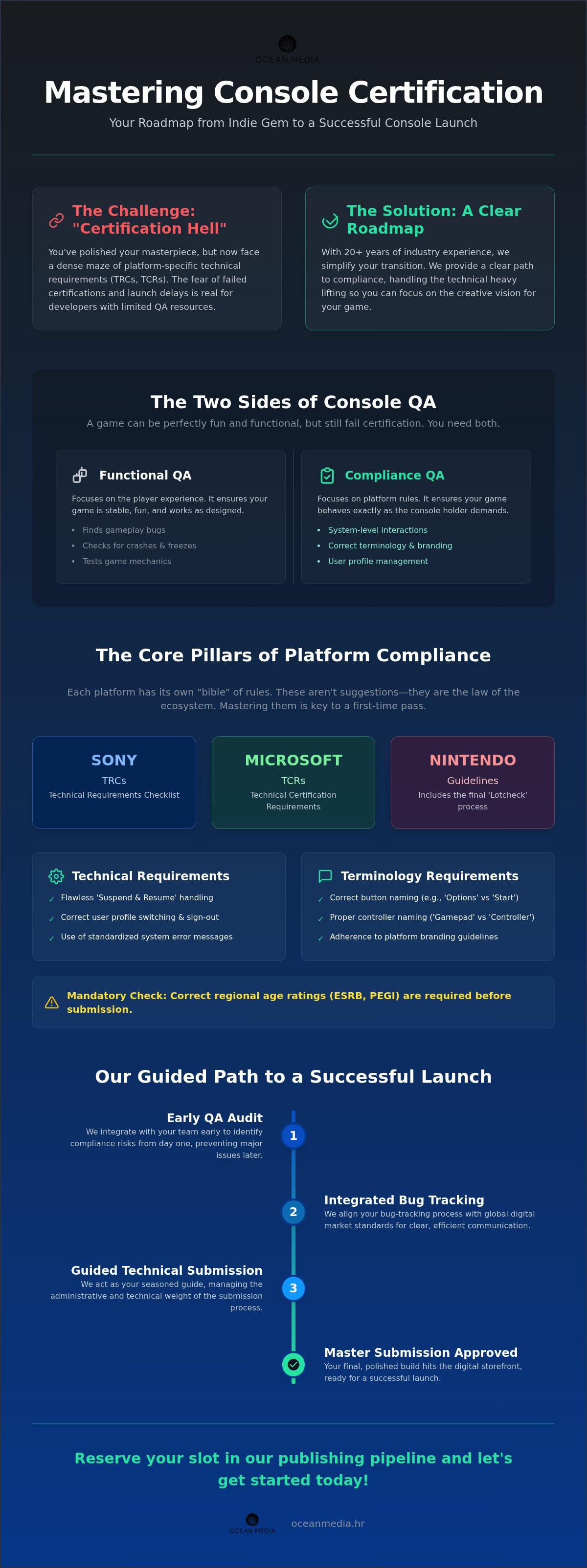
Console QA is a dual-track operation. It isn't just about finding a character clipping through a wall; it's about ensuring your title behaves exactly how the platform holder demands. While PC and mobile marketplaces often have a "fix it in post" culture with loose submission rules, console game QA testing requirements are significantly more rigorous. Platform holders like Sony, Microsoft, and Nintendo have spent decades building their brands on quality and reliability. They won't risk their hardware's reputation on a build that crashes or fails to handle system-level events properly. If your game crashes once during a specific platform-level event, you fail. If your controller disconnect screen uses the wrong terminology, you fail.
The ultimate goal of this rigorous process is the Master Submission. This is the gold-standard build that represents your final, polished vision. Getting there is a collaborative effort between your development team and our publishing expertise. We act as your seasoned guide, ensuring every technical box is checked before the platform holders ever see your code. This partnership allows you to focus on the creative side while we manage the administrative and technical weight of the submission.
The Role of QA in the Publishing Pipeline
QA shouldn't be an afterthought. It's a foundational step in the how to publish a game on console roadmap. Starting your QA process early prevents "certification hell," a state where developers get stuck in a frustrating loop of failed submissions and delayed launches. While internal playtesting is great for finding gameplay issues, a professional QA audit looks for the technical compliance failures that internal teams often miss. It's the difference between a game that's fun to play and a game that's legally and technically allowed to exist on a console storefront.
Key Industry Terminology for Developers
Understanding the language of certification helps us communicate effectively. Build Stability refers to how long a game runs without a fatal error. Smoke Testing is a quick, high-level check to see if the main functions work at all. Regression Testing is perhaps the most critical phase; it's the process of checking if a new bug fix accidentally broke an existing certification rule elsewhere in the build. These terms are the backbone of meeting console game QA testing requirements efficiently. For those targeting the Switch, Lotcheck is the final gatekeeping process for Nintendo submissions that determines if you're ready for the eShop. Reserve your slot in our publishing pipeline and let's get started today!
The Core Pillars of Console Certification Requirements
Every platform holder maintains a proprietary "bible" of rules that your build must satisfy. For Sony, it's the Technical Requirements Checklist (TRC). Microsoft uses Technical Certification Requirements (TCR), while Nintendo refers to them simply as Guidelines. These documents aren't suggestions; they are the law of the ecosystem. Meeting console game QA testing requirements means aligning your code with these specific pillars from day one of development. It's a rigorous process that goes beyond gameplay to ensure every title on the storefront provides a consistent user experience.
These requirements generally split into two categories: technical and terminology. Technical requirements focus on how the game interacts with the console's operating system. Terminology requirements, however, focus on branding and naming conventions. You can't call a "Controller" a "Gamepad" on certain platforms. You can't say "Press Start" if the button is officially named "Options" or "Menu." This is where many indie devs stumble during their first attempt at bringing your game to consoles. Additionally, ensuring your title complies with console game age rating systems is a mandatory part of the compliance check. Without the correct regional ratings, like ESRB or PEGI, your build will be rejected before a tester even touches a controller.
Technical Standards (TRCs and TCRs)
Proper user profile management is a major hurdle in modern certification. Your game must detect when a user switches accounts or signs out mid-session without losing data. It must also handle "Suspend and Resume" modes flawlessly. If the console goes into sleep mode and your game crashes upon waking, that's an automatic failure. Standardized error messages must also match the platform's UI exactly. These messages need to provide clear instructions for scenarios like hard-drive full errors or network connection losses. Navigating these granular details is far more efficient with a partner who knows the checklists inside out.
Hardware and Controller Compliance
Consoles are closed ecosystems with specific hardware quirks that you must account for. Your game needs to handle controller disconnections with a specific, platform-approved overlay that pauses the action immediately. Haptic feedback and button icons must be context-sensitive and platform-accurate. If you're using secondary devices or peripherals, those connections must be robust and fail-safe. A critical check is ensuring the game doesn't "soft lock" (a state where the game remains running but the user can't progress or exit) if the storage is full or a save file is corrupted. Reserve your slot in our publishing pipeline and let's get started today!
Functional QA vs. Compliance Testing: Why You Need Both
A game can be a masterpiece of design but still fail certification in minutes. This happens because developers often confuse functional QA with compliance testing. Functional QA asks a simple question: Does the game play as intended without crashing? Compliance testing, however, asks: Does the game follow every platform holder's legal and technical rules? While you might focus on the gameplay experience, compliance issues are actually the most common console certification failures we see. These requirements are non-negotiable; they are the gatekeepers of the ecosystem. If a build hits the "Critical Bug" threshold (a failure that compromises system security or user data), the submission stops in its tracks immediately.
The Anatomy of a Functional Bug
We categorize bugs into a strict hierarchy: Blocker, Critical, Major, and Minor. A "Blocker" prevents the game from even starting, while a "Critical" bug might crash the game during a specific boss fight. Platform holders will reject your build immediately for "A-Class" blockers. However, they might pass "C-Class" minor glitches, such as a tiny texture flicker, if the overall stability is high. Frame rate stability is another critical factor. If your game dips below 30 FPS in a way that affects the user experience, it can trigger a failure under certain console game QA testing requirements. Consistency is key here; a steady 30 FPS is often preferred over a fluctuating 60 FPS build that stutters during heavy action.
Compliance: The 'Hidden' Requirements
Compliance often involves "hidden" technical behaviors that players never see. For instance, network connectivity rules dictate exactly how your game must react if the internet drops mid-save. It cannot simply hang; it must provide a platform-approved error message. If you have DLC or microtransactions, storefront integration must be seamless. The game must correctly link to the console store and handle purchase verification without a single error. Legal requirements are just as vital. You must include specific EULAs, credits, and licensed technology logos (like Dolby or Unreal Engine) in the exact format required by the platform holder. Missing a single logo can lead to a rejection when bringing your game to consoles.
We believe that managing these dual tracks is the only way to ensure a smooth launch. By integrating these checks early into your publishing pipeline, you save time and resources. Don't let a missing logo or a network timeout error delay your vision. Reserve your slot in our publishing pipeline and let's get started today!
Building an Effective QA Submission Pipeline for Indie Studios
Building a repeatable, structured pipeline is the only way to meet console game QA testing requirements without burning out your team. It starts with a comprehensive Test Plan. This document shouldn't be a generic list; it must map your game's unique features to the specific technical standards of each platform. If your title features local co-op, your plan needs dedicated sections for controller assignment and profile switching. These structured steps ensure you satisfy all console game QA testing requirements before the official review begins.
Next, your bug-tracking system (whether you use Jira, Trello, or a custom tool) should mirror the platform holder's own categorization. By tagging bugs with specific TRC or TCR codes, you can immediately see which issues threaten your certification. Before you even think about hitting the submit button, conduct a "Pre-Cert" audit. This is a full simulation of the platform holder's review process. Only when your compliance checks are consistently green should you finalize your "Gold Master" build.
Internal vs. External QA Resources
Indie studios often struggle with the "fresh eyes" problem. When you've spent years looking at the same code, you become blind to subtle compliance flaws. Hiring dedicated internal testers is an option, but it's often more cost-effective to leverage a publishing partner's specialized QA expertise. We provide that external perspective, identifying technical hurdles that internal teams might overlook. This allows you to manage QA costs while ensuring the final submission is professional and polished.
Preparing for the Submission Window
Timing is everything in the console market. You should set a realistic timeline that accounts for at least two or three full QA cycles before your desired launch date. Beyond the build itself, you must prepare a "Submission Package." This includes all metadata, localized descriptions, and storefront screenshots. If you receive a "Fail" notification, don't panic. Analyze the platform holder's report carefully, fix the specific regression, and resubmit. We've spent 20 years helping developers navigate these reports to reach a successful launch. Reserve your slot in our publishing pipeline and let's get started today!
Navigating the Submission Maze with Ocean Media
Success in the console market requires more than just a great game; it requires a partner who understands the technical friction of the platform ecosystems. With over 20 years of industry experience, Ocean Media has evolved alongside the major platform holders. We've seen console game QA testing requirements shift from simple stability checks to the complex, multi-layered compliance audits of today. Our role is to act as the bridge between your creative vision and the rigid technical demands of Sony, Microsoft, and Nintendo. We handle the administrative weight so you can stay focused on what you do best: making games.
Managing the submission portals for different regions and platforms is a full-time job. Each console holder has its own feedback style, lead times, and specific portal requirements. We navigate these complexities daily, ensuring your build moves through the console game QA testing requirements phase without unnecessary friction. By acting as your guide, we help you achieve a smooth global digital launch across all major storefronts simultaneously. We don't just submit code; we manage the entire conversation with the platform holders on your behalf.
Why a Publishing Partner is Your Best QA Asset
Platform certification rules are living documents that change frequently. What passed six months ago might trigger a failure today. We maintain deep, updated knowledge of these shifting standards, providing you with a significant competitive advantage. This expertise allows us to catch the costly submission mistakes that often derail indie launches, such as incorrect trophy implementation or faulty save-data handling. You can learn more about our specific services for developers and how we integrate into your existing workflow to streamline the certification process.
We don't just find bugs; we provide solutions that align with the platform's long-term vision. Our team works collaboratively with yours to ensure every technical box is checked long before the official submission window opens. This proactive approach eliminates the stress of the "fail" notification and keeps your launch schedule on track. We've refined our methods over two decades to ensure your first-time pass rate is as high as possible.
Ready to Launch? Let's Talk
Bringing your game to consoles shouldn't feel like a gamble. We provide a structured, reliable path to success that simplifies the entire publishing pipeline. From the initial pre-cert audit to the final gold master approval, our team is with you at every step. The process is designed to be accessible and efficient, removing the technical barriers that stand between your game and its global audience. Let's turn your vision into a console reality. Reserve your slot in our publishing pipeline and let's get started today!
Secure Your Vision for Global Storefronts
Bringing your game to consoles is a major milestone that requires shifting from a purely creative mindset to a technical compliance framework. You've learned that mastering console game QA testing requirements means more than just patching gameplay glitches; it's about aligning with the rigid standards set by Sony, Microsoft, and Nintendo. By establishing a robust submission pipeline and distinguishing between functional stability and platform rules, you've already taken the first steps toward a successful launch. Navigating this landscape alone is daunting, but you don't have to do it without a guide.
With 20+ years of console publishing experience, our team specializes in digital distribution across all major platforms. We provide the expert guidance needed to navigate the technical certification maze and avoid the costly delays of a failed submission. We're here to act as your collaborative partner, ensuring your title meets every benchmark for a professional release. Your masterpiece deserves a global audience, and we have the tools to help you reach them. Reserve your slot in our publishing pipeline and let's get started today! Let's work together to make your console debut a resounding success.
Frequently Asked Questions
What are the most common reasons for console certification failure?
Incorrect terminology, improper handling of user profiles, and crashes during system-level events like controller disconnections are the most frequent culprits. These technical oversights trigger immediate rejections because they compromise the platform's user experience. We often see builds fail for missing legal logos or inconsistent button prompts. Addressing these console game QA testing requirements early in development is the most effective way to avoid these pitfalls and ensure your launch stays on track.
How long does the console QA and certification process typically take?
The timeline varies by platform but typically involves two to four weeks for the official review, plus several months of internal pre-certification QA. You should account for multiple submission cycles to handle potential regressions or minor fixes. Rushing this phase often leads to certification hell, where repeated failures delay your release indefinitely. We recommend starting your final QA audit at least 90 days before your target launch date to provide a comfortable buffer.
Do I need a separate QA process for PlayStation, Xbox, and Nintendo?
Yes, you must treat each platform as a unique ecosystem with its own set of rules and technical standards. While some gameplay bugs are universal, the compliance requirements for Sony, Microsoft, and Nintendo differ significantly in terminology and system-level behavior. For instance, how a game handles save data on a Switch is technically distinct from how it's managed on a PlayStation. Our expertise helps you manage these parallel workflows efficiently within our publishing pipeline.
Can I self-publish without meeting these QA requirements?
No, platform holders won't allow your game on their digital storefronts without a successful certification pass. Even if you choose to self-publish, you're still legally and technically bound to meet every technical standard they mandate. There are no shortcuts or bypasses for indie titles. Failing to invest in professional QA simply means your game will never reach the market. Reserve your slot in our publishing pipeline and let's get started today!
What is a TRC (Technical Requirements Checklist) exactly?
A Technical Requirements Checklist (TRC) is Sony's proprietary document detailing the mandatory standards your game must meet to be published on PlayStation. Other platforms have similar equivalents, such as Microsoft's TCRs. These checklists cover everything from how long a loading screen can last to how the game reacts when a user signs out of their profile. Mastering these console game QA testing requirements is essential for any developer bringing your game to consoles.
How much does it cost to submit a game for console certification?
Costs are generally not public and can vary based on your specific developer agreement and the platform's current policies. While some platform holders have moved away from charging per-submission fees, the real cost lies in the development time lost during failed cycles and resubmissions. It's much more economical to invest in a rigorous pre-certification audit than to pay for repeated technical failures and launch delays that eat into your marketing window.
What happens if my game fails the first-party review?
You'll receive a detailed report from the platform holder outlining exactly which requirements were not met. This report includes specific fail cases and instructions on what needs to be corrected. You must then fix these issues, perform regression testing to ensure no new bugs were introduced, and resubmit the build. We act as your guide through this feedback loop, helping you interpret the technical jargon and implement the necessary fixes quickly.
Is functional playtesting enough to pass console certification?
No, simply making sure the game is fun or playable isn't enough to pass the rigorous certification standards. Functional playtesting focuses on the player's experience, while certification focuses on the console's integrity and platform consistency. You need a dedicated compliance audit to check for things like correct button terminology, network timeout behaviors, and legal credit displays. Without this technical layer, even the most polished game will likely face rejection.


